There is a specific kind of culinary magic that happens when cold-water Atlantic salmon meets the searing heat of a dark metal sheet pan. This lemon garlic baked salmon isn’t just a meal; it is a masterclass in texture, balancing the buttery richness of the fish with a deeply caramelized honey garlic glaze that creates visible pools of golden sauce within every flake. If you have been searching for a restaurant-quality dinner that requires minimal cleanup, you have found the definitive version.
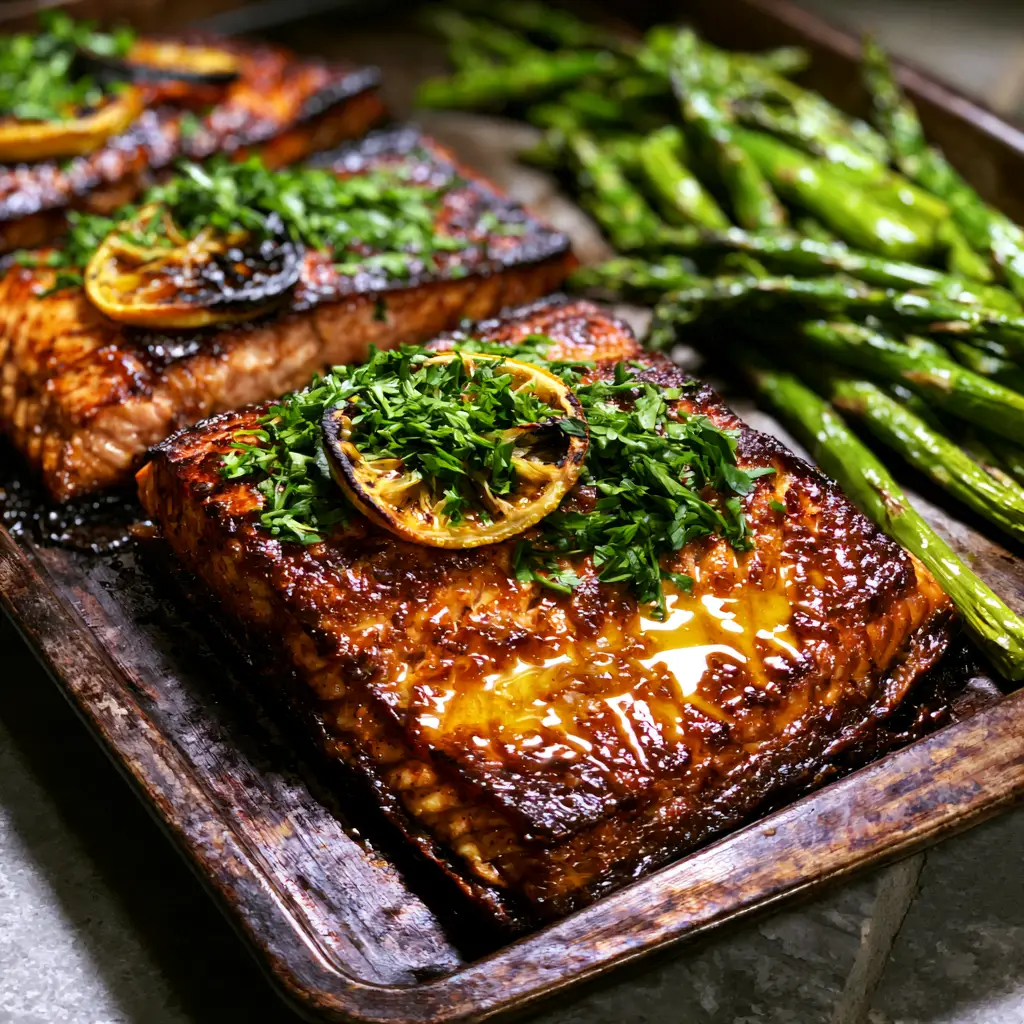
Imagine pulling a rustic tray from the oven where the edges of the salmon are crisp and dark, the lemon wheels are charred to a concentrated citrus candy, and the asparagus spears are bright green with tender, scorched tips. The aroma of toasted garlic and bubbling butter will fill your kitchen, signaling a meal that is as nutritious as it is indulgent. This recipe focuses on the synergy between high-heat roasting and the moisture-locking power of a honey-butter emulsion.
Whether you are a seasoned home cook or just starting your culinary journey, the visual cues provided here will ensure success. We are looking for that specific “handheld smartphone photo” aesthetic—authentic, unedited, and stunningly vibrant. Let’s dive into the science and soul of this perfect sheet pan dinner.
The Visual Anatomy of a Perfectly Caramelized Salmon Fillet
- Deep Caramelization: The honey and garlic in the glaze undergo the Maillard reaction, resulting in a dark, rich crust that contrasts beautifully with the pink, flaky interior.
- Glistening Honey Garlic Butter: We use a specific ratio of fats to sugars to ensure the sauce doesn’t just run off but clings to the salmon flakes in “glowing pools.”
- Charred Citrus Accents: Roasting thin lemon wheels alongside the fish concentrates their sugars and softens their bitterness, providing a sophisticated garnish.
- Vibrant Herb Contrast: A heavy finishing sprinkle of fresh, flat-leaf parsley adds a necessary “pop” of green against the rustic dark metal of the pan.
- Tender-Crisp Asparagus: High heat ensures the asparagus spears develop slight char marks while retaining their structural integrity and bright green hue.
Hand-Selected Ingredients for the Ultimate Glazed Salmon
Atlantic Salmon Fillets: You will need 3 thick, center-cut fillets (about 6 oz (170g) each). These provide the necessary thickness to allow the exterior to caramelize without the interior drying out. If you prefer other methods, you might also enjoy this baked salmon in foil for a different texture profile.
Unsalted Butter: Use 4 tbsp (56g) of high-quality butter. This acts as the fat base for our sauce, carrying the flavor of the garlic into the fibers of the fish.
Raw Honey: 2 tbsp (30ml) of honey is crucial for that “deeply caramelized” look described in our visual blueprint. It provides the sugars necessary for the glaze to thicken and glow under natural light.
Fresh Garlic: 4 large cloves, minced. Avoid the jarred variety; we need the volatile oils of fresh garlic to stand up to the oven’s heat and create those visible “minced garlic bits” on the surface.
Fresh Asparagus: 1 lb (450g) of medium-thickness spears. These roast at the same rate as the salmon, making them the perfect companion for sheet pan meals.
Lemon: 1 large organic lemon. Half will be sliced into thin wheels for charring, and the other half will be juiced to cut through the richness of the butter.
Extra Virgin Olive Oil: 1 tbsp (15ml) for the asparagus. This foundational ingredient ensures the vegetable roasted properly and achieves those “slight char marks” we desire.
Seasonings: Use 1 tsp (6g) flaky sea salt and 1/2 tsp (2g) cracked black pepper. The flaky salt provides a crystalline crunch that catches the light in food photography, while the cracked pepper adds a rustic visual element.
Fresh Parsley: 1/4 cup (10g) finely chopped. This is our “vibrant green” finishing touch that elevates the dish from a simple bake to a gourmet presentation.
Essential Kitchen Tools for Professional Sheet Pan Results
To achieve the “rustic dark metal sheet pan” look, use a heavy-duty rimmed baking sheet. Darker pans absorb more heat, which helps in creating the deep caramelization on the bottom and edges of the salmon fillets. Avoid using parchment paper if you want maximum browning, though it does make cleanup easier.
A small saucepan is required to emulsify the honey, garlic, and butter before it hits the fish. You will also need a sharp chef’s knife for the “thin lemon wheels” and a pastry brush to ensure the glaze is evenly distributed into the flakes of the Atlantic salmon.
Step-by-Step: From Raw Fillet to Deeply Caramelized Perfection
Preparing the Salmon and Asparagus
Preheat your oven to 400°F (200°C). Position your oven rack in the upper-middle third to maximize the “side-lit natural daylight” effect of the oven’s heating elements. Pat the salmon fillets completely dry with paper towels; moisture is the enemy of caramelization.
Trim the woody ends off your asparagus spears. On your dark metal sheet pan, toss the asparagus with olive oil, a pinch of flaky salt, and cracked black pepper. Push them to the sides to create a “nest” for the salmon in the center.
Creating the Honey Garlic Butter Glaze
In a small saucepan over medium heat, melt the 4 tbsp (56g) of butter. Add the minced garlic and sauté for 1 minute until fragrant but not browned. Whisk in the 2 tbsp (30ml) of honey and 1 tbsp (15ml) of lemon juice.
Continue to simmer the glaze for 2-3 minutes until it reduces slightly and coats the back of a spoon. This is the secret to getting those “visible pools of golden sauce” seen in our professional food photography style.
The Roasting Process and Sensory Cues
Place the salmon fillets in the center of the pan. Brush them generously with two-thirds of the glaze, ensuring it gets into the natural crevices of the meat. Top each fillet with 2-3 thin lemon wheels.
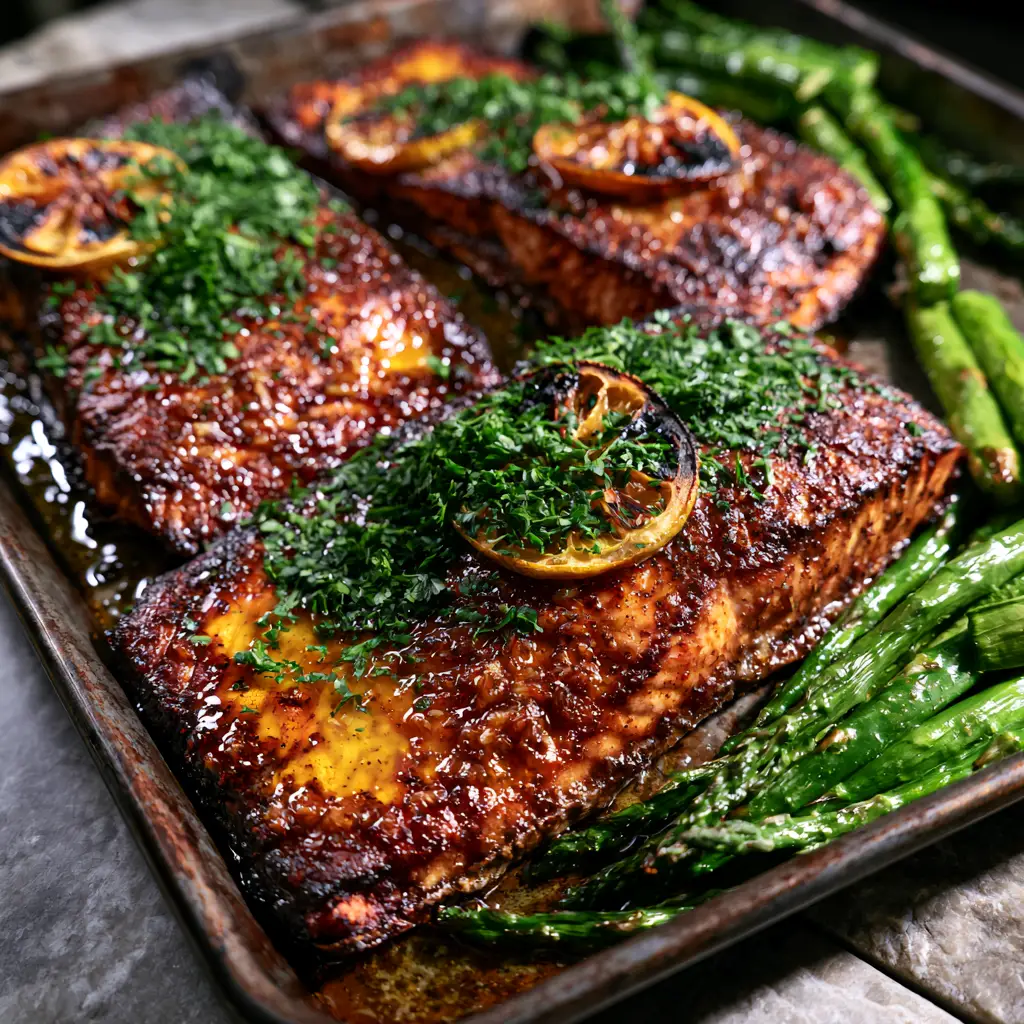
Slide the pan into the oven. Roast for 12-15 minutes. At the 10-minute mark, check for visual cues: the salmon should be transitioning from translucent to opaque, and the honey glaze should be starting to bubble and turn a deep amber color.
The Final Broil for Visual “Pop”
To achieve the “charred” look on the lemons and the “deeply caramelized” crust, turn your broiler to high for the final 2 minutes. Watch closely! You are looking for the lemon edges to blacken slightly and the garlic bits on the salmon to turn golden brown. The asparagus should show slight char marks on the tips.
Pro-Tips for Achieving Restaurant-Quality Char
- Room Temperature Salmon: Take your fillets out of the fridge 15 minutes before cooking. This ensures even heat distribution, so the outside caramelizes at the same rate the inside reaches flakiness.
- The Honey Ratio: Do not skip the honey. It is the primary agent for the Maillard reaction in this recipe, providing the sticky texture that traps the butter on the fish.
- High Heat is Key: Don’t be afraid of the 400°F (200°C) temperature. Salmon is a fatty fish that can handle high heat, which is necessary to roast the asparagus properly without overcooking the protein.
- Finishing Salt: Always add the flaky sea salt *after* cooking. It stays on the surface, providing a beautiful visual highlight and a burst of seasoning in every bite.
How to Store and Reheat Your Leftover Salmon
If you have leftovers, this lemon garlic baked salmon stores beautifully. Place the fillets and asparagus in an airtight container and refrigerate for up to 3 days. To maintain the “glistening” texture, avoid the microwave if possible.
To reheat, place the salmon on a pan in a 300°F (150°C) oven for about 8-10 minutes. Add a tiny splash of water or a small pat of butter to the top to keep it moist. This salmon also works wonderfully cold, flaked over a refreshing noodle salad for lunch the next day.
What to Serve With This Sheet Pan Masterpiece
While the roasted asparagus makes this a complete meal, you can round out the dinner table with other vibrant sides. The acidity of the lemon pairs perfectly with crispy air fryer zucchini or even a side of perfectly crispy potatoes.
If you are looking for more “one-pan” inspiration, consider trying our classic salmon and asparagus pairing or for a tropical twist, the baked pineapple salmon is a crowd favorite. For those focusing on low-carb options, these healthy burger bowls offer a great alternative for your weekly meal prep.
Frequently Asked Questions
Yes, but ensure it is completely thawed and patted extremely dry. Excess moisture from frozen fish will prevent the honey glaze from caramelizing properly.
Slice the lemons very thin and use the broiler for the last 2 minutes. The high sugar content in the honey glaze also helps the lemon wheels brown quickly.
Salmon is done when it flakes easily with a fork and reaches an internal temperature of 145°F (63°C). Visually, the meat should be opaque throughout but still moist.
Keep the skin on! It acts as a barrier that prevents the salmon from overcooking and makes it much easier to remove the fillets from the pan after roasting.
If using ‘pencil’ thin asparagus, add it to the sheet pan halfway through the salmon’s cooking time (around the 7-minute mark) so it doesn’t over-char.
The H1 Title From The Article
This lemon garlic baked salmon recipe is the ultimate solution for those who demand high-flavor, high-aesthetic meals with low-effort cleanup. With its deeply caramelized glaze and tender roasted vegetables, it’s a dish that looks like it came from a professional kitchen but was made in your own home in under 30 minutes.
Lemon Garlic Baked Salmon with Honey Glaze and Roasted Asparagus
Ingredients
Equipment
Method
- Preheat oven to 400°F (200°C). Pat salmon fillets dry and trim asparagus. Toss asparagus on a dark sheet pan with olive oil, salt, and pepper.
- In a saucepan, melt butter and sauté garlic for 1 minute. Whisk in honey and lemon juice, simmering for 2 minutes until thickened.
- Place salmon on the pan. Brush with glaze and top with lemon wheels. Roast for 12-15 minutes until salmon is opaque and asparagus is tender.
- Turn broiler to high for 2 minutes to char lemon wheels and caramelize the honey garlic glaze into golden pools.
- Garnish heavily with chopped parsley and a final sprinkle of flaky sea salt.
Notes
Keep a close eye on the broiler to prevent the honey glaze from burning.
Bring Gourmet Excellence to Your Weeknight Kitchen
Mastering the lemon garlic baked salmon is a rite of passage for any home cook looking to expand their repertoire of healthy dinner ideas. The combination of omega-3 rich Atlantic salmon and the punchy flavors of charred citrus and honey garlic butter is truly unbeatable. We hope this guide helps you achieve that perfect, glistening finish every time.
Did you try this recipe? We would love to see your results! Please leave a comment below and share your photos with us. Don’t forget to follow KellyTaste on Pinterest for more visually stunning recipe inspiration and kitchen tips!