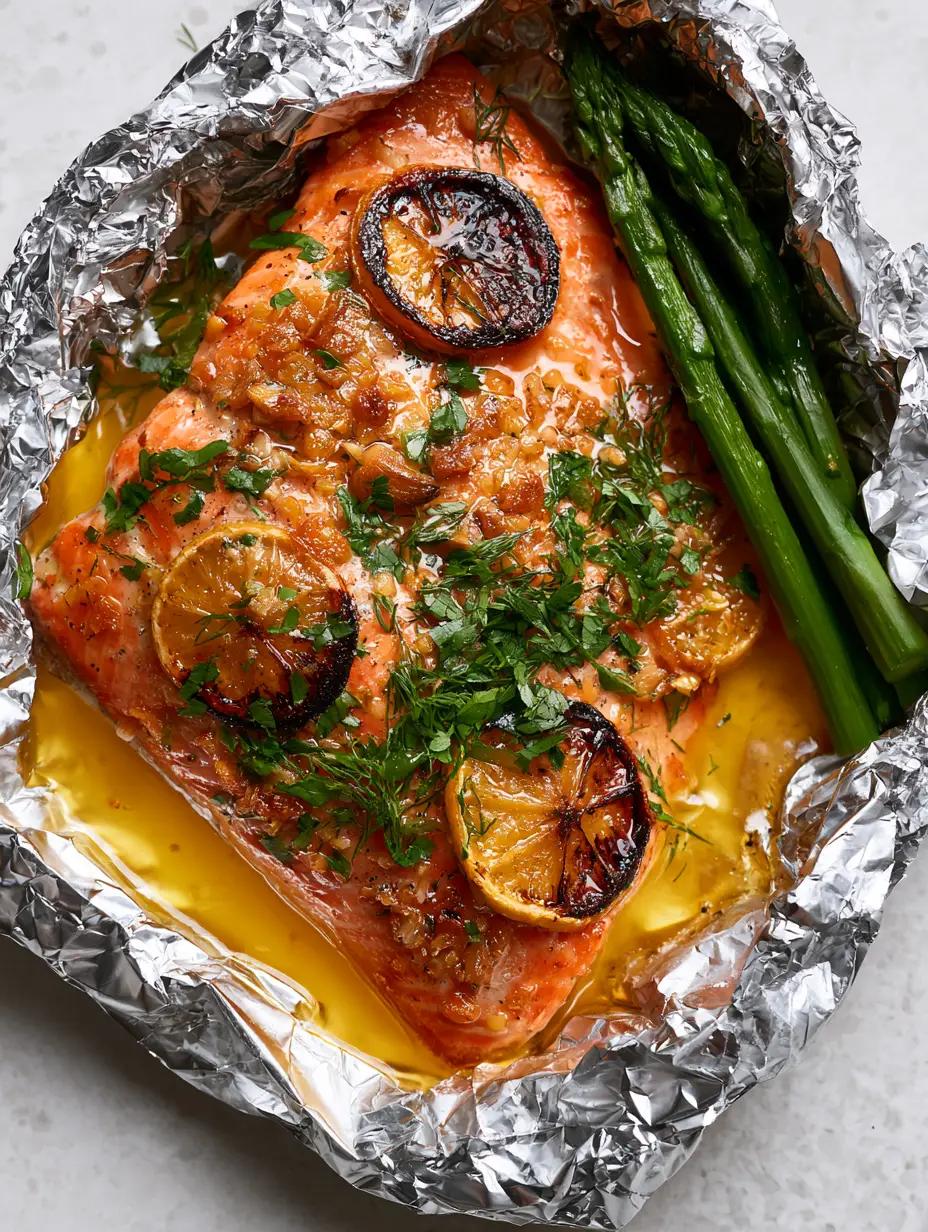
There is a specific visual magic that happens when you peel back a layer of rustic, crumpled aluminum foil to reveal a vibrant coral pink fillet shimmering under a pool of golden sauce. This Baked Salmon in Foil isn’t just a meal; it’s a sensory experience designed to mimic the viral, high-contrast food photography that stops your scroll on social media.
The secret lies in the contrast between the tender, flaky fish and the aggressive char of caramelized lemon wheels nestled against toasted, golden-brown garlic bits. Every bite delivers a hit of citrus brightness followed by the earthy depth of fresh dill and parsley, all while keeping your kitchen clean and your prep time minimal.
By using the foil-packet method, we trap moisture to ensure the salmon never dries out, while a final high-heat finish creates those dark, caramelized edges on the lemons that define a professional-grade dish. Whether you are looking for healthy dinner ideas or a show-stopping main for guests, this recipe delivers restaurant-quality results with home-cook simplicity.
Why This Foil-Packet Method Is a Game Changer
- Locked-In Moisture: The aluminum foil creates a pressurized steaming environment, ensuring a succulent, flaky texture every single time.
- Glossy Visual Appeal: We use a specific ratio of butter to lemon juice to create a sauce that doesn’t just flavor the fish but creates a “pooling” effect in the foil folds.
- One-Pan Cleanup: By cooking the tender-crisp asparagus directly alongside the fish, you eliminate extra dishes while infusing the greens with garlic butter.
- Flavor Layering: We combine the “low and slow” moisture of the foil with a high-heat “blast” to achieve browned minced garlic and charred citrus.
The Essential Pantry List for Ultimate Garlic Butter Salmon
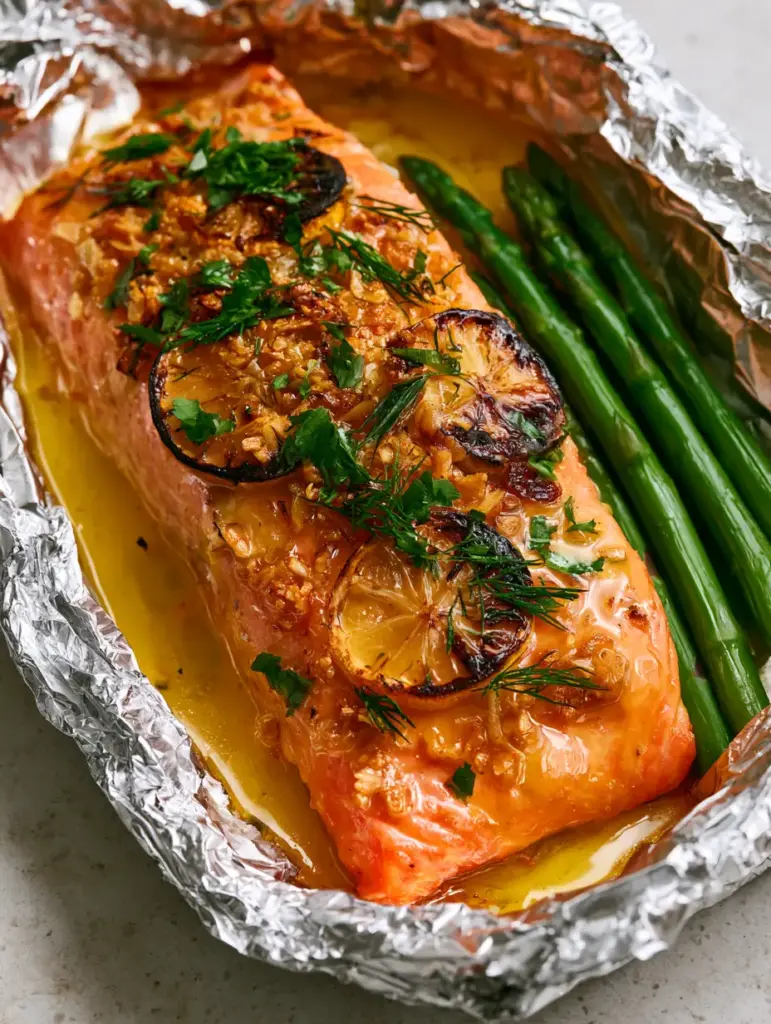
Achieving the vibrant coral color and glossy sheen seen in our photos requires high-quality ingredients and a few foundational “invisible” elements that stabilize the sauce. Here is what you will need for this Baked Salmon in Foil masterpiece.
1.5 lbs (680g) Salmon Fillet: Look for a center-cut fillet with a consistent thickness so it cooks evenly; the vibrant coral hue is best achieved with wild-caught varieties like Sockeye or King salmon.
4 tbsp (56g) Unsalted Butter: This provides the fat needed for the glossy finish and carries the flavor of the garlic; using unsalted allows you to control the seasoning precisely.
4 cloves Garlic, minced: We use a generous amount to ensure those toasted golden-brown bits are visible across the entire surface of the fish.
1 Large Lemon: You will need half for juice and the other half sliced into thin wheels; these wheels will be charred to provide a dark-edged, caramelized contrast to the pink fish.
1/2 tsp (3g) Fine Sea Salt & 1/4 tsp (1g) Cracked Black Pepper: Essential for drawing out the natural sweetness of the salmon and balancing the rich butter sauce.
1/4 cup (10g) Fresh Parsley and 2 tbsp (5g) Fresh Dill Fronds: These bright green herbs are added at the very end to maintain their color and provide a “viral” pop of freshness against the gold sauce.
1 bunch (approx. 450g) Asparagus: These should be blanched briefly before baking to ensure they stay tender-crisp and vibrant green rather than turning a dull olive color.
1 tbsp (15ml) Extra Virgin Olive Oil: A small amount of oil mixed with the butter prevents the milk solids in the butter from burning too quickly during the garlic browning phase.
If you love this flavor profile, you should also check out our lemon garlic baked salmon or for a twist, try the honey dijon baked salmon.
Professional Gear for the Perfect Flaky Fillet
To achieve the “top-down handheld smartphone photo” look, you need the right tools to manage heat and moisture. First, high-quality heavy-duty aluminum foil is a must; it holds its shape better when crumpled for that rustic aesthetic.
You will also need a large rimmed baking sheet to catch any potential butter leaks and a sharp chef’s knife for mincing the garlic into uniform bits that brown evenly. A small saucepan is required to emulsify the lemon butter sauce before it hits the fish, ensuring that “glossy” shimmer.
Finally, a digital meat thermometer is the most important tool for any Baked Salmon in Foil. Aim for an internal temperature of 135°F (57°C) for a perfect medium—the carryover heat will bring it to the food-safe 145°F (63°C) while keeping it succulent.
The Masterclass: Forging Your Foil Packet Masterpiece
Step 1: The Flavor Foundation and Blanching
Start by preheating your oven to 400°F (200°C). While the oven warms, bring a small pot of salted water to a boil and prepare an ice bath. Blanch the asparagus spears for exactly 60 seconds until they are bright green, then immediately plunge them into the ice water.
This “invisible” step is what separates amateur recipes from pro results; it locks in the chlorophyll, ensuring the greens look “tender-crisp” in the final presentation. Pat the asparagus completely dry before placing them in the foil.
Step 2: Crafting the Glossy Garlic Butter Sauce
In a small saucepan over medium-low heat, melt the 4 tbsp (56g) of butter with the olive oil. Add the minced garlic and cook for 2-3 minutes, stirring constantly until you hear a gentle sizzle and the garlic turns a pale golden-brown.
Remove from heat and whisk in the fresh lemon juice, salt, and pepper. This creates an emulsion that will pool beautifully in the foil rather than separating into a greasy mess. For a similar technique with a sweeter profile, our honey lime garlic butter baked salmon is a fantastic alternative.
Step 3: Engineering the Foil Packet
Lay out a large piece of aluminum foil on your baking sheet and purposefully crumple the edges to create a rustic “nest.” Place the salmon fillet in the center and tuck the three blanched asparagus spears neatly alongside the fish.
Pour that glossy garlic butter sauce over the fish, ensuring the garlic bits stay on top of the fillet. Lay the lemon wheels on top of the salmon. Fold the foil up around the sides but leave the top slightly open—this allows a bit of steam to escape so the fish doesn’t become mushy.
Step 4: The Heat Application and Final Char
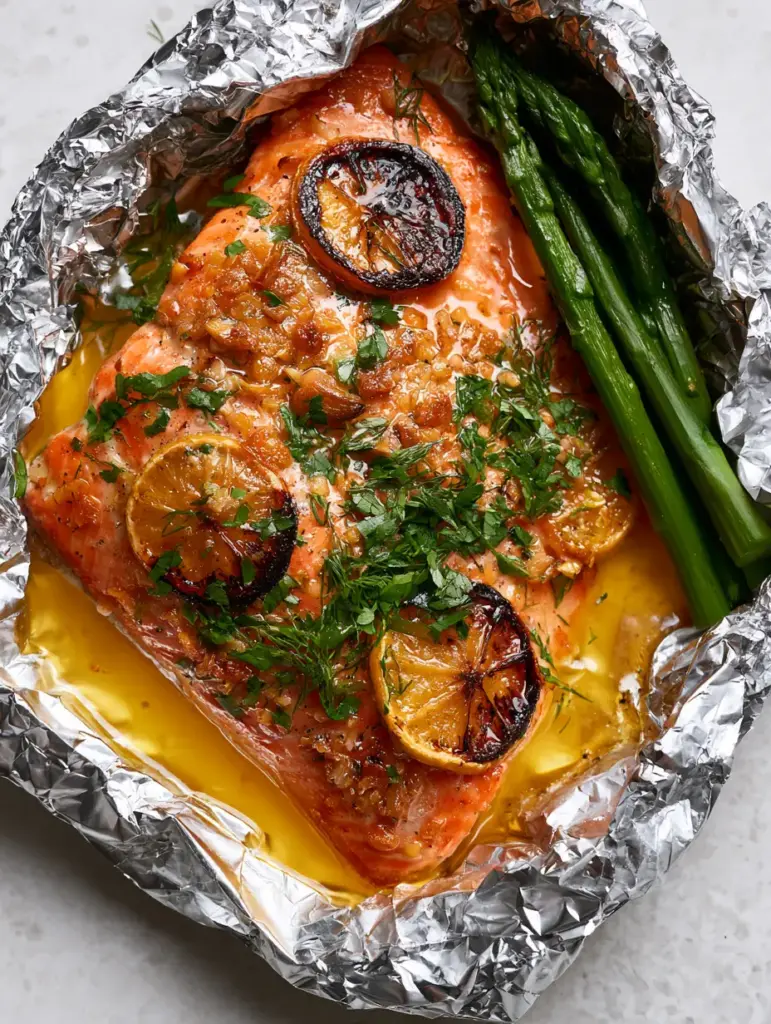
Slide the tray into the oven and bake for 12-15 minutes. The salmon is ready when the thickest part is opaque and flakes easily with a fork. To get those “dark edges” on the lemon wheels mentioned in our visual prompt, turn your broiler to high for the last 2 minutes.
Watch closely! You want the garlic to reach a deep toasted brown and the lemon skin to caramelize without burning the herbs. Remove from the oven and let it rest for 3 minutes within the foil to let the juices redistribute.
Step 5: The Viral Finishing Touches
Now for the visual “pop.” Sprinkle the freshly chopped parsley and fine dill fronds generously over the glistening fish. The residual heat will release the aroma of the herbs without wilting them into brown specks.
The final result should show the salmon in a vibrant coral pink, resting in a pool of golden sauce, exactly like a high-end food post. If you enjoy this sheet-pan style, you might also like our sheet pan lemon garlic butter salmon.
Expert Tips for Visual and Culinary Success
- Don’t Overcrowd: If you are making multiple servings, give each fillet its own foil “boat” to ensure proper air circulation and even browning.
- The “Squeeze” Test: If your salmon feels firm to the touch but still has a slight “give,” it is perfectly medium; if it’s hard, it’s overcooked.
- Citrus Control: Always remove the seeds from your lemon wheels before placing them on the fish to avoid a bitter surprise for your diners.
- Herb Timing: Never bake the delicate dill; its volatile oils are destroyed by high heat. Always add it as a “finisher” for that bright green contrast.
The Best Side Dishes to Pair with Salmon
While the asparagus provides a built-in side, you can round out this meal with a variety of textures. A light noodle salad provides a refreshing cold contrast to the warm, buttery fish.
For a heartier meal, consider serving the salmon over a steak fajita bowl base (minus the steak!) or alongside crispy potatoes to soak up every drop of that pooling garlic butter sauce. If you’re keeping things low-carb, air fryer zucchini is an excellent companion.
Common Questions About Baking Salmon in Foil
You can use olive oil, but you will lose the ‘glossy’ pooling effect and the rich, toasted flavor that dairy provides to the garlic.
Yes, but ensure it is completely thawed and patted very dry with paper towels to prevent excess moisture from diluting the glossy butter sauce.
Heavy-duty aluminum foil is recommended as it is less likely to tear and holds the ‘rustic’ crumpled shape better for presentation.
The salmon is done when it reaches an internal temperature of 135-145°F (57-63°C) and the flesh flakes easily with a fork while appearing opaque.
Blanching locks in the bright green color and ensures the asparagus is tender-crisp in the same amount of time the salmon takes to cook.
Baked Salmon in Foil: The Ultimate Recipe Card
Baked Salmon in Foil with Glossy Lemon Garlic Butter
Ingredients
Equipment
Method
- Mince garlic and melt butter in a small saucepan with olive oil. Stir until garlic is golden-brown.
- Place salmon and blanched asparagus on crumpled foil. Pour over garlic butter and top with lemon wheels.
- Bake at 400°F (200°C) for 12-15 minutes. Broil for 2 minutes to char the lemons. Garnish with fresh dill and parsley.
Notes
Always blanch asparagus beforehand to keep them bright green.
Closing & Call to Action
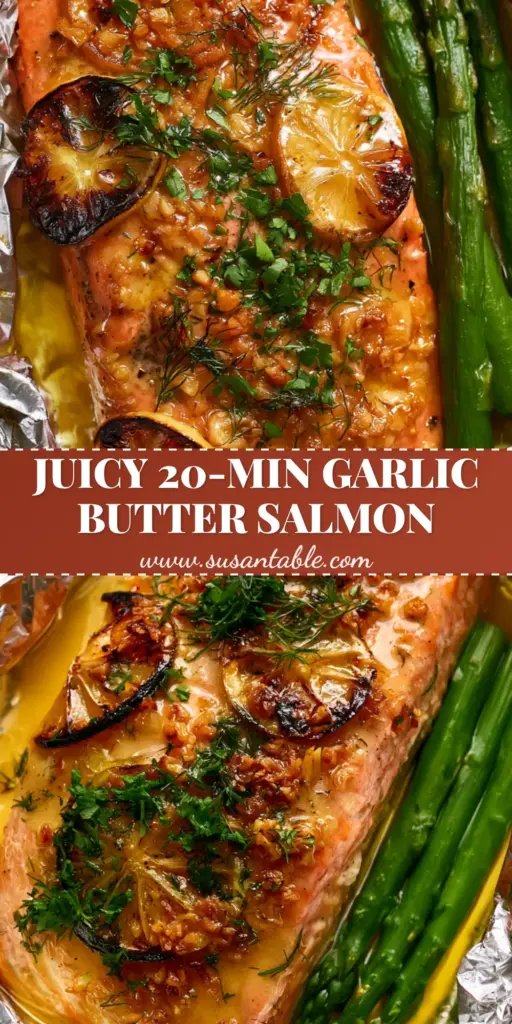
Making a restaurant-quality Baked Salmon in Foil doesn’t require years of culinary school—it just requires an eye for detail and the right technique. From the glossy garlic butter to the charred citrus accents, this dish is designed to impress both your palate and your followers.
If you enjoyed this recipe, please leave a comment below and tell us how yours turned out! Don’t forget to follow us on Pinterest for more visually stunning recipe inspiration. Happy cooking!