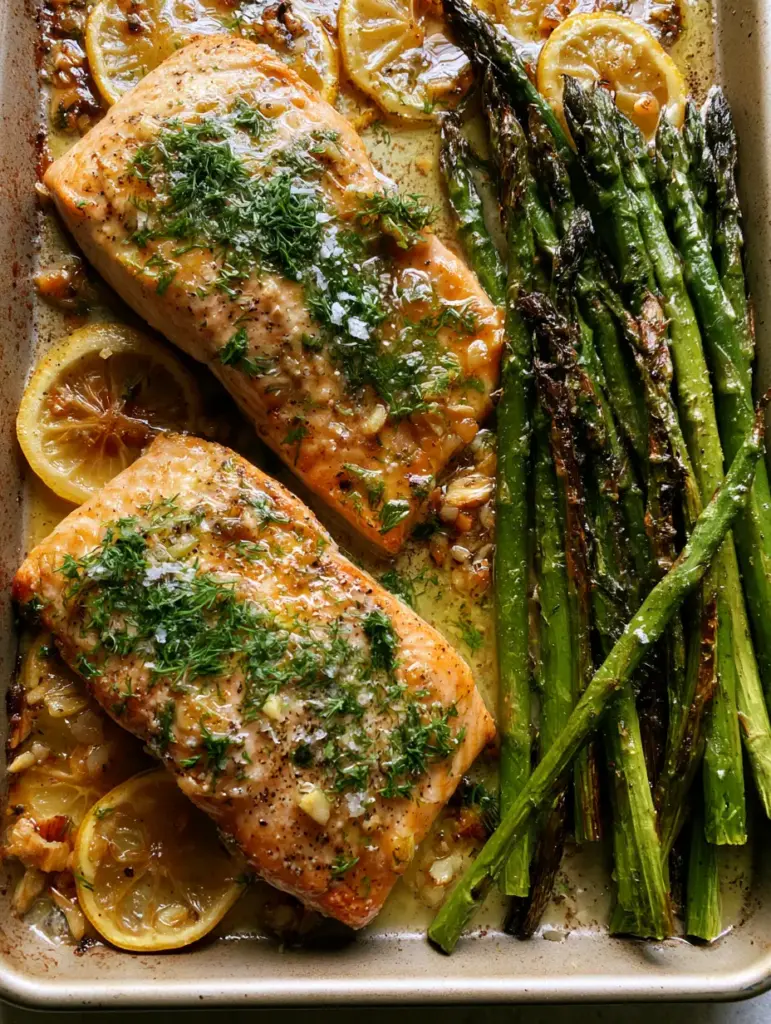
Baked salmon with asparagus is the quintessential meal for anyone seeking a marriage of elegance and efficiency. This recipe isn’t just a meal; it is a masterclass in texture, featuring thick, center-cut Atlantic salmon fillets with golden-brown seared edges and slender, tender-crisp asparagus spears.
The secret to this dish lies in the shimmering lemon-garlic butter glaze that coats every crevice of the fish. By roasting the ingredients together, the natural juices of the salmon mingle with the charred, blistered tips of the asparagus, creating a depth of flavor that usually requires hours of preparation.
Whether you are looking for healthy dinner ideas or a show-stopping main course for a weekend gathering, this sheet pan wonder delivers. The vibrant green of the fresh dill against the caramelized lemon wheels makes for a visual feast that looks as good as it tastes.
The Anatomy of the Perfect Sheet Pan Salmon
To achieve the result seen in professional culinary photography, we must focus on the interplay of heat and fat. The “seared” appearance in a baked dish is achieved through high-temperature roasting, which triggers the Maillard reaction on the salmon’s surface.
The slender green asparagus spears are chosen specifically because their cooking time aligns perfectly with the salmon. This ensures that by the time the fish is flaky and moist, the asparagus has achieved that coveted charred, blistered texture without becoming mushy.
We also utilize caramelized lemon wheels, which transform from tart fruit into sweet, concentrated flavor bombs. These slices release their essential oils during the roasting process, infusing the entire tray with a bright, citrusy aroma.
Essential Components for a Five-Star Result
- Center-Cut Atlantic Salmon: These thick fillets provide the best fat-to-protein ratio, ensuring a moist and flaky interior even after the edges have turned golden-brown.
- Slender Asparagus Spears: Choose thin spears for this recipe; they blister quickly at high heat, providing a beautiful textural contrast to the soft fish.
- Salted Butter: This forms the base of our shimmering glaze, providing the fat necessary to “fry” the garlic and carry the lemon flavor.
- Fresh Garlic: Minced finely, the garlic roasts into sweet, golden bits that cling to the salmon and asparagus.
- Fresh Dill: Added at the very end, this herb provides a punch of herbaceous brightness that cuts through the richness of the butter.
- Flaky Sea Salt & Cracked Pepper: These aren’t just seasonings; they provide a tactile crunch that elevates the mouthfeel of the finished dish.
The Equipment You Will Need
Achieving a professional-grade baked salmon with asparagus requires a heavy-duty, rimmed sheet pan. A seasoned pan is preferred as it helps with heat conduction, ensuring the bottoms of the fillets get as much love as the tops.
You will also need a sharp chef’s knife for mincing the garlic and slicing the lemons into uniform wheels. A small saucepan or microwave-safe bowl is necessary for emulsifying the lemon-garlic butter glaze before it is drizzled over the salmon.
Finally, a meat thermometer is your best friend. To ensure your salmon is perfectly moist and flaky, we are aiming for an internal temperature of 135°F (57°C) for medium, allowing for carry-over cooking to bring it to a final 145°F (63°C).
Step-by-Step Mastery: How to Bake the Perfect Salmon
Preparing the Salmon and Asparagus
Preheat your oven to 400°F (200°C). Pat the two 6 oz (170g) Atlantic salmon fillets dry with a paper towel; removing surface moisture is the only way to achieve those golden-brown, seared edges.
Trim the woody ends off 1 lb (450g) of slender asparagus. Arrange the salmon in the center of the pan and surround it with a cluster of asparagus spears, ensuring they are in a single layer to promote even charring.
Creating the Shimmering Lemon-Garlic Glaze
In a small bowl, combine 3 tbsp (45g) of melted butter, 1 tbsp (15ml) of fresh lemon juice, and 3 cloves (15g) of minced garlic. Whisk until the mixture is slightly thickened and opaque.
Drizzle the glaze generously over the salmon fillets and the asparagus spears. Use a pastry brush or spoon to ensure every inch is drenched in this shimmering liquid gold, which will prevent the fish from drying out in the high heat.
The Roasting Process and Visual Cues
Slide the sheet pan into the oven. Lay 4-5 thin lemon wheels over the salmon and asparagus; these will caramelize and release juice as they bake. Roast for 12-15 minutes.
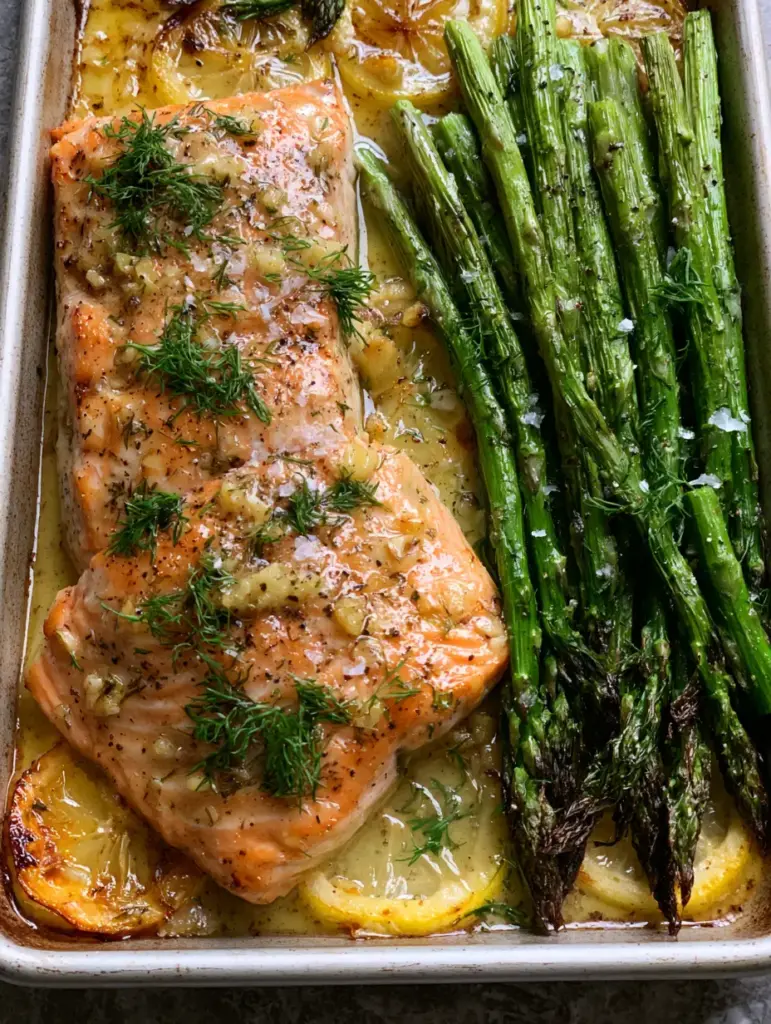
Look for the visual cues: the salmon should be opaque and the edges should appear slightly crisp. The asparagus tips should be blistered and dark green. For an extra seared look, turn on the broiler for the last 90 seconds until the butter glaze is bubbling and shimmering.
Top Culinary Secrets for Salmon Success
- Temperature Control: Never cook salmon straight from the fridge. Let it sit at room temperature for 15 minutes to ensure it cooks evenly from edge to center.
- The “Flake” Test: Use a fork to gently press the thickest part of the fillet; if it separates easily along the natural white lines (fats), it is ready.
- The Acid Balance: If your glaze feels too heavy, add a tiny pinch of lemon zest to the butter. The oils in the zest provide a more intense citrus flavor than the juice alone.
- Asparagus Sizing: If you can only find thick asparagus, peel the bottom two inches with a vegetable peeler so they cook at the same rate as the salmon.
Maximizing Your Meal: What to Serve with This Dish
This baked salmon with asparagus is a complete meal on its own, but it pairs beautifully with a side of crispy potatoes for a more substantial dinner. The saltiness of the potatoes complements the lemon-garlic glaze perfectly.
For a lighter option, consider serving the salmon over a bed of fresh greens or alongside a noodle salad. If you enjoy this flavor profile, you might also love our lemon garlic baked salmon which focuses more on the citrus infusion.
If you’re looking for more sheet pan inspiration, don’t miss our sheet pan lemon garlic butter salmon which utilizes similar techniques for a larger family-style serving.
Storage and Reheating Guidelines
Salmon is best enjoyed fresh, but leftovers can be stored in an airtight container in the refrigerator for up to 2 days. To maintain the flaky texture, avoid the microwave if possible.
Instead, reheat the salmon and asparagus in a 275°F (135°C) oven for about 10 minutes. This gentle heat warms the fish through without toughening the proteins or making the asparagus soggy.
Frequently Asked Questions
Yes, but you will lose the rich, shimmering glaze and the creamy mouthfeel that the butter provides. If using oil, use a high-quality extra virgin olive oil.
Yes, but they must be completely thawed and patted dry with paper towels to ensure the lemon-garlic butter glaze sticks and the edges sear properly.
Salmon is done when it is opaque and flakes easily with a fork. For precision, use a meat thermometer to reach an internal temperature of 135°F (57°C) for medium-rare/medium.
Store in an airtight container for up to 2 days. Reheat in a 275°F (135°C) oven for 10 minutes to avoid drying out the fish or making the asparagus rubbery.
Mushy asparagus usually results from overcrowding the pan or using spears that are too thick. Ensure they are in a single layer and use high heat (400°F/200°C) for that blistered effect.
The Ultimate Baked Salmon with Asparagus Recipe
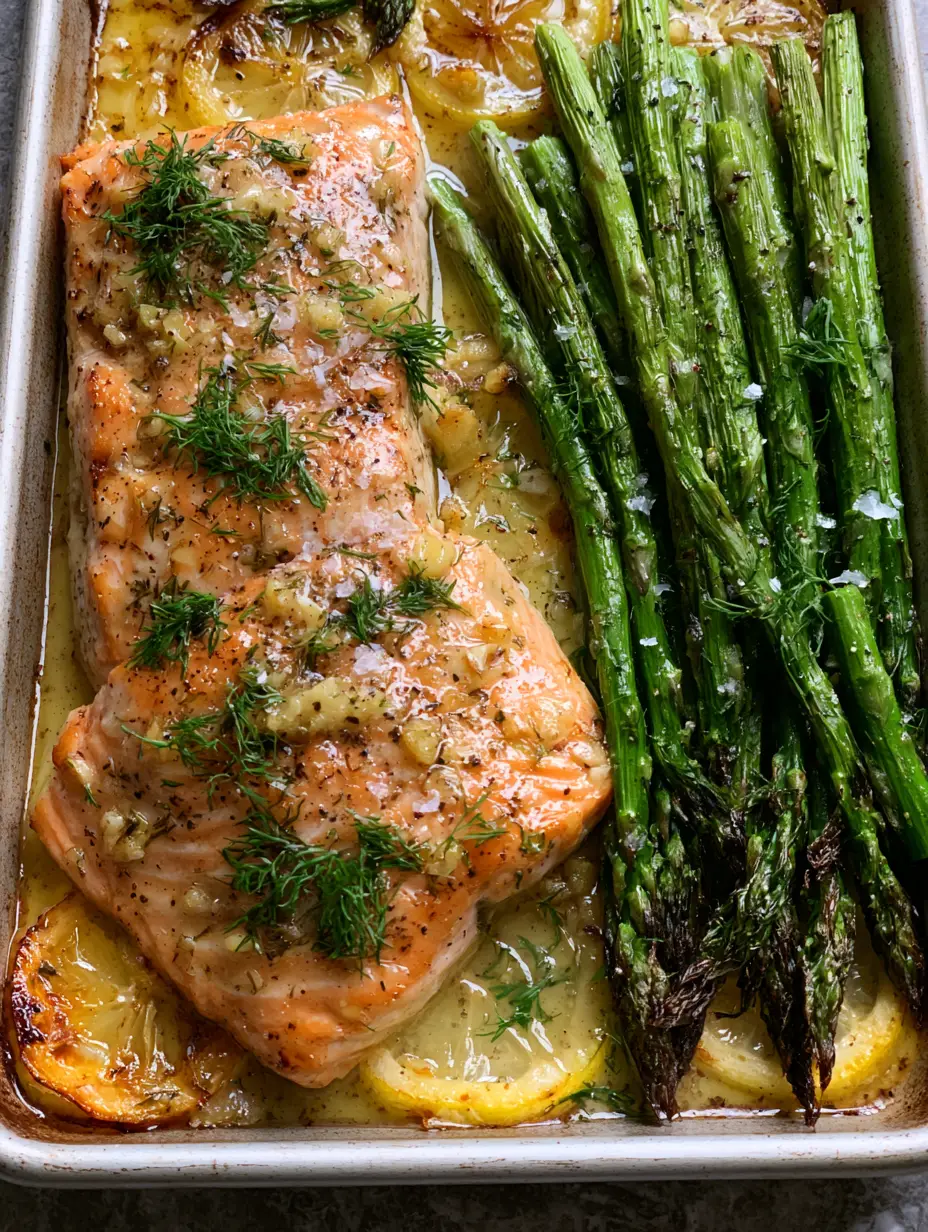
Baked Salmon with Asparagus: The Ultimate Sheet Pan Dinner Guide
Ingredients
Equipment
Method
- Preheat oven to 400°F (200°C). Pat salmon fillets completely dry with paper towels to ensure golden-brown edges.
- Place salmon and trimmed asparagus on the sheet pan. Drizzle with melted butter, lemon juice, and minced garlic.
- Layer lemon wheels over the salmon. Bake for 12-15 minutes until salmon is flaky and asparagus is charred and blistered.
- Remove from oven. Top with fresh dill, flaky sea salt, and cracked black pepper before serving.
Notes
Use the broiler for the final 90 seconds for extra seared edges.
Final Thoughts on This Healthy Sheet Pan Dinner
Mastering the baked salmon with asparagus is a gateway to stress-free, high-quality cooking. With its shimmering glaze, charred vegetables, and perfectly seared fish, it hits every sensory note required for a satisfying meal. The addition of fresh dill and flaky sea salt at the end provides that “restaurant-style” finish that will impress any guest.
If you loved this recipe, please leave a comment below and let us know how your salmon turned out! Don’t forget to follow us and share your creations on Pinterest for more culinary inspiration.