There is a specific kind of culinary magic that happens when the tropical brightness of fruit meets the savory richness of Atlantic salmon. This baked pineapple salmon isn’t just a meal; it’s a visual and sensory masterpiece that looks like it stepped straight off a professional food stylist’s set.
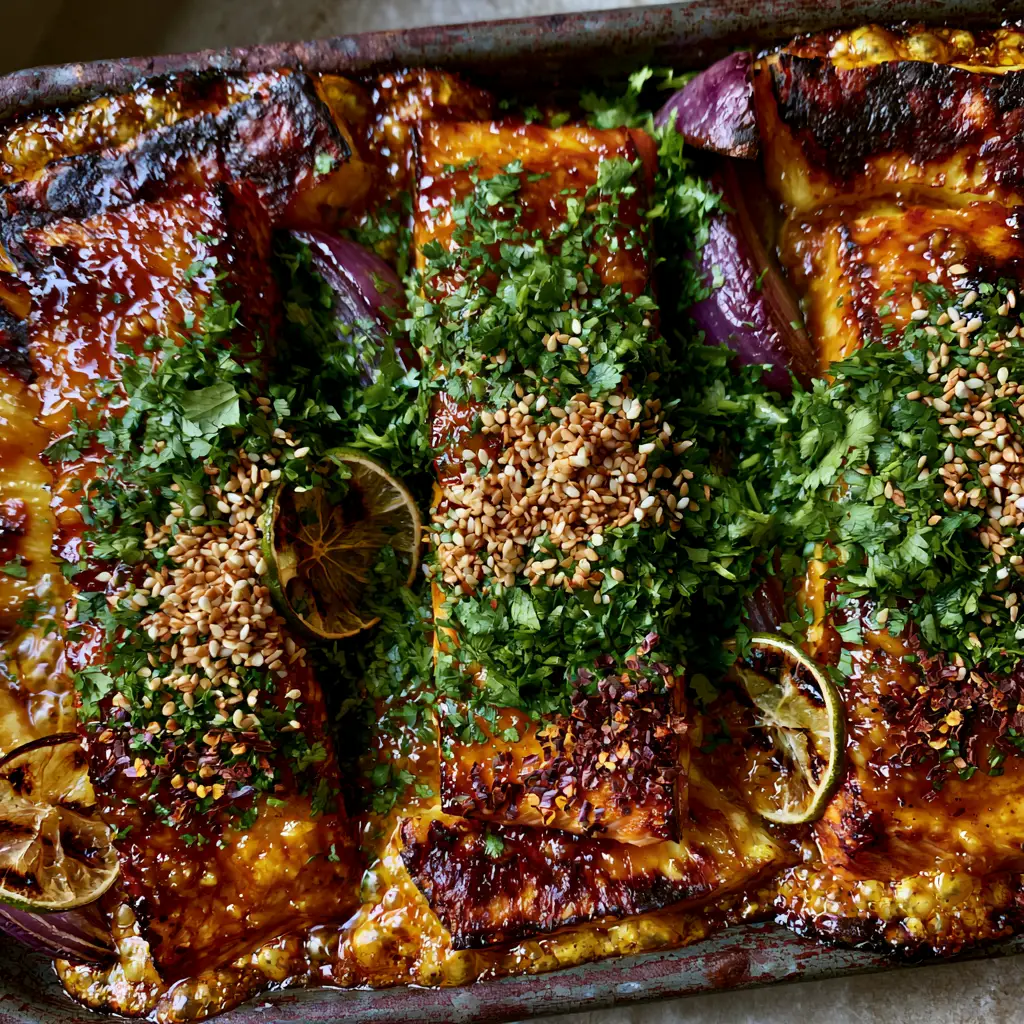
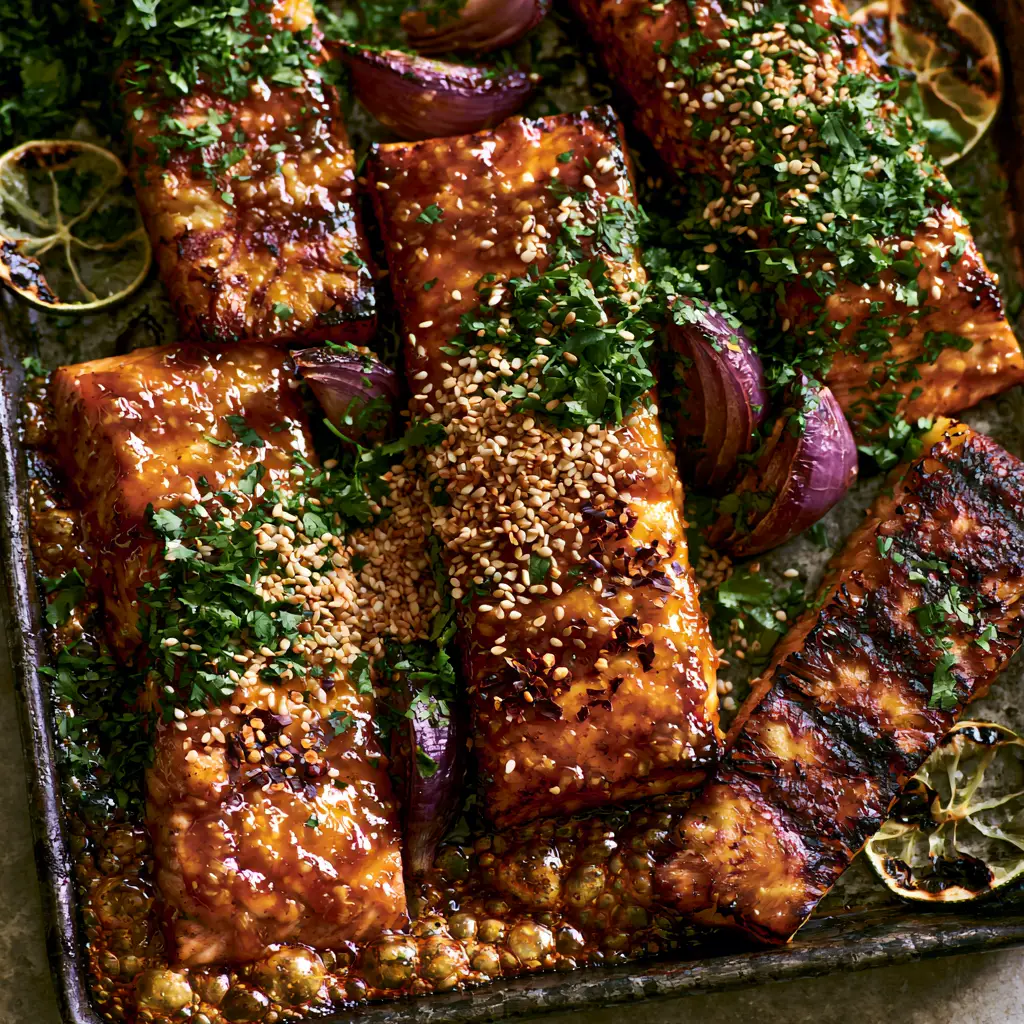
Imagine three thick, succulent Atlantic salmon fillets resting on a rustic dark sheet pan, each drenched in a thick, glistening amber-colored honey garlic glaze. As the heat of the oven works its charm, that glaze begins bubbling at the edges, creating a sticky, caramelized coating that is impossible to resist.
The soft morning daylight hitting the pan highlights the dark caramelized brown sear marks on fresh pineapple rings and the charred edges of thin lime wheels. A heavy shower of bright green cilantro, toasted white sesame seeds, and a pinch of dried red pepper flakes complete this vibrant, high-protein dinner.
Why This Tropical Sheet Pan Dinner is a Total Game Changer
- The Perfect Texture Contrast: You get flaky, tender fish paired with the firm, juicy snap of caramelized pineapple rings.
- Visual Showstopper: Between the charred lime slices and the vibrant red onion wedges, this dish offers a rainbow of colors that make it perfect for entertaining.
- Effortless Cleanup: By using a single sheet pan, you minimize the mess while maximizing the concentrated flavors of the roasted aromatics.
- The “Sticky” Factor: The honey garlic glaze reduces in the oven to a professional-grade lacquer that clings to every flake of the salmon.
The Tropical Pantry: Essentials for Your Baked Pineapple Salmon
To achieve the exact visual results seen in our photography, selecting the right ingredients is paramount. We aren’t just looking for flavor; we are looking for the structural integrity that holds up under the broiler.
Atlantic Salmon Fillets: You will need 3 thick fillets, approximately 6 oz (170g) each. Atlantic salmon is preferred here for its higher fat content, which ensures the fish stays moist even when the glaze is bubbling and caramelizing.
Fresh Pineapple Rings: While canned works in a pinch, fresh pineapple contains natural sugars that create those iconic dark brown sear marks. Slice them into 1/2-inch (1.25cm) rings for the best texture.
Honey and Garlic: These form the base of our amber glaze. Use 1/4 cup (60ml) of honey and 4 cloves of minced garlic to create that thick, glistening consistency that catches the light.
Red Onion Wedges: One large red onion, cut into thick wedges, provides a savory, earthy balance to the sweet fruit. As they roast, they become translucent and sweet.
Charred Lime Wheels: Two limes, sliced thinly, add essential acidity. When charred, they release deep citrus oils that cut through the richness of the honey garlic sauce.
The Finishing Garnishes: You must have 1/4 cup (10g) of fresh chopped cilantro, 1 tbsp (9g) of toasted white sesame seeds, and 1 tsp (2g) of dried red pepper flakes. These add the final layers of crunch, heat, and herbaceousness.
Foundational Fats and Seasoning: You will also need 2 tbsp (30ml) of avocado oil or olive oil to coat the onions and pineapple, and a generous pinch of sea salt to balance the sweetness.
Must-Have Kitchen Tools for a Perfect Sear
A rustic, dark-colored sheet pan is your best friend for this recipe. Darker pans absorb more heat, which helps in achieving those deep brown caramelization marks on the bottom of the pineapple and onions.
A high-quality pastry brush is also essential. This allows you to paint the honey garlic glaze onto the salmon in layers, ensuring every nook and cranny is glistening and covered.
Lastly, a sharp chef’s knife is required for the precision needed to slice the lime wheels thin enough to char without disintegrating, and to finely mince the cilantro for that professional “shower” effect.
Step-by-Step Instructions for the Perfect Baked Pineapple Salmon
Preparing the Sheet Pan Landscape
Preheat your oven to 400°F (200°C). Lightly grease your dark sheet pan with a small amount of oil to prevent the sugars in the glaze from sticking too aggressively.
Arrange the three Atlantic salmon fillets in the center of the pan, leaving space between them. In the surrounding areas, tuck in the pineapple rings, red onion wedges, and the lime slices.
Drizzle the fruit and vegetables with 1 tbsp (15ml) of oil and a pinch of salt. Do not oil the salmon yet, as we want the glaze to adhere directly to the protein.
Mastering the Amber Honey Garlic Glaze
In a small saucepan over medium heat, whisk together the honey, minced garlic, a splash of soy sauce (optional for depth), and a squeeze of lime juice. Simmer for 3-4 minutes until it thickens slightly.
The glaze should be thick enough to coat the back of a spoon. If it is too thin, it will run off the salmon and pool on the pan instead of creating that beautiful, bubbling crust.
The Roasting and Caramelization Process
Generously brush the salmon fillets with half of the glaze. Place the pan in the center rack of the oven and bake for 12-15 minutes.
For the final 2-3 minutes, turn the oven to the “Broil” setting. Watch closely—this is when the magic happens. You want to see the glaze bubbling at the edges and the pineapple developing those dark caramelized brown sear marks.
Remove the pan when the lime wheels look slightly charred and the salmon flakes easily with a fork. The glaze should look like glistening amber under the kitchen lights.
The Final Garnish Shower
While the pan is still sizzling, apply the remaining glaze to the salmon for maximum shine. Now, begin the layering of textures.
Start with a heavy shower of the bright green chopped cilantro. Follow this with a generous sprinkle of toasted white sesame seeds, and finish with the dried red pepper flakes for a pop of color and heat.
Expert Tips for Culinary Success
- Pat the Salmon Dry: Before adding the glaze, use a paper towel to remove excess moisture from the fish. This ensures the glaze sticks rather than sliding off.
- Temperature Control: Use an instant-read thermometer to check the salmon. It should reach an internal temperature of 145°F (63°C) for the perfect flaky texture.
- Pineapple Placement: Ensure the pineapple rings are in direct contact with the pan. This is what creates the “sear” marks that a smartphone camera picks up so well.
- Fresh vs. Toasted Seeds: Always toast your sesame seeds in a dry pan for 2 minutes before using. The aroma and crunch are significantly better than raw seeds.
Smart Storage and Reheating Methods
If you have leftovers, this baked pineapple salmon stays delicious for up to 2 days when stored in an airtight container in the refrigerator. The glaze will thicken further when cold.
To reheat, avoid the microwave if possible, as it can make the salmon rubbery. Instead, place the fillets back on a sheet pan, cover loosely with foil, and warm in a 300°F (150°C) oven until heated through.
We do not recommend freezing this specific dish. The high water content in the roasted pineapple and onions will lead to a mushy texture upon thawing, ruining that beautiful visual contrast.
What to Serve with Your Tropical Salmon
Since this is a vibrant, bold dish, you want side dishes that can soak up that extra honey garlic glaze. A simple bed of jasmine rice or a light refreshing noodle salad works beautifully.
If you are looking to keep things low-carb, try pairing this with roasted cauliflower steaks or some crispy air fryer zucchini to maintain that healthy dinner vibe.
For those who love a full sheet-pan spread, you could even add some asparagus to the pan midway through, similar to how we prepare our salmon with asparagus recipe.
Frequently Asked Questions
Absolutely! You can prepare the glaze up to 3 days in advance. It will thicken in the fridge, so just warm it slightly before brushing it onto the fish.
Yes, but ensure you pat the rings dry thoroughly. Canned pineapple has more moisture and may not develop the same deep brown sear marks as fresh slices.
The salmon is done when the thickest part reaches 145°F (63°C) or when the meat easily flakes with a fork while remaining moist in the center.
For this recipe, skin-on is preferred as it helps the fillet hold its shape on the sheet pan, and it protects the bottom of the fish from drying out.
Slice the limes very thin (about 1/8 inch) and place them on the sheet pan from the beginning. The high heat and the natural sugars in the lime will char them perfectly by the time the salmon is cooked.
The Ultimate Baked Pineapple Salmon Recipe Card
Baked Pineapple Salmon with a Glistening Honey Garlic Glaze
Ingredients
Equipment
Method
- Preheat oven to 400°F (200°C) and grease a dark rustic sheet pan.
- Place salmon, pineapple rings, red onion wedges, and lime slices on the pan. Drizzle produce with oil and salt.
- Whisk honey and garlic in a small pan over heat until thickened. Brush half onto the salmon.
- Bake for 12 minutes, then broil for 2-3 minutes until glaze is bubbling and pineapple is charred.
- Apply remaining glaze and shower with cilantro, sesame seeds, and red pepper flakes.
Notes
Pat the salmon extremely dry before glazing to ensure it sticks.
Closing & Call to Action
This baked pineapple salmon is a testament to how simple ingredients, when treated with the right culinary techniques, can create a five-star dining experience at home. The combination of the bubbling honey garlic glaze and charred fruit is a flavor profile your family will request again and again.
If you enjoyed this recipe, please leave a comment below and let us know how your caramelization turned out! Don’t forget to snap a photo and share it with us on Pinterest. For more inspiration, check out our other healthy dinner ideas to keep your weeknight meals exciting.