There is a specific kind of culinary magic that happens when high heat meets the natural sugars of root vegetables. Roasted Beets and Carrots are not just a side dish; they are a masterclass in texture and vibrant color. This recipe transforms humble earth-grown roots into a gourmet centerpiece that looks like it stepped off the pages of a high-end food magazine.
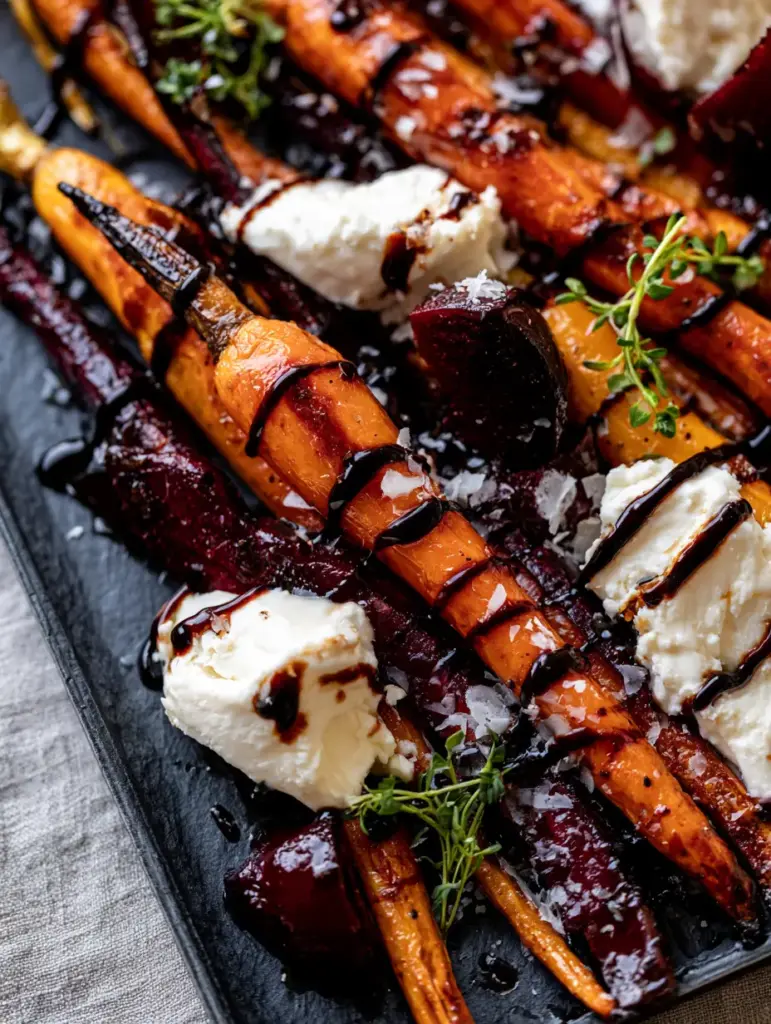
Imagine deep crimson beets and multi-colored heirloom carrots resting on a dark slate tray, their edges perfectly blistered and charred. A glistening honey glaze coats every inch, catching the light while a thick, syrupy balsamic reduction creates dramatic dark zig-zags across the plate. The heat from the vegetables slightly softens large chunks of tangy goat cheese, creating a sensory experience that is as beautiful as it is delicious.
This Roasted Beets and Carrots dish is designed to be the “hero” of your dinner table. Whether you are looking for a sophisticated holiday side or a way to elevated a simple and tasty recipe for a weeknight meal, the combination of earthy, sweet, and tangy flavors here is unmatched.
Why These Caramelized Root Vegetables Will Steal the Show
- The Maillard Reaction: By using a high-heat roasting method on a dark ceramic pan, we achieve those coveted charred, blistered edges that provide a smoky depth to the sweetness.
- Gourmet Visual Appeal: The contrast between the deep red beets, the orange and purple heirloom carrots, and the snow-white goat cheese is breathtaking.
- Complex Flavor Profile: We balance the earthy notes of the beets with the floral sweetness of honey and the sharp, acidic punch of a balsamic reduction.
- Textural Contrast: You get the snap of the carrot, the tender bite of the beet, the creaminess of the cheese, and the crystalline crunch of Maldon sea salt.
The Anatomy of Perfect Roasted Beets and Carrots
Heirloom Carrots: Look for a bunch with varying colors like deep purple, bright yellow, and classic orange. We halve them lengthwise to ensure maximum surface area for caramelization against the pan.
Red Beets: Choose firm, medium-sized beets and quarter them. Their dense structure requires a slightly different approach than the carrots to ensure they become tender and sweet without drying out.
Extra Virgin Olive Oil: This is our foundational fat, providing the necessary conduit for heat. It helps the vegetables reach that “blistered” state without burning the sugars too quickly.
Raw Honey: This creates the “glossy honey glaze” described in our visual blueprint. It adheres to the vegetables as they roast, creating a sticky, lacquered finish.
Balsamic Reduction: Do not confuse this with standard balsamic vinegar. We need a thick, syrupy consistency to achieve those elegant zig-zags that won’t simply run off the vegetables.
Fresh Micro-Thyme: These tiny green leaves provide an essential herbal lift. Their bright green color pops against the dark vegetables, adding both visual flair and an earthy aroma.
Crumbled Goat Cheese: Choose a high-quality, creamy variety. Placing the chunks on the hot vegetables allows them to soften just enough to become spreadable and luxurious.
Flaky Sea Salt: A heavy pinch of Maldon salt is the final “forensic” detail. The large flakes catch the light and provide a burst of salinity that cuts through the honey’s sweetness.
Essential Tools for Professional Roasting
To achieve the specific “dark slate” aesthetic and the perfect char, equipment choice matters. A dark grey ceramic sheet pan or a slate baking stone is ideal because dark surfaces absorb more heat, promoting better browning on the bottom of the vegetables.
You will also need a sharp chef’s knife for clean, uniform cuts. When you halve the carrots and quarter the beets, precision ensures that every piece finishes cooking at the exact same moment. A small whisk and bowl are necessary for emulsifying the honey and oil before coating the roots.
The Culinary Science of High-Heat Caramelization
Preparing the Roots for the Pan
Start by preheating your oven to 400°F (200°C). Wash 1 lb (450g) of heirloom carrots and 1 lb (450g) of red beets thoroughly. Peel the beets to reveal their deep crimson interior, then quarter them into uniform wedges.
For the carrots, leave about an inch of the green tops if they are fresh for a rustic look. Halve them lengthwise. In a large bowl, toss the vegetables with 3 tbsp (45ml) of olive oil and 2 tbsp (30ml) of honey until they are glistening and fully coated.
Mastering the Roast and the Char
Spread the vegetables in a single layer on your dark grey ceramic sheet pan. Ensure they are not crowded; if they touch too much, they will steam instead of roast. You want the dry heat of the oven to hit every surface to create those blistered edges.
Roast for 30-35 minutes. Halfway through, use a metal spatula to toss them gently. Look for the visual cue: the honey should be bubbling and the edges of the carrots should look dark and slightly shriveled, indicating concentrated flavor.
The Finishing Architectural Drizzles
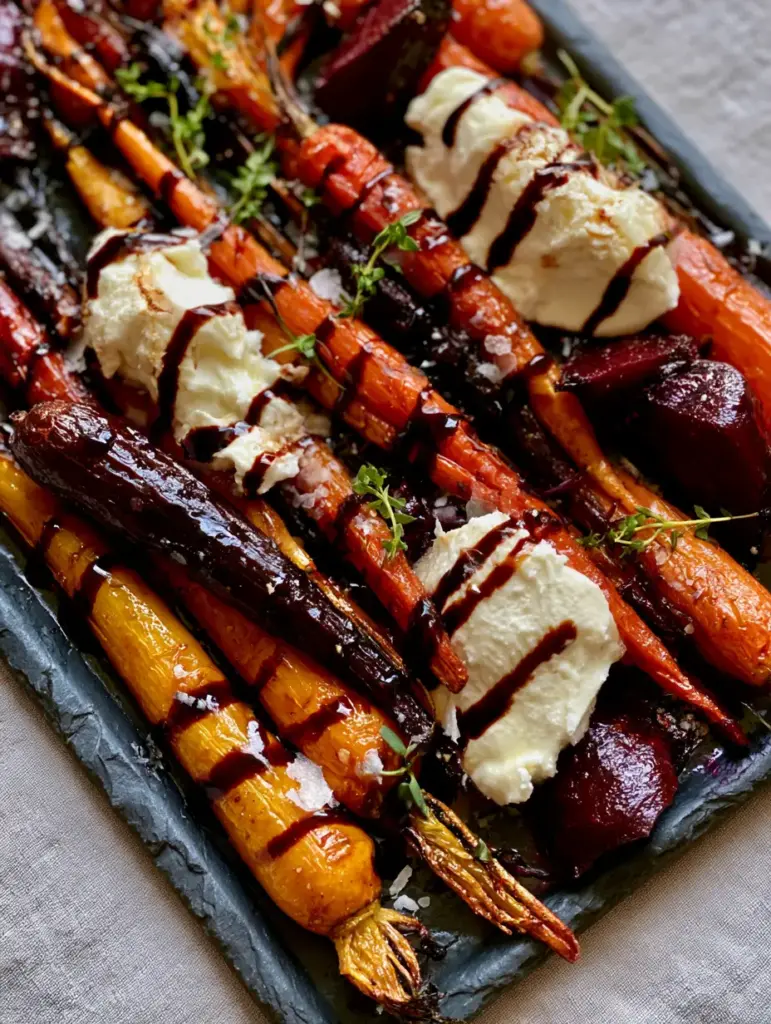
Once the vegetables are tender and charred, remove the pan from the oven. While they are still piping hot, scatter 4 oz (115g) of crumbled goat cheese over the top. The residual heat will soften the cheese, making it look creamy and inviting.
Take your thick balsamic reduction and drizzle it in a confident zig-zag motion across the entire tray. Finish with a generous scatter of fresh micro-thyme and a heavy pinch of flaky sea salt. The salt should be visible, like tiny diamonds against the dark glaze.
Expert Tips for the Ultimate Vegetable Platter
- Temperature Control: If your carrots are very thin and your beets are large, add the carrots to the pan 10 minutes after the beets have started roasting. This prevents the carrots from over-charring.
- The Gloss Factor: If the vegetables look dry when they come out, a tiny extra drizzle of honey while they are hot will restore that “macro-shot” glossiness.
- Cheese Texture: Do not use pre-crumbled goat cheese if possible. Buying a log and breaking it into large “chunks” by hand provides a much better visual and creamy mouthfeel.
- Color Bleeding: Be aware that red beets will “bleed” their color onto the carrots. If you want the heirloom colors to stay distinct, roast them on separate sides of the pan.
The Best Way to Store and Reheat Leftovers
These Roasted Beets and Carrots are best served immediately to maintain the contrast between the hot vegetables and the softening cheese. However, they can be stored in an airtight container for up to 3 days in the refrigerator.
When reheating, avoid the microwave, as it will make the vegetables rubbery and the cheese oily. Instead, place them back on a baking sheet in a 350°F (175°C) oven for 10 minutes. Add a fresh drizzle of balsamic and a new sprinkle of thyme to revive the flavors.
Creative Pairings for a Complete Feast
This vibrant side dish pairs beautifully with protein-heavy mains. It is a natural companion to a hearty chicken shawarma recipe or a piece of roasted salmon. The earthiness of the beets also complements the savory depth of middle-eastern kofta.
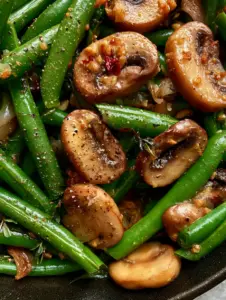
If you are looking for a vegetarian spread, serve these vegetables alongside garlic butter sautéed green beans and mushrooms. The combination of different vegetable textures and glazes creates a restaurant-quality experience at home. For a lighter lunch, pair them with a bowl of roasted tomato soup.
Your Questions About Roasting Roots Answered
Yes, but goat cheese is preferred for its ability to soften slightly from the heat, creating a creamy contrast that feta (which stays firm) cannot match.
For heirloom carrots, scrubbing them thoroughly is usually enough. Leaving the skin on provides a more rustic texture and helps achieve those beautiful blistered edges.
The secret is emulsifying the honey with olive oil before roasting. The high heat thickens the honey into a lacquer that coats the vegetables perfectly.
Beets are denser than carrots. If your beets are large, ensure you quarter them into smaller wedges or give them a 10-minute head start in the oven.
Use a ‘Balsamic Glaze’ or ‘Reduction’. Standard balsamic vinegar is too thin and will run off the vegetables instead of creating the defined lines seen in the photos.
The Perfect Roasted Beets and Carrots Recipe
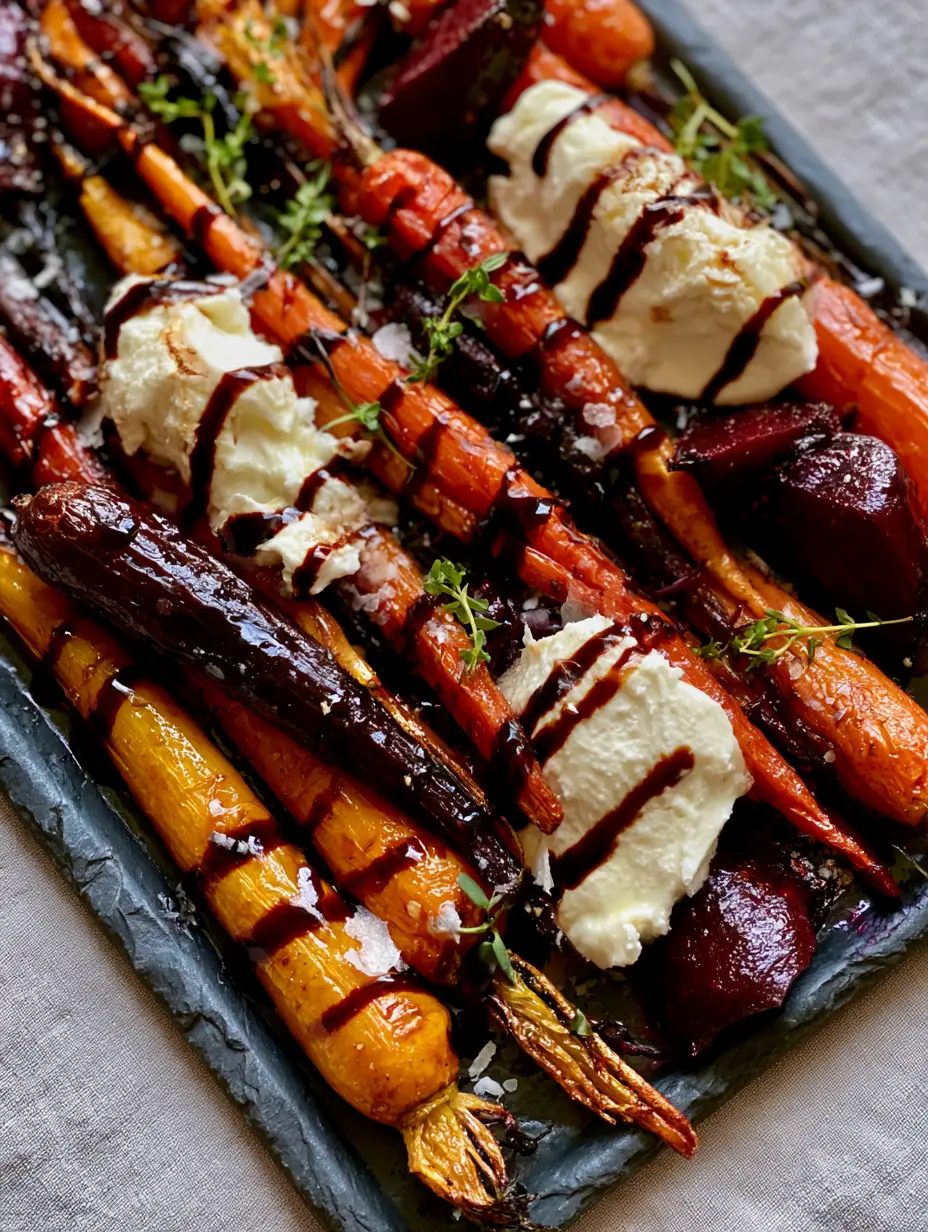
Roasted Beets and Carrots with Honey Glaze and Creamy Goat Cheese
Ingredients
Equipment
Method
- Preheat your oven to 400°F (200°C). Peel the red beets and quarter them into uniform wedges. Halve the heirloom carrots lengthwise, leaving a bit of the green stem for visual appeal.
- In a small bowl, whisk together the olive oil and honey. Place the vegetables in a large mixing bowl, pour the mixture over them, and toss until every surface is glossy.
- Spread the carrots and beets onto a dark grey ceramic sheet pan in a single layer. Ensure there is space between pieces to promote charring.
- Roast for 30-35 minutes, tossing halfway through. Look for blistered, charred edges on the carrots and tender, caramelized centers in the beets.
- Remove from the oven and immediately scatter the goat cheese chunks over the hot vegetables. Drizzle the thick balsamic reduction in elegant zig-zags.
- Finish with a heavy pinch of flaky sea salt and the fresh micro-thyme leaves. Serve directly from the slate pan for a rustic, macro-ready look.
Notes
Ensure the balsamic is a reduction, not just vinegar.
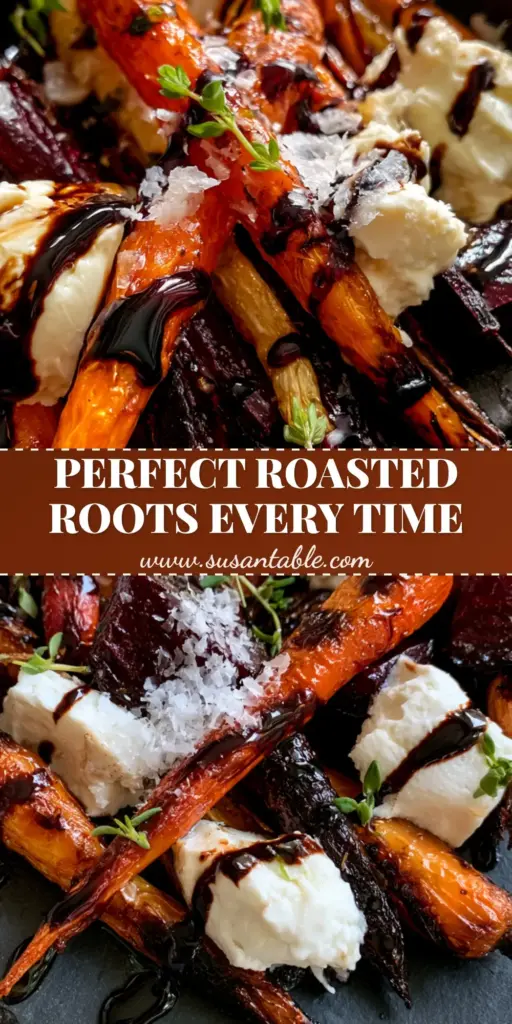
Join Our Culinary Community
We hope this Roasted Beets and Carrots recipe becomes a staple in your kitchen. The balance of charred edges and sweet honey glaze is a crowd-pleaser every time. If you make this dish, please leave a comment below and let us know how your caramelization turned out!
Don’t forget to follow us on Pinterest for more visually stunning recipe inspiration. Share your photos with us; we love seeing your “forensic” recreations of our recipes!