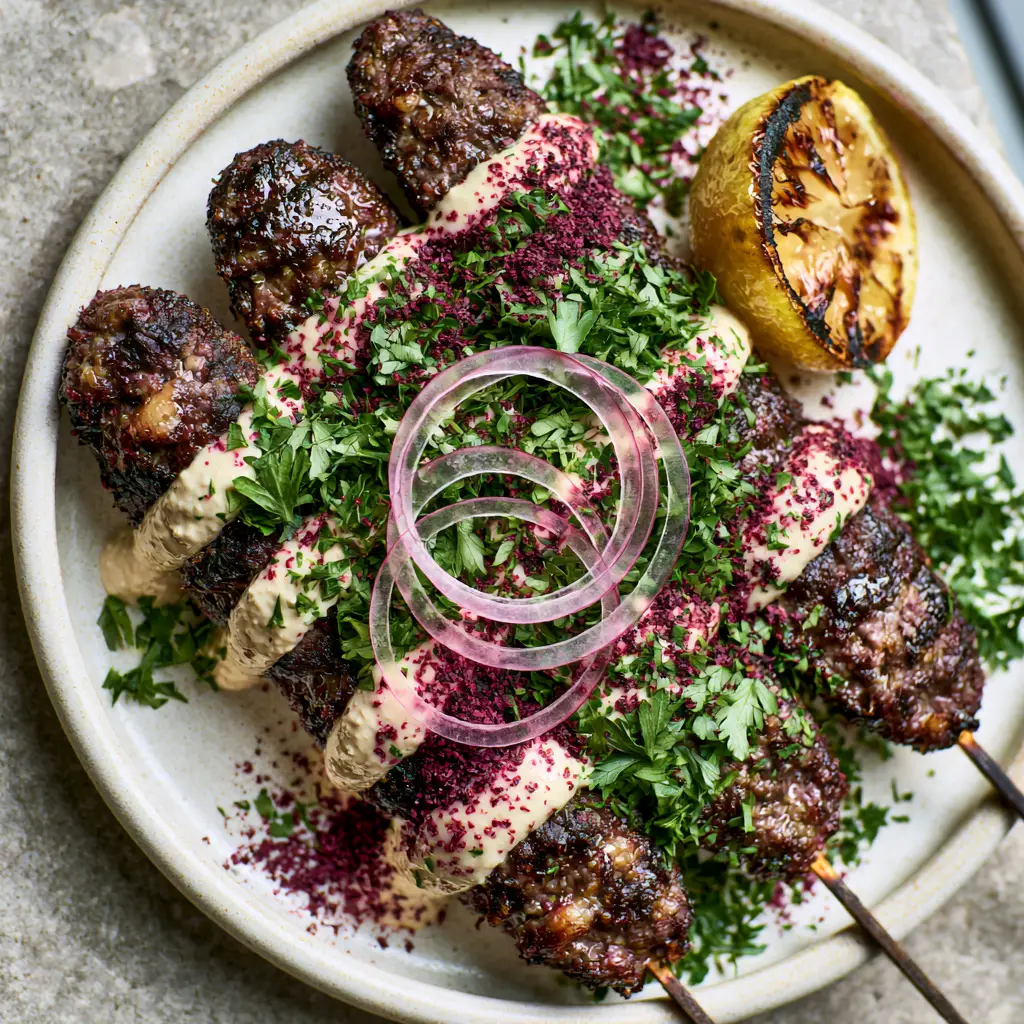
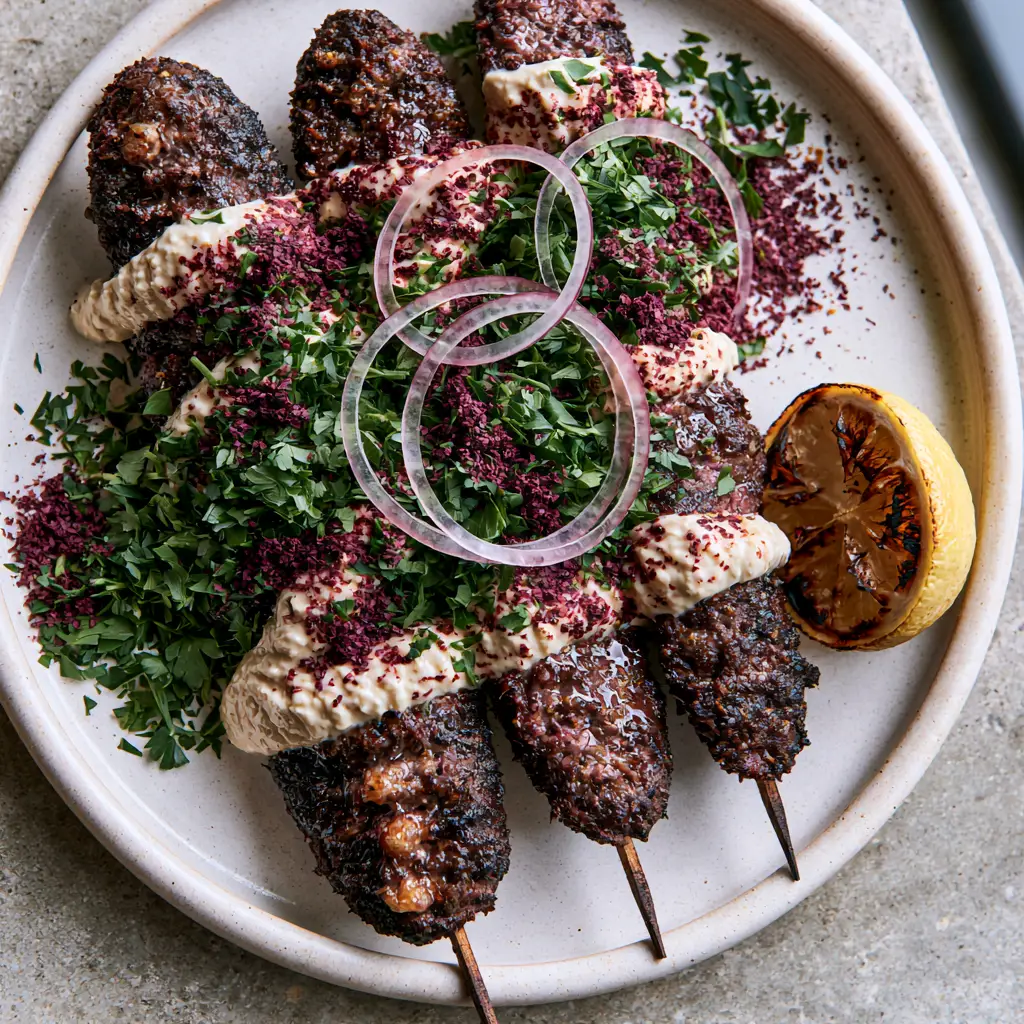
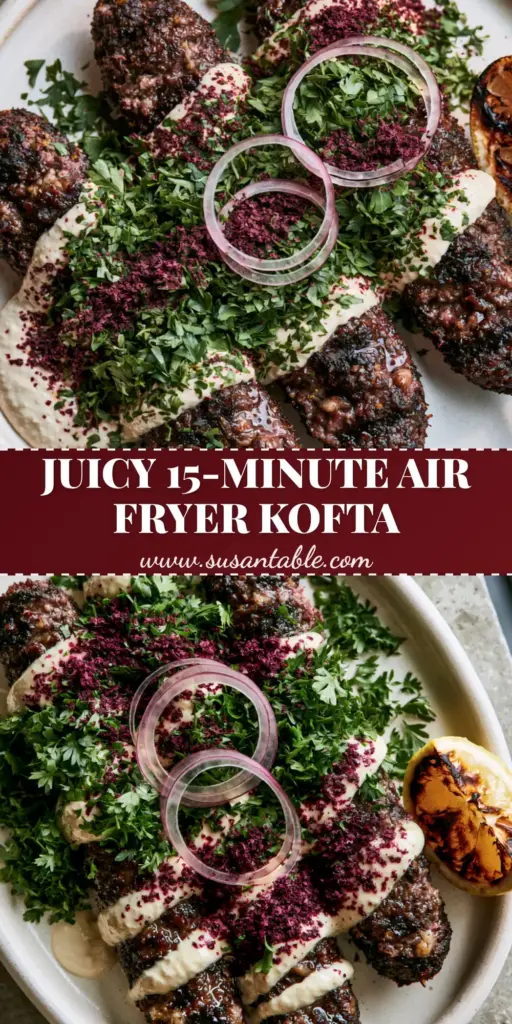
There is nothing quite like the sensory explosion of a perfectly executed middle eastern kofta. Imagine three long, oval-shaped skewers resting on a cool, off-white ceramic plate, their surfaces boasting a deep, dark brown char that speaks of high-heat mastery. The glistening fat catches the light, promising a coarse, meaty texture that melts upon the first bite.
This recipe isn’t just about cooking meat; it’s about the architecture of flavor. We crown the beef with a thick, ivory-colored tahini sauce drizzled in a precise zig-zag, followed by a forest-green confetti of parsley and the deep burgundy glow of sumac. It is a dish designed for the eyes as much as the palate, featuring translucent red onion rings and a caramelized lemon half that adds a bright, acidic punch to the rich, natural meat juices.
Whether you are recreating the vibrant street food of the Levant or hosting a sophisticated dinner party, this middle eastern kofta is the centerpiece you need. Every element, from the smoky crust to the velvety sauce, has been engineered to provide a professional-grade culinary experience in your home kitchen.
The Visual and Flavor Profile of This Masterpiece
- High-Contrast Aesthetics: The contrast between the dark, charred beef and the bright ivory tahini creates a stunning visual that mimics high-end restaurant plating.
- Complex Textural Layers: You get the crunch of the char, the creaminess of the sauce, the snap of the raw red onions, and the tenderness of the ground beef.
- Symphony of Acidity: Between the sumac powder and the caramelized lemon half, the richness of the 80/20 beef is perfectly balanced.
- Aromatic Depth: The combination of fresh flat-leaf parsley and warm spices ensures every bite smells as good as it looks.
Essential Elements for Authentic Charred Beef Kofta
To achieve the results seen in our visual blueprint, you must start with the right foundation. Do not settle for lean meat; the “glistening fat” mentioned in the prompt requires a specific fat-to-lean ratio.
Ground Beef (80/20 Blend): Use 1 lb (450g) of high-quality ground beef. The 20% fat content is non-negotiable, as it renders during the charring process to create those essential natural meat juices.
Pure Sesame Tahini: You will need 1/2 cup (120ml) of premium tahini. This serves as the base for our thick, ivory drizzle, providing a nutty, earthy counterpoint to the savory meat.
Fresh Flat-Leaf Parsley: One large bunch (approx. 50g) of parsley is required. We will finely chop this into a “forest-green confetti” to provide a fresh, herbal lift.
Red Sumac Powder: 1 tbsp (8g) of ground sumac. This burgundy-colored spice is critical for both its citrusy flavor and its vibrant visual pop against the meat.
Red Onion: One small red onion, sliced into ultra-thin, translucent rings. These provide a sharp, crisp bite and a beautiful purple-hued garnish.
Fresh Lemon: One large lemon, halved. We will caramelize one half specifically to serve alongside the skewers, intensifying its sugars and juice.
Foundational Spices & Aromatics: 2 cloves (10g) of minced garlic, 1 tsp (5g) of kosher salt, 1/2 tsp (2g) of cracked black pepper, and 1 tsp (2g) of ground cumin. These “invisible” ingredients build the internal flavor profile.
Ice Water: 2-4 tbsp (30-60ml) of ice-cold water. This is the secret to transforming thick tahini paste into a smooth, zig-zag-ready ivory sauce.
Pro Tools for Achieving the Perfect Macro-Shot Char
While the ingredients provide the flavor, your equipment dictates the texture. To get that “deep, dark brown char,” you need focused, high heat.
A heavy-duty cast iron grill pan or an outdoor charcoal grill is essential for the searing process. These surfaces retain the heat necessary to caramelize the exterior of the meat without overcooking the center.
You will also need flat metal skewers. Unlike round wooden skewers, flat metal ones prevent the meat from spinning, allowing you to achieve a uniform char on all sides of the oval-shaped kofta.
Finally, a sharp mandoline or a very sharp chef’s knife is required to get the red onion rings truly “translucent.” If the onions are too thick, they will overwhelm the delicate balance of the plate.
Mastering the Art of Middle Eastern Kofta Construction
Step 1: Preparing the Meat Matrix
In a large chilled bowl, combine your 1 lb (450g) of ground beef with the minced garlic, salt, pepper, and cumin. Use your hands to mix gently but thoroughly.
Avoid over-working the meat, which can lead to a rubbery texture; you want the “coarse, meaty texture” described in the visual prompt. Let the mixture chill in the refrigerator for 30 minutes to allow the proteins to set.
Step 2: Shaping the Iconic Oval Skewers
Divide the meat into three equal portions. Wet your hands slightly to prevent sticking, and mold each portion around a skewer into a long, oval shape, approximately 6 inches (15cm) in length.
Press firmly so the meat adheres to the skewer, but keep the surface slightly textured. Those small ridges are what will catch the heat and create the “dark brown char” highlights.
Step 3: The High-Heat Searing Ritual
Preheat your grill or cast-iron pan to medium-high heat. Lightly brush the surface with a high-smoke-point oil.
Place the skewers and the lemon half (cut-side down) onto the heat. Sear the kofta for 4-5 minutes per side. You are looking for a visual cue: the meat should easily release from the grate once a deep crust has formed.
Continue turning until the exterior is dark and glistening with rendered fat. The lemon half is ready when the edges are blackened and the face is a deep golden brown.
Step 4: Emulsifying the Ivory Tahini Drizzle
While the meat rests, whisk the tahini with a splash of lemon juice and a pinch of salt. It will initially seize and become thick.
Slowly whisk in ice water, one tablespoon at a time, until it reaches a “thick ivory” consistency that can hold a zig-zag shape. It should be viscous enough to sit on top of the meat rather than soaking in immediately.
Expert Tips for Success
- Temperature Control: Ensure your meat is cold before it hits the hot pan. This temperature differential helps create a better crust while keeping the inside juicy.
- The Resting Phase: Let the kofta rest for 3 minutes on the ceramic plate before garnishing. This allows the “natural meat juices” to pool slightly, adding to the visual appeal.
- Parsley Technique: Wash and dry your parsley thoroughly before chopping. Wet parsley will clump; bone-dry parsley creates the “confetti” effect.
- Sumac Placement: Dust the sumac from a height of about 10 inches to ensure a light, even “burgundy dusting” rather than concentrated clumps.
The Science of Storage and Reheating
Middle eastern kofta is best enjoyed immediately to appreciate the contrast of hot meat and cold tahini. However, leftovers can be stored in an airtight container for up to 3 days.
To reheat, avoid the microwave as it will toughen the meat and ruin the char. Instead, place the skewers in a 350°F (175°C) oven for 8-10 minutes until the fat begins to glisten again.
The tahini sauce should be stored separately. If it thickens too much in the fridge, simply whisk in a teaspoon of warm water to restore its drizzling consistency.
What to Serve With This Flavor-Packed Plate
To create a full Middle Eastern spread, consider pairing these skewers with other regional favorites. The smoky beef pairs beautifully with a side of authentic chicken shawarma for a high-protein feast.
For a lighter side, the acidity of the charred lemon complements honey-roasted beets and carrots perfectly. If you want to start the meal with a warm appetizer, a bowl of garlic chickpea soup sets the stage for the rich flavors to follow.
If you have leftovers, they make an incredible filling for a pita wrap, topped with a scoop of hearty lentil vegetables on the side for a complete lunch.
Frequently Asked Questions
Yes, a cast-iron grill pan or even a heavy stainless steel skillet can work. The key is preheating the pan until it is smoking hot to achieve the required dark brown char.
Use a mandoline set to the thinnest possible gauge, or a very sharp chef’s knife. Once sliced, you can soak them in ice water for 10 minutes to make them even crispier and more vibrant.
Sumac has a bright, acidic, and slightly floral flavor profile similar to lemon juice but with more earthy depth. It provides a sharp contrast to the rich, fatty beef.
An 80/20 lean-to-fat ratio is ideal. The fat renders during cooking to create the ‘glistening’ appearance and provides the moisture needed for a tender, coarse texture.
Tahini naturally contains solids that tighten when a small amount of liquid is added. Continue whisking in ice-cold water one tablespoon at a time; it will eventually emulsify into a smooth, ivory-colored sauce.
The Signature Middle Eastern Kofta Recipe
Middle Eastern Kofta: The Ultimate Guide to Charred Beef Skewers with Tahini
Ingredients
Equipment
Method
- Combine beef, garlic, salt, pepper, and cumin in a chilled bowl. Mix gently by hand until just combined.
- Shape meat into 3 long, oval portions around flat metal skewers. Chill for 30 minutes.
- Sear skewers on high heat for 4-5 minutes per side until a deep dark brown char forms and fat glistens.
- Place lemon half cut-side down on the grill until edges are blackened and surface is caramelized.
- Emulsify tahini with lemon juice and ice water until it reaches a thick ivory zig-zag consistency.
- Drizzle tahini over kofta, then top with parsley confetti, sumac powder, and translucent onion rings.
Notes
Ensure parsley is perfectly dry before chopping for the confetti effect.
Closing & Call to Action
Mastering the middle eastern kofta is a rite of passage for any home cook who loves bold, fire-kissed flavors. By focusing on the “Visual Recipe Blueprint”—from the translucent onion rings to the burgundy sumac—you aren’t just making dinner; you are creating a work of art.
Did your skewers achieve that perfect dark char? Let us know in the comments below! If you enjoyed this culinary deep-dive, be sure to share this recipe with your friends and save it to your favorite boards on Pinterest.