There is a specific kind of culinary magic that happens when high-heat roasting meets the sharp, sweet tang of a honey-mustard emulsion. This Honey Dijon Baked Salmon isn’t just another seafood recipe; it is a masterclass in texture and visual appeal, designed to replicate that “perfect bite” every single time.
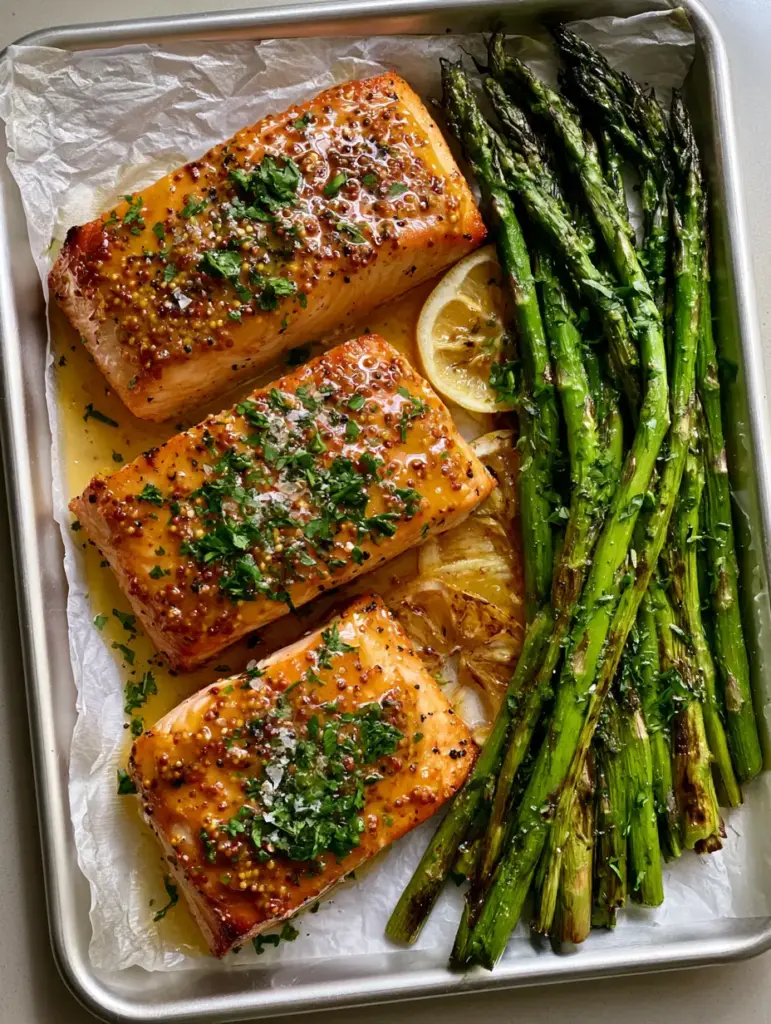
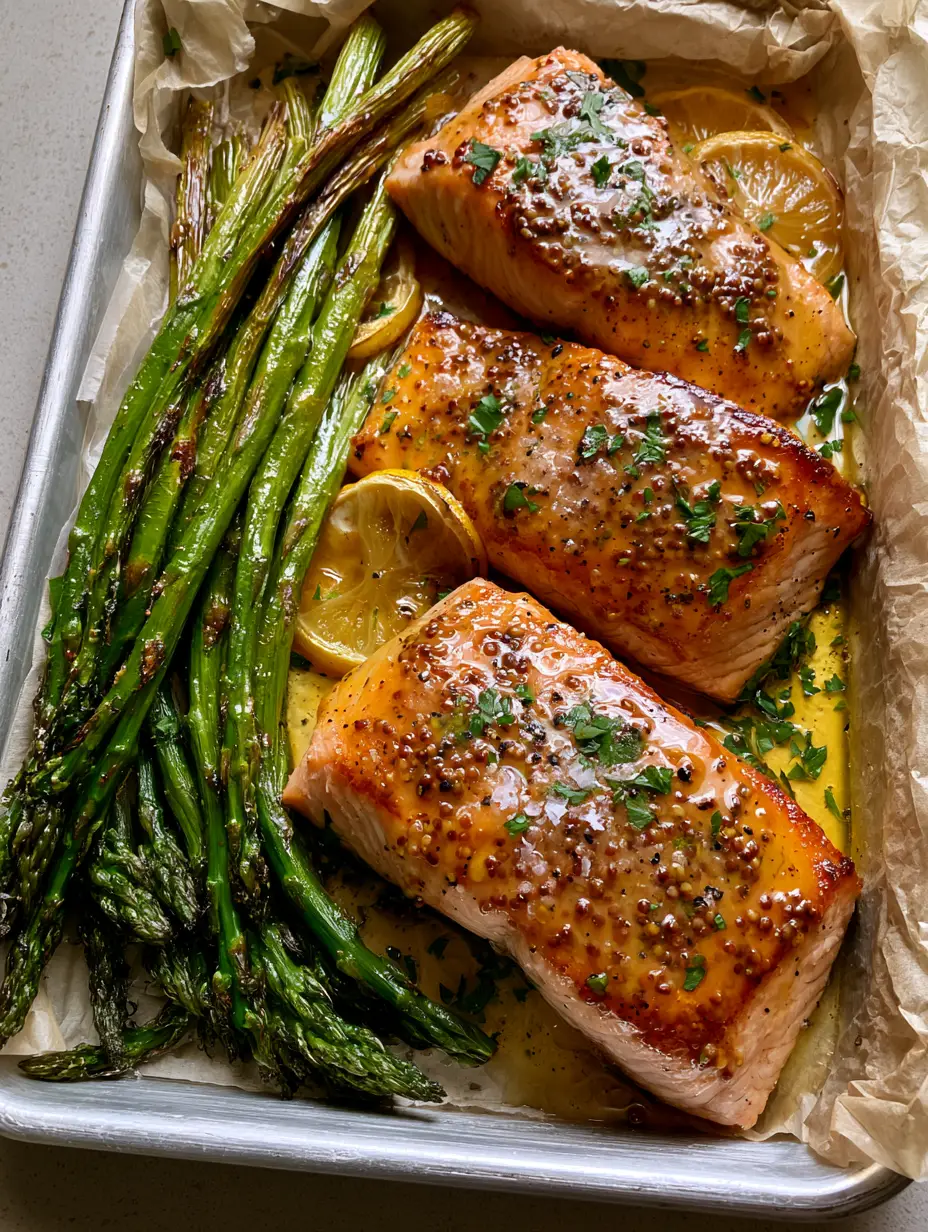
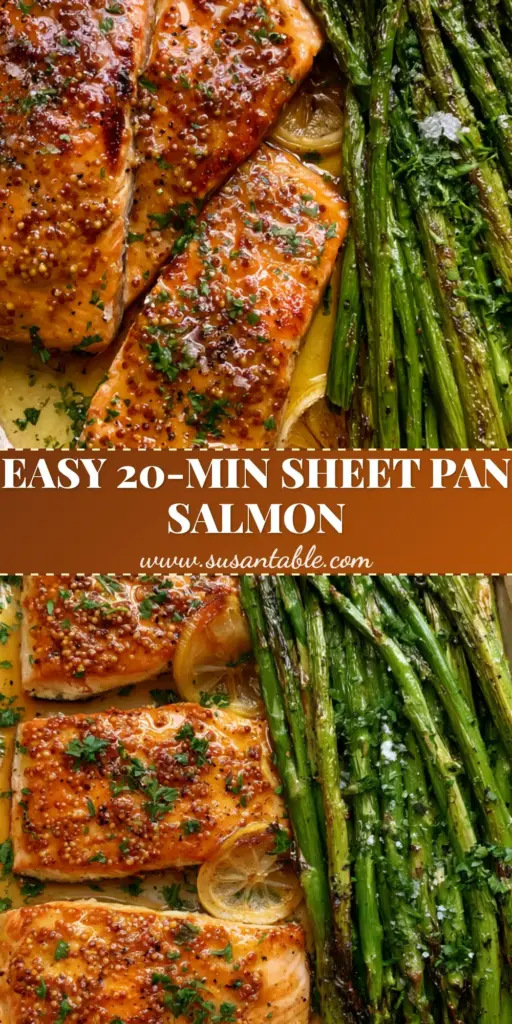
Imagine pulling a brushed aluminum sheet pan from the oven to find three thick, center-cut Atlantic salmon fillets. The edges are crisp and flaky, while the tops are buried under a thick, glistening honey dijon glaze that bubbles with the heat of the oven. Visible whole grain mustard seeds and cracked black pepper stud the surface, promising a sophisticated depth of flavor.
Surrounding the fish, vibrant green asparagus spears have transformed, becoming lightly charred and blistered. Thin rounds of caramelized lemon are tucked into the gaps, their juices mingling with the honey to create a natural pan sauce. It is a handheld-photo-ready meal that tastes even better than it looks.
Why This Honey Dijon Baked Salmon Recipe Outshines the Rest
- The Dual-Mustard Texture: By combining smooth Dijon with whole grain mustard, we achieve a glaze that is both creamy and punctuated by “popping” mustard seeds.
- High-Heat Charring: We don’t just “cook” the asparagus; we blister it at high temperatures to ensure it remains crisp-tender rather than mushy.
- Caramelized Citrus Infusion: Slicing the lemons thin and roasting them alongside the salmon allows the sugars to brown, mellowing the acidity into a sweet, jammy garnish.
- One-Pan Efficiency: This entire meal is constructed on a single sheet of crumpled parchment paper, making cleanup as satisfying as the first bite.
The Anatomy of the Perfect Honey Dijon Glaze
To achieve the glistening, thick consistency seen in professional food photography, the ratio of honey to mustard must be precise. Honey provides the viscosity and the sugars necessary for the Maillard reaction, while the mustard provides the acid to cut through the fatty richness of the Atlantic salmon.
Atlantic Salmon Fillets (approx. 6 oz (170g) each): We specify center-cut Atlantic salmon for its higher fat content and thickness. This ensures the fish stays succulent while the glaze has time to bubble and brown without overcooking the core.
Honey (1/4 cup (60ml)): Use a high-quality clover or wildflower honey. This acts as our primary glaze base, providing the “glisten” and the sticky foundation for the spices.
Dijon Mustard (2 tbsp (30g)): This provides the classic sharp, vinegar-forward punch that defines the dish. It emulsifies with the honey to create a smooth coating.
Whole Grain Mustard (1 tbsp (15g)): This is the forensic secret. The whole seeds provide a rustic visual and a physical texture that contrasts with the flaky fish.
Fresh Asparagus (1 bunch (approx. 450g)): Look for medium-thickness spears. If they are too thin, they will burn before the salmon is done; if they are too thick, they won’t blister properly.
Lemons (2 medium): One lemon is sliced into paper-thin rounds for roasting, while the other is reserved for a fresh finishing squeeze to brighten the heavy honey notes.
Fresh Parsley & Flaky Sea Salt: These are non-negotiable finishes. The parsley adds a pop of cool green against the warm gold glaze, and the sea salt provides a crunch that elevates the sweetness.
Essential Kitchen Tools for Professional Results
To replicate the visual blueprint of this dish, you will need a brushed aluminum sheet pan. Aluminum is an excellent heat conductor, which is vital for getting those blistered edges on the asparagus.
You will also need parchment paper. Do not use silicone mats for this specific recipe; we want the paper to “crumple,” which helps trap small pockets of steam and oil, contributing to the rustic, handheld-photo aesthetic.
A Step-by-Step Guide to Mastering the Perfect Sear and Bake
Preparing the Salmon for Maximum Crust
Start by patting your salmon fillets bone-dry with paper towels. Any moisture on the surface of the fish will create steam, preventing the glaze from adhering and stopping those “flaky edges” from crisping up.
Season the raw fillets generously with cracked black pepper and a small pinch of salt. Set them aside for 10 minutes at room temperature; this ensures the proteins don’t “shock” when they hit the oven, resulting in a more even cook.
Building the Honey-Mustard Emulsion
In a small glass bowl, whisk together the honey, Dijon mustard, whole grain mustard, and a teaspoon of olive oil. The oil is an “invisible” foundational ingredient that helps the glaze flow and prevents the honey from burning too quickly.
The glaze should be thick enough to coat the back of a spoon. If it feels too runny, add a half-teaspoon more of the whole grain mustard to give it body and structure.
The Sheet Pan Arrangement
Line your aluminum pan with a sheet of parchment paper, purposely crumpling it into a ball first and then flattening it out. This creates a textured surface that prevents the asparagus from rolling around and looks beautiful for serving.
Place the salmon fillets in the center with at least two inches of space between them. Arrange the asparagus spears in a bundle to the side, and tuck the thin lemon slices between the fillets and the vegetables.
Roasting for the Blistered Effect
Preheat your oven to 425°F (220°C). This high temperature is critical. It forces the honey to bubble and the asparagus to char simultaneously.
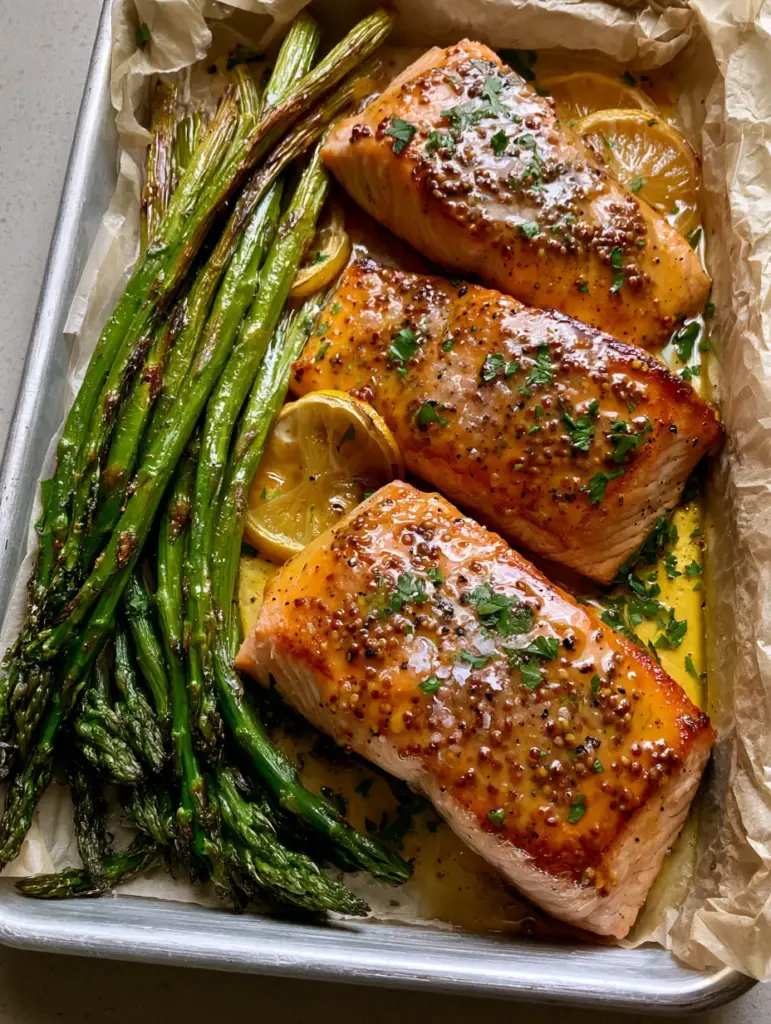
Spoon the glaze over the salmon, ensuring it drips down the sides. Roast for 12-15 minutes. Look for the “Visual Cue”: the glaze should be bubbling and darker at the edges, and the asparagus tips should look dark brown and slightly shriveled.
Expert Tips for Success
- Don’t Overcrowd the Pan: If the asparagus is piled too high, it will steam instead of blister. Keep it in a single, generous layer.
- Check for Flakiness: Use a fork to gently press the side of the salmon. If it “flakes” or separates easily along the white fat lines (albumin), it is perfectly done.
- The Broiler Trick: If your glaze isn’t “glistening” enough, pop the pan under the broiler for the final 60 seconds. Watch it like a hawk to prevent burning!
- Internal Temperature: For a restaurant-quality medium, pull the salmon when it hits an internal temperature of 135°F (57°C). It will rise to 145°F (63°C) while resting.
How to Store and Reheat Your Leftovers
This Honey Dijon Baked Salmon is best enjoyed immediately to preserve the texture of the blistered asparagus. However, you can store leftovers in an airtight container in the refrigerator for up to 2 days.
When reheating, avoid the microwave, which will make the salmon rubbery. Instead, place the salmon and asparagus back on a sheet pan, cover loosely with foil, and heat in a 300°F (150°C) oven for 8-10 minutes until warmed through.
What to Serve with This Vibrant Salmon Dish
While this is a complete sheet pan meal, you can stretch it further by serving it alongside a light chilled noodle salad or some crispy roasted potatoes.
If you love the flavor profile of this glaze, you might also enjoy our spicy honey lime chicken thighs or our classic lemon garlic butter sheet pan salmon. For a lower-carb option, pair the salmon with air fryer zucchini or even roasted cauliflower steaks.
Frequently Asked Questions
Yes, maple syrup is a great substitute. However, it is thinner than honey, so you may need to reduce the amount of lemon juice or oil in the glaze to maintain a thick, glistening consistency.
Yes, but ensure the salmon is completely thawed and patted dry with paper towels before glazing. Any excess moisture will prevent the honey dijon glaze from sticking and bubbling properly.
Make sure your oven is preheated to at least 425°F (220°C). The high heat chars the exterior of the asparagus quickly. If the spears are very thin, add them to the pan 5 minutes after the salmon has started roasting.
For this specific glaze, Atlantic salmon is preferred because its higher fat content prevents it from drying out at the high roasting temperatures needed to caramelize the honey.
If the glaze is too thin, it may be due to the temperature of your kitchen or the brand of honey used. Try adding an extra teaspoon of whole grain mustard or chilling the glaze for 5 minutes before applying it to the salmon.
The Complete Honey Dijon Baked Salmon Recipe
Honey Dijon Baked Salmon: The Ultimate Sheet Pan Meal with Blistered Asparagus
Ingredients
Equipment
Method
- Preheat oven to 425°F (220°C). Crumple a sheet of parchment paper and line a brushed aluminum sheet pan. Pat salmon fillets dry and place them on the pan.
- In a small bowl, combine honey, Dijon, whole grain mustard, and olive oil. Whisk until a thick emulsion forms.
- Toss asparagus with a drizzle of oil and place next to the salmon. Tuck lemon slices between the salmon and the asparagus bundle.
- Spoon the honey dijon mixture over the salmon fillets. Bake for 12-15 minutes until the glaze is bubbling and the asparagus is charred and blistered.
- Remove from oven. Top with a heavy sprinkle of fresh parsley, cracked black pepper, and flaky sea salt before serving.
Notes
Ensure the oven is fully preheated to achieve the blistered asparagus texture.
Closing & Call to Action
Mastering the Honey Dijon Baked Salmon is a milestone for any home cook looking to balance healthy eating with gourmet flavor. The combination of the thick, bubbling glaze and the charred, vibrant asparagus creates a sensory experience that is hard to beat.
If you made this dish, I would love to see your results! Please leave a comment below or share your photos on Pinterest. Be sure to follow KellyTaste for more visual recipe inspiration and weeknight dinner wins!