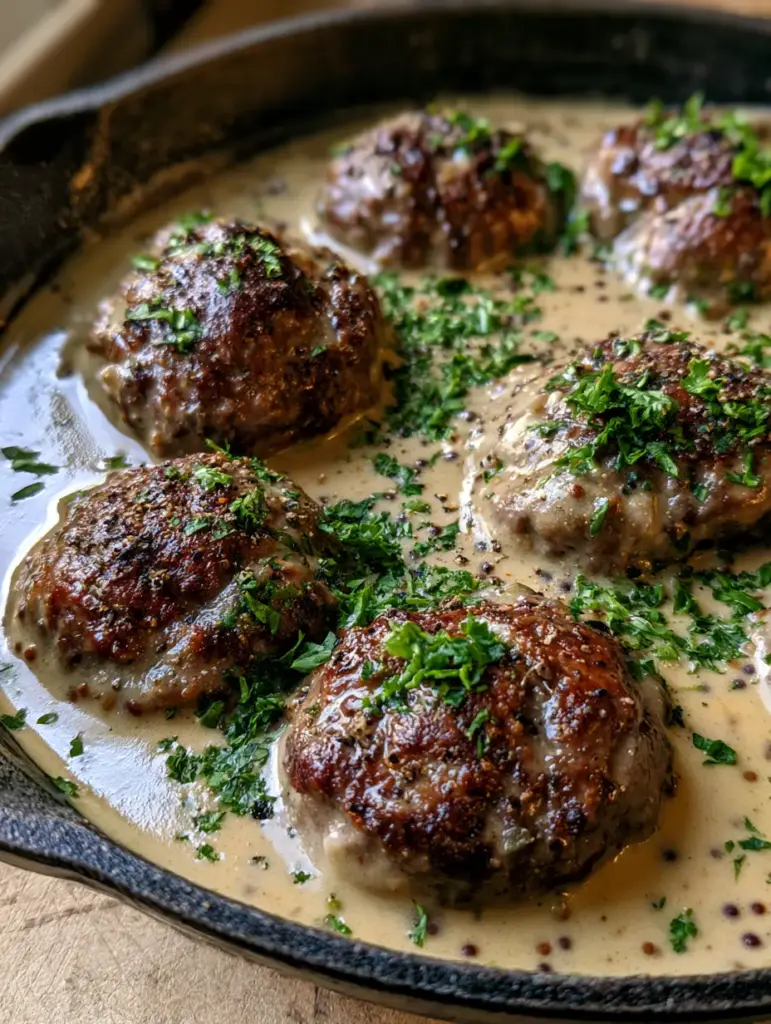
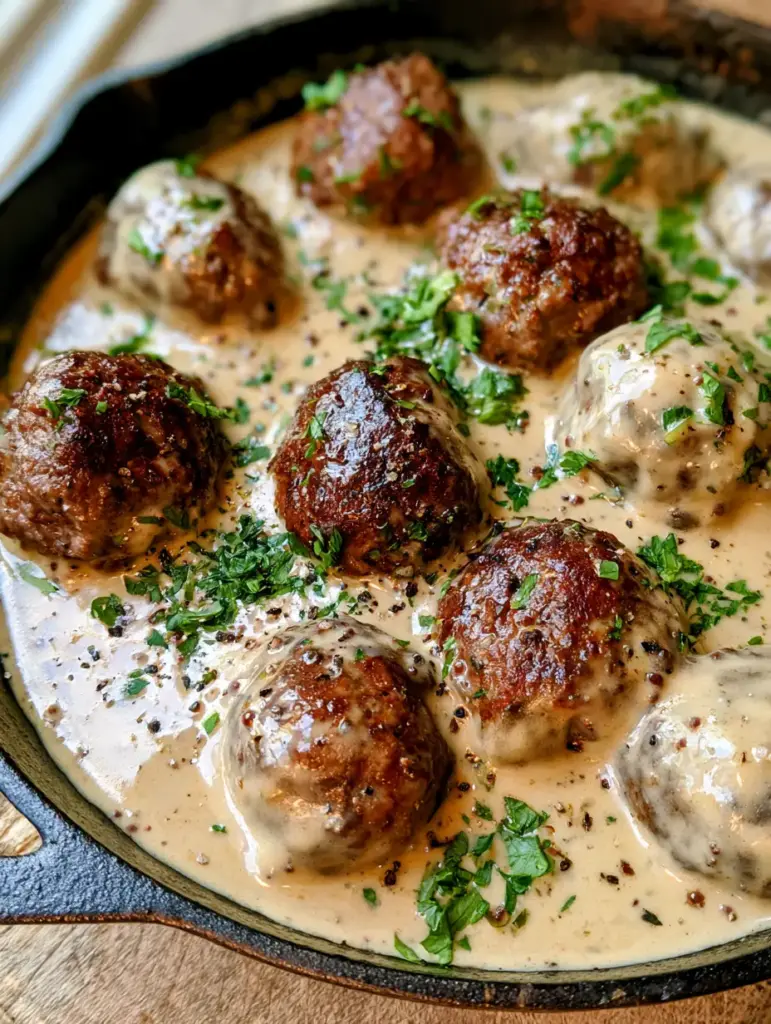
When you imagine the perfect weeknight indulgence, these meatballs in Dijon gravy should be at the very top of your list. There is something profoundly comforting about succulent beef spheres, seared to a deep, mahogany crust, resting in a pool of velvety cream sauce.
This recipe isn’t just about flavor; it is a visual masterpiece designed for the home cook who appreciates the rustic beauty of a cast iron skillet. We are bridging the gap between high-end French bistro techniques and approachable, hearty soul food.
The pale-ivory sauce, punctuated by the sharp pop of whole grain mustard seeds and the vibrant green of fresh parsley, creates a striking contrast that is as beautiful to look at as it is delicious to eat. Let’s dive into how to achieve this professional result in your own kitchen.
Why These Savory Beef Meatballs Will Become Your New Obsession
- Textural Perfection: We achieve a succulent, deeply browned beef crust through high-heat searing, ensuring a “snap” before you reach the tender interior.
- Velvety Sauce Consistency: The Dijon cream sauce is thick, glossy, and perfectly balanced between the tang of mustard and the richness of heavy cream.
- Visual Contrast: The dark mustard seeds and coarse black pepper scattered across the ivory sauce provide an authentic, rustic aesthetic.
- One-Pan Simplicity: By utilizing a single cast iron skillet, we build layers of flavor by deglazing the fond (the browned bits) directly into the gravy.
The Essential Components for a Velvety Dijon Sauce and Succulent Beef
To achieve the visual and flavor profile described in our blueprint, every ingredient serves a dual purpose. Here is what you will need for the perfect meatballs in Dijon gravy.
The Meatball Foundation
Ground Beef (80/20 Blend): 1 lb (450g) of high-quality ground beef provides the necessary fat for a succulent, juicy interior. The fat content also aids in creating that deep brown crust during the sear.
Plain Breadcrumbs: 1/2 cup (60g) acts as a binder, trapping the juices inside the meatball so they don’t dry out under high heat. This ensures the “succulent” texture promised in our visual guide.
Large Egg: 1 egg (50g) serves as the structural glue, holding the beef and breadcrumbs together so the meatballs maintain their perfect spherical shape in the pan.
Whole Milk: 1/4 cup (60ml) hydrates the breadcrumbs, creating a “panade” that keeps the meat fibers tender rather than tough.
Garlic Powder & Onion Powder: 1 tsp (5g) each provides a foundational savory depth without adding moisture that might interfere with the searing process.
Kosher Salt & Cracked Black Pepper: Essential for seasoning. We will also use 1 tsp (5g) of coarse black pepper for the final visual garnish.
The Ivory Dijon Gravy
Heavy Cream: 1 cup (240ml) is the base for our thick, glossy, pale-ivory sauce. It provides the luxurious mouthfeel required for a professional gravy.
Beef Broth: 1/2 cup (120ml) thins the cream slightly and adds a savory, salty backbone that complements the beef meatballs.
Smooth Dijon Mustard: 2 tbsp (30g) provides the characteristic tang and the “pale-ivory” color to the sauce base.
Whole Grain Mustard: 1 tbsp (15g) is critical for the visual blueprint, providing those “visible seeds” and “tiny dark mustard seeds” throughout the sauce.
Unsalted Butter: 2 tbsp (28g) is used to create a roux or to finish the sauce for a professional glossy sheen.
Fresh Italian Parsley: 1/4 cup (15g) finely chopped for that “generous garnish of vibrant green” that makes the dish pop.
Critical Equipment for Professional Results
12-inch Cast Iron Skillet: This is non-negotiable for the “deeply browned beef meatballs.” Cast iron retains heat better than stainless steel, allowing for a crusty sear without overcooking the center.
Stainless Steel Whisk: Essential for emulsifying the Dijon and cream into a velvety, smooth gravy that doesn’t break.
Meat Thermometer: To ensure the beef reaches a safe internal temperature of 160°F (71°C) while remaining succulent.
Fine Mesh Sieve: If you want the smoothest sauce possible before adding the mustard seeds, though the rustic approach usually skips this.
Mastering the Sear: Step-by-Step Instructions
Phase 1: Crafting the Perfect Beef Spheres
In a large mixing bowl, combine the ground beef, breadcrumbs, egg, milk, garlic powder, onion powder, and a generous pinch of salt. Use your hands to mix gently; overworking the meat will result in tough, rubbery meatballs.
Portion the meat into roughly 1.5-inch (4cm) balls. You should have approximately 12-14 meatballs. Ensure the surfaces are smooth, as this helps create an even sear across the entire crust.
Phase 2: Achieving the Crusty Mahogany Sear
Place your cast iron skillet over medium-high heat and add 1 tbsp (15ml) of high-smoke point oil (like avocado or vegetable oil). Wait until the oil is shimmering and just starting to wisps of smoke.
Carefully place the meatballs in the skillet, leaving space between each. Do not crowd the pan, or the meatballs will steam rather than sear. Listen for the sizzle—it should be loud and immediate.
Sear the meatballs for 2-3 minutes per side. You are looking for a “visible crusty sear” that is deeply browned. Once browned on all sides, remove the meatballs from the skillet and set them aside on a plate. They will finish cooking in the sauce.
Phase 3: The Velvety Dijon Cream Sauce
Reduce the heat to medium. In the same skillet, melt the butter, scraping up the browned bits (the fond) from the bottom of the pan. This is where all the deep beef flavor lives.
Whisk in the beef broth and Dijon mustard until smooth. Slowly pour in the heavy cream while whisking constantly. You will see the sauce transform into a “pale-ivory” color. Stir in the whole grain mustard seeds.
Bring the sauce to a gentle simmer. Do not boil vigorously, as the cream may break. Let it cook for 3-5 minutes until it thickens into a “thick, glossy” consistency that coats the back of a spoon.
Phase 4: The Final Assembly and Visual Garnish
Nestle the seared meatballs back into the bubbling Dijon gravy. Let them simmer for another 5 minutes, spooning the sauce over them until they are fully cooked through and have absorbed some of the mustard tang.
For the final visual touch, scatter the finely chopped Italian parsley across the surface. Add several coarse cracks of black pepper. The side-lighting in your kitchen should catch the “gentle sheen” of the velvety sauce at this stage.
Expert Tips for the Perfect Meatballs in Dijon Gravy
- Don’t Rush the Sear: The “deeply browned” look comes from the Maillard reaction. If you move the meatballs too early, you’ll lose that crust. Wait until they release naturally from the cast iron surface.
- Temperature Control: If your sauce looks like it’s separating, whisk in a teaspoon of warm water or additional cream to bring it back together.
- Mustard Balance: Use smooth Dijon for the flavor base and whole grain mustard primarily for the visual texture and tiny bursts of acidity.
- Rest the Meat: Let the meatballs sit in the sauce for 2 minutes off the heat before serving. This allows the proteins to relax, ensuring they are succulent and tender.
Storage, Reheating, and Make-Ahead Advice
Meatballs in Dijon gravy actually taste better the next day as the flavors meld. Store leftovers in an airtight container in the refrigerator for up to 3 days.
When reheating, do so gently on the stovetop over low heat. You may need to add a splash of beef broth or water to loosen the gravy, as the cream will thicken significantly when cold.
We do not recommend freezing the sauce, as cream-based gravies tend to separate and become grainy upon thawing. However, you can freeze the seared meatballs separately for up to 3 months.
What to Serve With This Rustic Skillet Meal
This dish demands a side that can soak up the incredible Dijon gravy. A bed of buttery mashed potatoes or wide egg noodles is a classic choice. For a lighter pairing, consider roasted beets and carrots, which add a sweet earthiness to the plate.
If you are looking for a complete menu, start with a light garlic chickpea soup to awaken the palate. For those who love a variety of meat dishes, these meatballs pair surprisingly well alongside a small portion of middle eastern kofta for a fusion-style feast.
Finish the evening with something sweet, like a classic homemade chocolate chip cookie or a decadent brownie cookie to balance the savory, tangy notes of the mustard.
Frequently Asked Questions
Yes, but turkey has less fat. You may need to add a teaspoon of olive oil to the meat mixture to keep them succulent and ensure they don’t stick to the pan.
Keep the heat at a gentle simmer. Boiling heavy cream too vigorously or adding highly acidic mustard to boiling liquid can cause the sauce to break or curdle.
While smooth Dijon provides the flavor, the whole grain mustard is critical for the visual appeal, providing the ‘tiny dark mustard seeds’ that define this rustic dish.
The combination of heavy cream and smooth Dijon mustard creates that specific ivory hue, while whole grain mustard adds the dark specks for visual texture.
Cast iron provides superior heat retention, which is essential for achieving the deeply browned, crusty sear described in the recipe without overcooking the meat’s interior.
The Complete Meatballs in Dijon Gravy Recipe
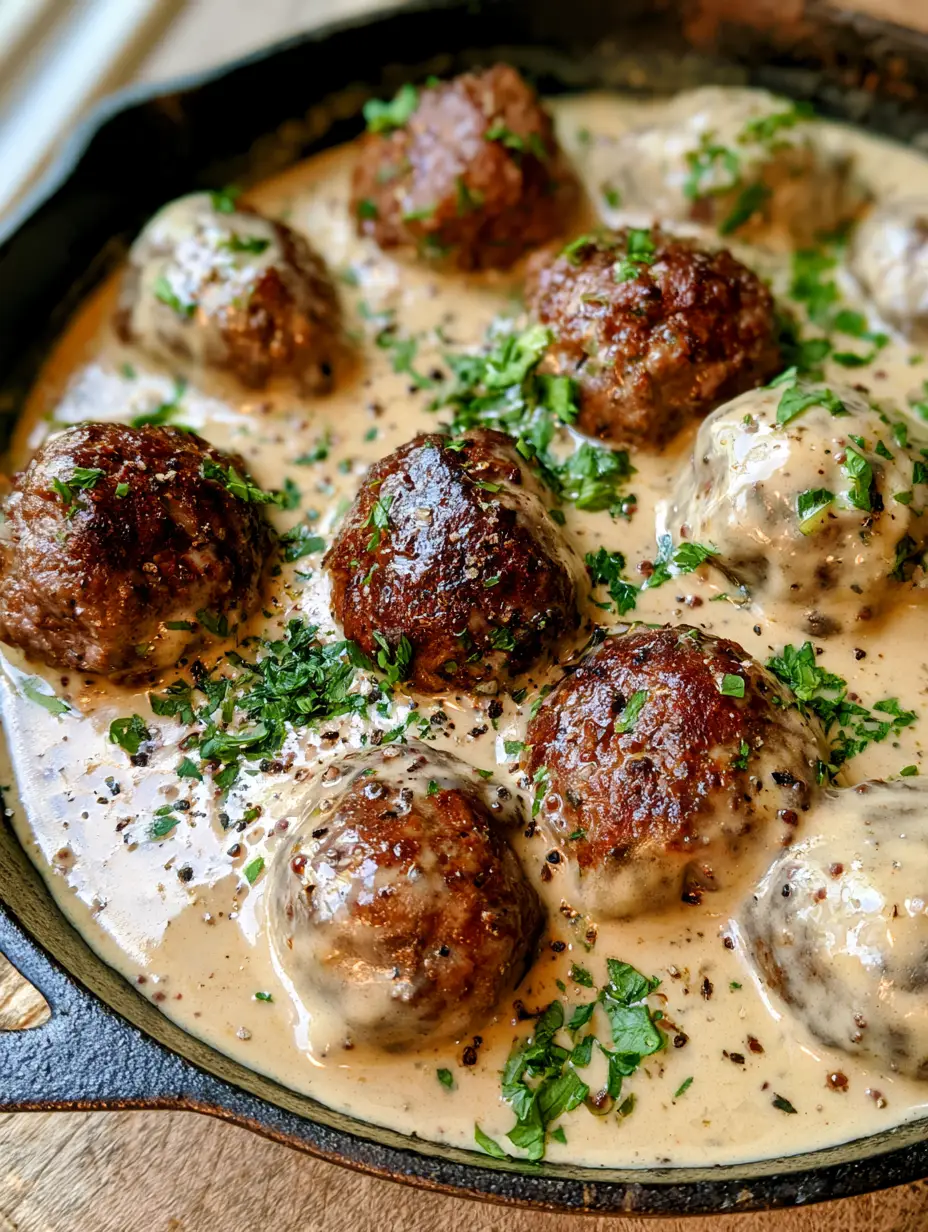
Meatballs in Dijon Gravy: The Ultimate Creamy Cast Iron Recipe
Ingredients
Equipment
Method
- In a large bowl, combine ground beef, breadcrumbs, egg, milk, garlic powder, onion powder, salt, and pepper. Mix until just combined.
- Form the mixture into 1.5-inch (4cm) balls, ensuring a smooth surface for an even sear.
- Heat oil in a cast iron skillet over medium-high heat. Sear meatballs until a deep brown crust forms on all sides. Remove and set aside.
- In the same skillet, melt butter and whisk in beef broth, heavy cream, and both mustards. Simmer until thickened and pale-ivory.
- Return meatballs to the skillet. Simmer for 5 minutes until fully cooked. Garnish with fresh parsley and coarse black pepper.
Notes
Use high-quality whole grain mustard for the best visual specks in the ivory sauce.

Closing & Call to Action
These meatballs in Dijon gravy represent the pinnacle of rustic home cooking. With their succulent centers and the sharp, sophisticated tang of the mustard cream sauce, they are guaranteed to impress anyone at your dinner table. The use of a cast iron skillet ensures that every bite is packed with the deep, savory flavor of a professional sear.
If you enjoyed this recipe, please leave a comment below and let us know how your sear turned out! Don’t forget to share your photos and tag KellyTaste on Pinterest so we can see your culinary creations.