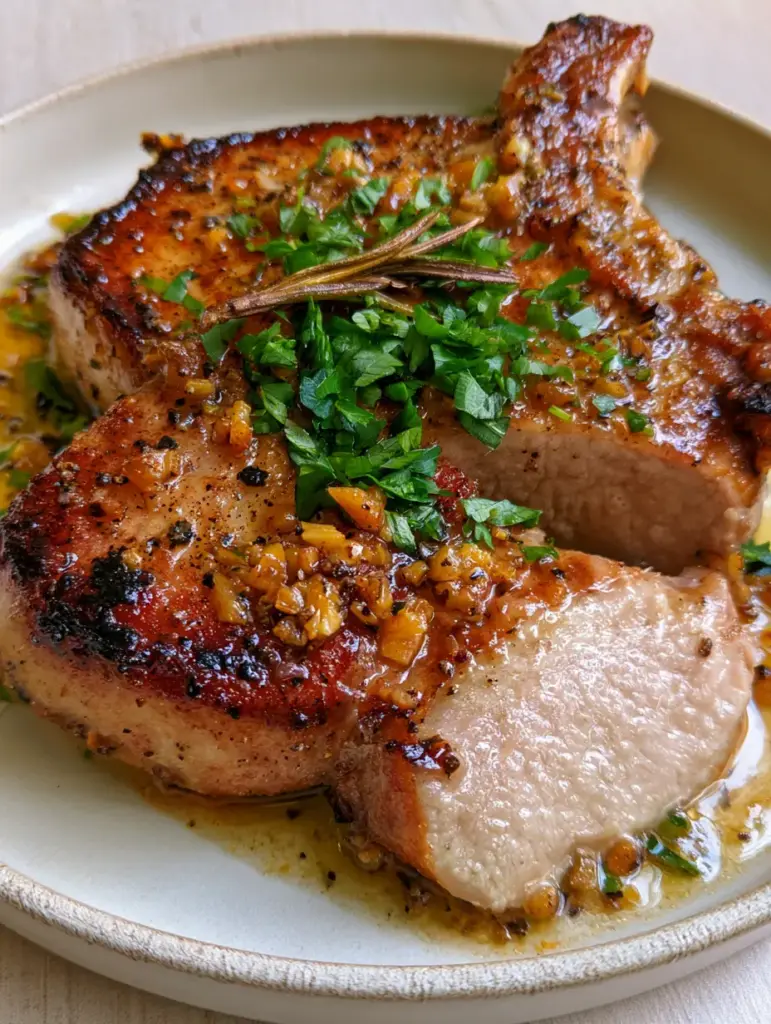
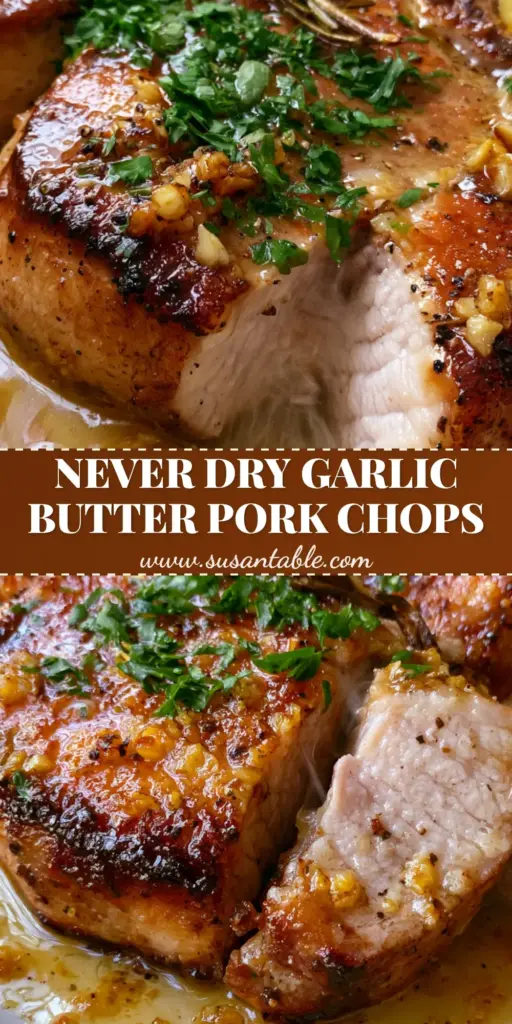
When searching for the perfect addition to your collection of pork recipes, few dishes command the room quite like a thick-cut, bone-in pork chop. Imagine a macro view of a dinner plate where a deep, caramelized golden-brown crust glistens under soft, natural light. This isn’t just a meal; it’s a masterclass in culinary textures, featuring a translucent garlic butter glaze that pools at the base of the meat, punctuated by shards of cracked black pepper and vibrant green flecks of fresh parsley.
The beauty of this specific preparation lies in the contrast between the rugged, seared exterior and the succulent, pale pink interior that releases a gentle wisp of steam when sliced. Whether you are an enthusiast looking for new weeknight inspiration or a seasoned cook aiming for restaurant-quality results, this guide will transform how you perceive pork recipes. We are moving beyond the dry, overcooked chops of the past and embracing a technique-driven approach that prioritizes moisture and flavor.
Why This Garlic Butter Sear Defines Premium Pork Recipes
- The Maillard Reaction: We achieve a deep, mahogany crust that provides a structural crunch against the tender meat.
- Aromatic Infusion: Using a whole woody rosemary sprig and minced garlic creates a sensory experience that begins long before the first bite.
- Bone-In Insulation: Keeping the bone intact protects the meat from drying out, ensuring a moist interior every time.
- Emulsified Butter Glaze: A thick, translucent sauce that clings to the pork, providing a luxurious mouthfeel.
To truly elevate your repertoire of dinner options, consider how this dish stacks up against other proteins. While baked salmon recipes offer a lighter profile, these pork chops provide a hearty, savory satisfaction that is unmatched. The key is in the physics of the pan and the chemistry of the butter-basting process.
The Essential Ingredients for Succulent Pan-Seared Pork
Thick-Cut Bone-In Pork Chops (1.5 inches / 3.8cm): The thickness is non-negotiable for achieving that pale pink, succulent center without overcooking the exterior. Bone-in chops offer more flavor and a better presentation for high-end pork recipes.
Kosher Salt and Coarse Cracked Black Pepper: Salt is the primary tool for moisture retention via dry-brining, while the large cracks of pepper provide the visual “fine cracks” seen in the blueprint. Use 1 tsp (6g) of salt per chop for optimal seasoning.
Unsalted Butter (4 tbsp / 56g): Butter is the vehicle for flavor. Using unsalted allows you to control the sodium levels while creating that translucent, glistening glaze.
Fresh Garlic Cloves (4 large cloves): We will finely mince these to create the “golden-sauteed” bits mentioned in the visual prompt. Avoid pre-minced jarred garlic as it lacks the necessary pungent oils.
Fresh Rosemary and Flat-Leaf Parsley: A single woody rosemary sprig infuses the butter, while the finely chopped parsley adds the vibrant garnish that breaks up the rich colors of the sear.
High-Smoke Point Oil (2 tbsp / 30ml): Avocado or grapeseed oil is essential for the initial sear to prevent the meat from sticking and the fat from burning before the crust forms.
Professional Equipment for the Perfect Crust
To achieve the results seen in the Midjourney prompt—a deep caramelized crust and a moist interior—you need a heavy-bottomed skillet. A cast-iron pan is the gold standard for pork recipes because it retains heat exceptionally well, ensuring the temperature doesn’t drop when the cold meat hits the surface.
You will also need a digital meat thermometer. Achieving a “moist, pale pink” interior is a game of degrees; pulling the pork at exactly 140°F (60°C) allows carry-over cooking to bring it to the FDA-recommended 145°F (63°C). A small spoon for basting (arrosé) is also vital for creating that translucent garlic butter coating.
The Step-by-Step Anatomy of a Perfect Sear
Phase 1: The Dry Brine and Temperature Tempering
Remove your chops from the refrigerator at least 30 minutes before cooking. Pat the meat extremely dry with paper towels; moisture on the surface is the enemy of a golden-brown crust. Season generously with kosher salt and cracked black pepper on all sides, including the fat cap.
Phase 2: High-Heat Searing
Heat your cast-iron skillet over medium-high heat until the oil is shimmering and just beginning to wisps of smoke. Place the chops in the pan. Press down slightly to ensure even contact. Sear for 4-5 minutes without moving them until a deep, caramelized crust forms.
Phase 3: Rendering the Fat Cap
Using tongs, stand the chops on their sides to render the white fat strip. This adds another layer of flavor to the pan juices and ensures every part of the pork is edible and delicious. This is a hallmark of professional-grade pork recipes.
Phase 4: The Garlic Butter Baste (Arrosé)
Flip the chops. Immediately reduce the heat to medium and add the butter, the woody rosemary sprig, and the minced garlic. As the butter foams, tilt the pan and use a spoon to continuously pour the garlic-infused butter over the chops for the final 3-4 minutes.
Phase 5: The Critical Rest
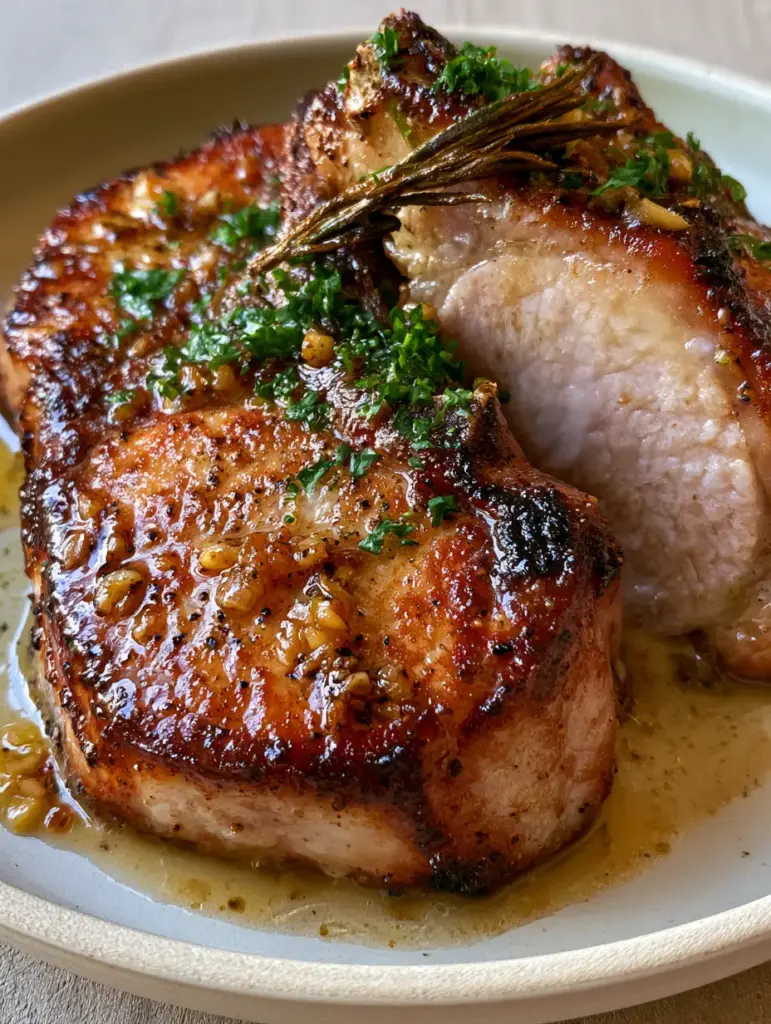
Transfer the chops to a warm plate and pour the remaining garlic butter sauce from the pan over them. Let them rest for 8-10 minutes. This allows the juices to redistribute, ensuring that when you slice it open, the interior remains succulent rather than losing its moisture to the plate.
Expert Tips for Success with Pork Recipes
- Don’t Fear the Pink: Modern pork is safe to eat at 145°F (63°C). A slight blush in the center is the difference between a gourmet meal and a dry one.
- Cold Butter Finishing: If your sauce looks too thin, whisk in a small cube of cold butter at the very end to create that thick, translucent glaze.
- The “Sizzling” Cue: Listen to the pan. If the sizzle dies down, your heat is too low; if the butter turns black, it’s too high. You want a constant, rhythmic bubbling.
- Aromatic Timing: Add the minced garlic only in the last few minutes. Garlic burns quickly and becomes bitter, which would ruin the delicate butter sauce.
Storage, Reheating, and Meal Prep
Leftover pork can be stored in an airtight container for up to 3 days. To reheat without drying it out, place the chop in a skillet with a splash of water or broth, cover with a lid, and warm over low heat. This “steams” the meat back to temperature while preserving the interior moisture.
For those focused on healthy dinner ideas, you can slice the leftovers thinly and serve them over a fresh greens or a chilled noodle salad for a high-protein lunch the following day.
What to Serve With Garlic Butter Pork
The richness of the garlic butter demands a side dish that can either absorb the sauce or provide a crisp contrast. A side of crispy potatoes is a classic choice, as the textured edges of the potatoes catch the pooling butter glaze perfectly.
If you prefer something lighter, consider air fryer zucchini or a side of sautéed mushrooms. In fact, many mushroom recipes pair beautifully with the rosemary and garlic notes present in the pork’s crust.
Frequently Asked Questions about Pork Recipes
For this specific technique, fresh is much better. Dried rosemary can become needle-like and woody in the butter, whereas a fresh sprig releases aromatic oils without leaving behind unpleasant textures.
The secret is patting the meat completely dry and using a heavy cast-iron skillet. High initial heat creates the sear, while reducing the heat during the butter-baste prevents the interior from overcooking.
Yes. The USDA currently recommends an internal temperature of 145°F (63°C) followed by a three-minute rest. At this temperature, the meat will often have a pale pink blush and remain succulent.
Use an oil with a high smoke point, such as avocado, grapeseed, or canola oil. Avoid extra virgin olive oil or butter for the initial sear, as they will burn at the temperatures required for a crust.
The bone acts as an insulator, slowing the cooking process near the center and preventing the meat from drying out. It also adds a richer flavor to the pan juices during the basting process.
The Master Garlic Butter Bone-In Pork Chop Recipe
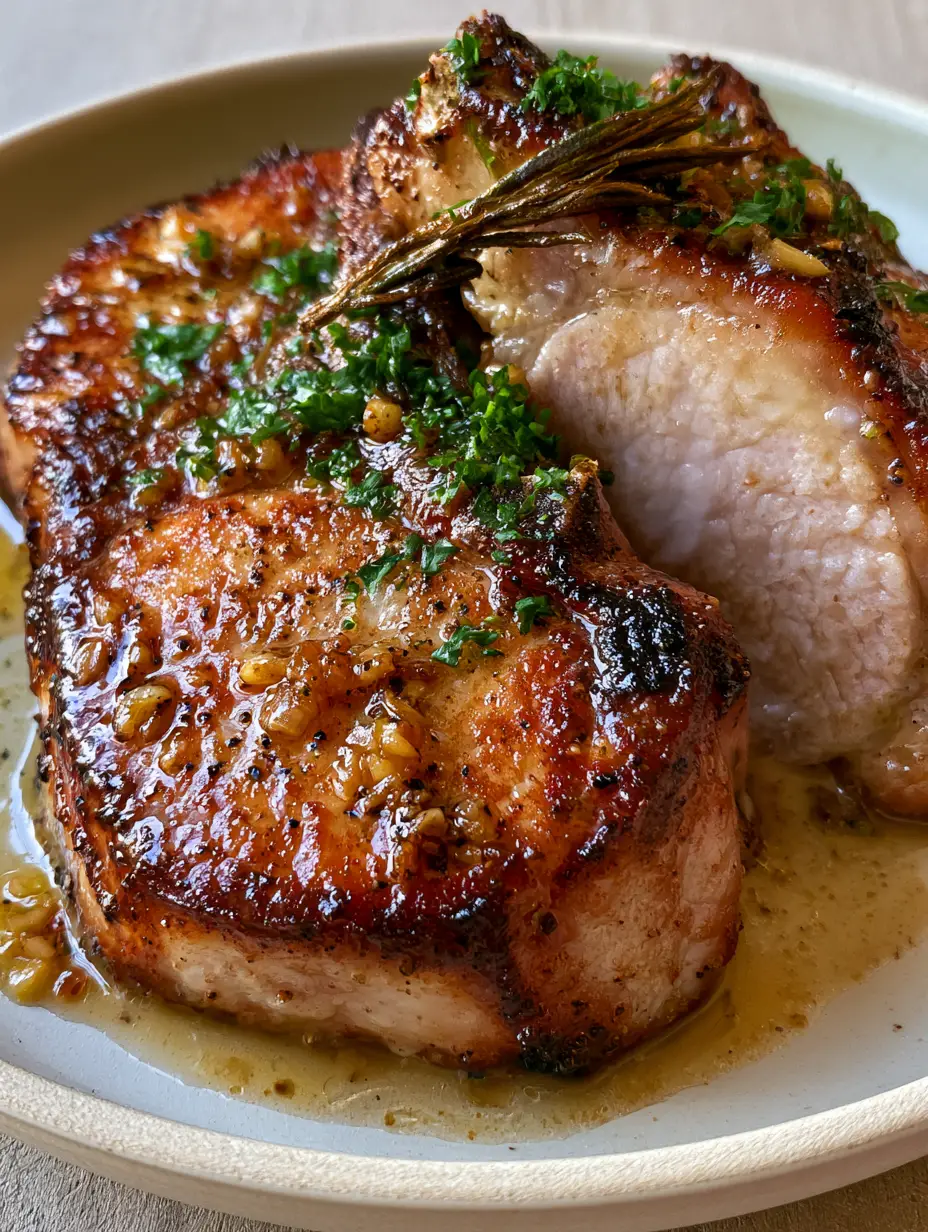
Pork Recipes: The Ultimate Garlic Butter Seared Bone-In Chops
Ingredients
Equipment
Method
- Pat the pork chops extremely dry with paper towels. Season all sides generously with salt and coarse black pepper.
- Heat oil in a cast-iron skillet over medium-high. Sear chops for 4-5 minutes until a deep golden-brown crust forms. Flip.
- Add butter, rosemary, and minced garlic to the pan. Spoon the foaming butter over the chops repeatedly for 3-4 minutes.
- Remove from pan at 140°F (60°C). Let rest for 10 minutes to reach 145°F (63°C) and keep the interior moist.
Notes
Always render the fat cap by standing the chops on their side with tongs.
Closing & Call to Action
Mastering pork recipes is about understanding the balance between high-heat physics and delicate fat-basting. By following this blueprint, you’ve created a dish that is as visually stunning as it is culinarily sound. The deep sear, the aromatic rosemary, and the succulent interior represent the pinnacle of home cooking.
If you enjoyed this recipe, please leave a comment below and tell us how your crust turned out! Don’t forget to follow KellyTaste on Pinterest for more visual recipe inspiration and share your creations with our community. Happy searing!