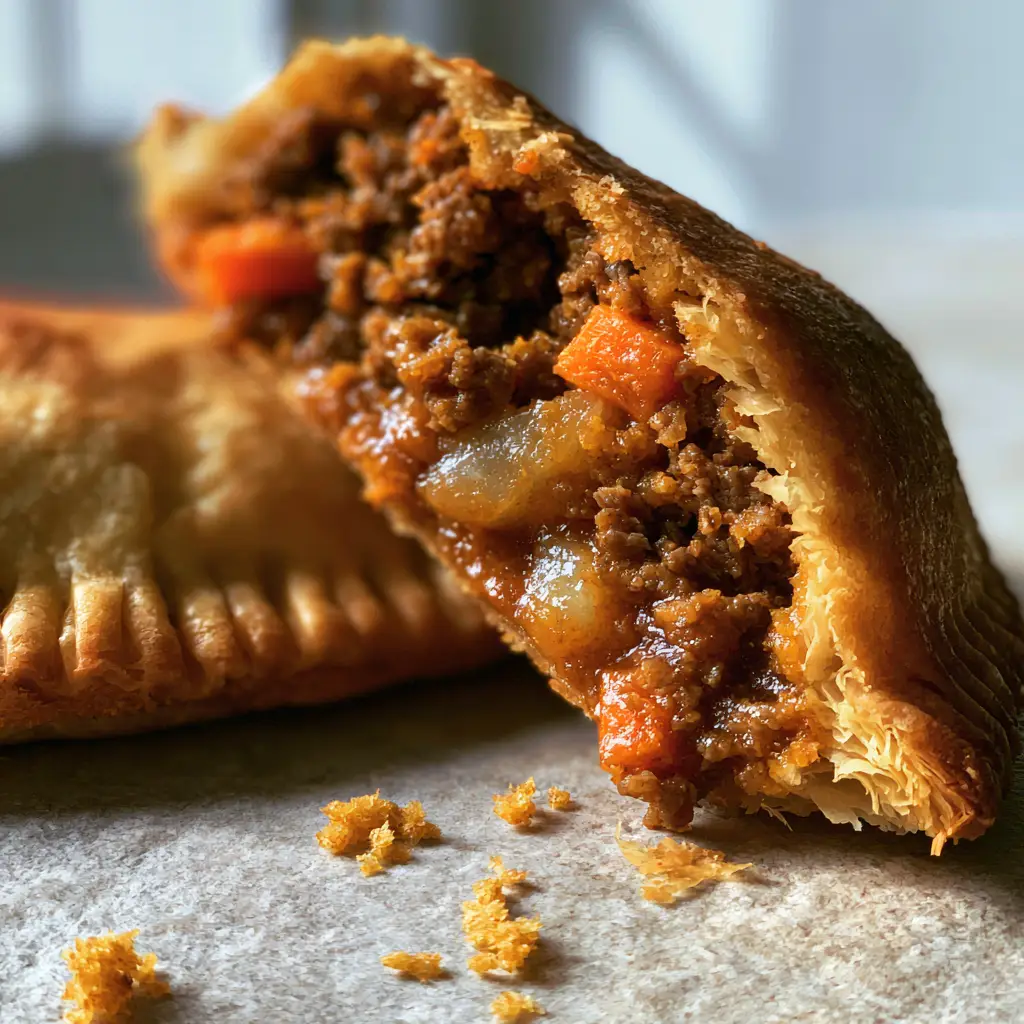
There is nothing quite like the first bite of a perfectly executed Nigerian meat pie recipe. As you break the pastry in half, a plume of aromatic steam escapes, revealing a glistening, rich interior that defines West African comfort food.
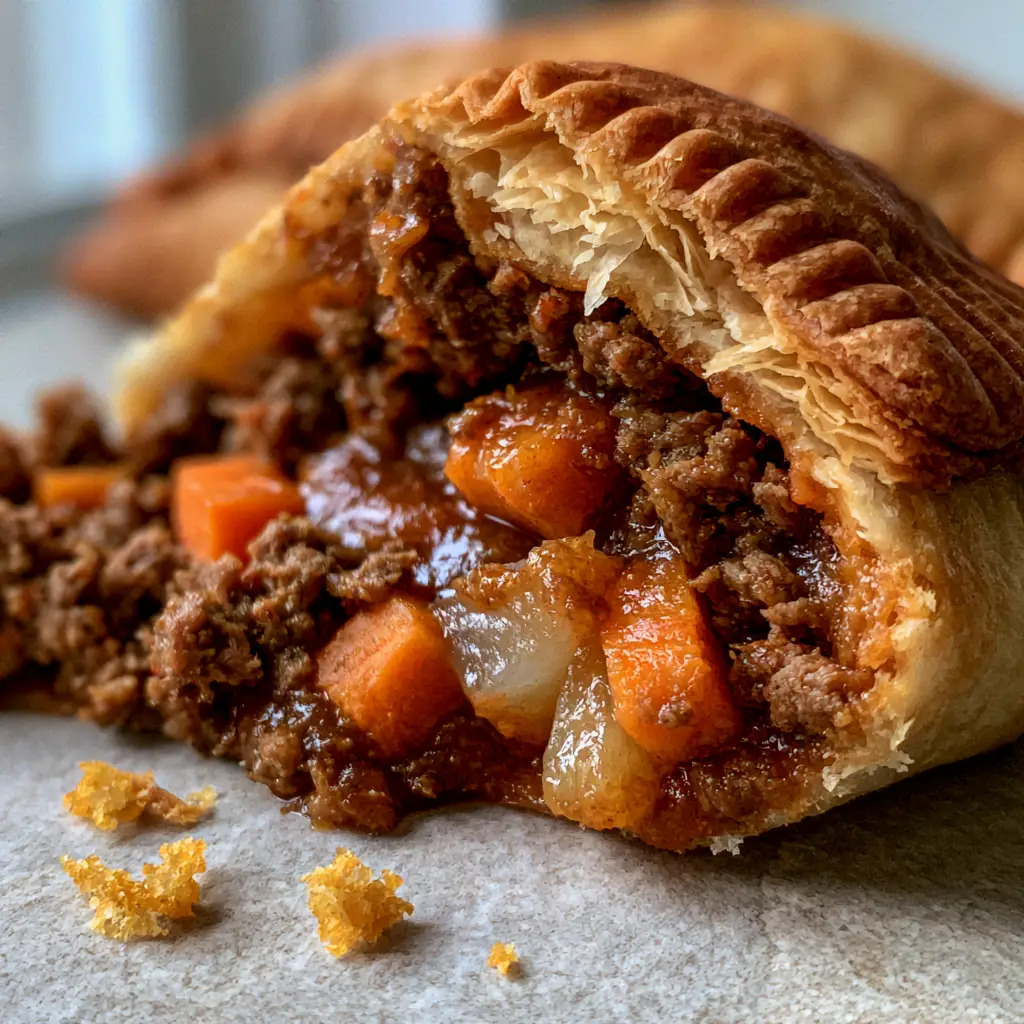
This isn’t just a snack; it is a culinary masterpiece of textures. We are talking about a crust so flaky it shatters into paper-thin buttery layers, protecting a heart of seasoned minced beef, tender potatoes, and vibrant carrots bathed in a mahogany-colored gravy.
Whether you grew up eating these at Nigerian parties or you are discovering them for the first time, this guide will teach you the forensic precision required to achieve that iconic deep golden-brown finish and savory depth.
The Anatomy of a Flawless West African Meat Pastry
To master the Nigerian meat pie recipe, one must understand the structural balance between the shortcrust and the moist filling. The pastry must be sturdy enough to be handheld yet delicate enough to melt on the tongue.
Unlike a traditional chunky meat pie, the Nigerian version focuses on a finely minced texture. This ensures that every single bite contains a perfect ratio of beef, vegetable, and thick, savory sauce.
Visual cues are paramount here. We are aiming for a crust that looks like a handheld smartphone photo—crisp edges, visible crimping, and a mahogany-colored sauce that doesn’t soak through the bottom of the pie.
- The Shatter-Effect Crust: Achieving those paper-thin buttery flakes requires specific temperature control and minimal handling.
- The Mahogany Gravy: A rich, thick savory brown gravy that binds the beef and vegetables without making the pastry soggy.
- The Steam Factor: Properly vented pies ensure the interior cooks through while the exterior remains crisp and golden-brown.
- The “Holy Trinity” Filling: A balanced mix of seasoned minced beef, soft orange carrot cubes, and tender translucent potato bits.
The Secret Ingredients for a Flaky, Golden-Brown Crust
The foundation of this Nigerian meat pie recipe lies in the shortcrust. We use cold fats and specific leavening agents to create the “steam pockets” that result in a professional, bakery-style finish.
All-Purpose Flour (500g): This provides the necessary gluten structure to hold the heavy beef filling without being overly tough. It acts as the canvas for our buttery layers.
Cold Unsalted Butter (250g): Using high-fat, chilled butter is non-negotiable. As the butter melts in the oven, it creates steam, which pushes the dough apart into those coveted paper-thin flakes.
Baking Powder (1 tsp): While traditional shortcrust is unleavened, a tiny hint of baking powder provides a structural lift. This ensures the crust isn’t “leaden” but instead feels light and airy.
Ice Cold Water (120ml): Temperature is the enemy of flaky pastry. Cold water keeps the butter from melting during the mixing process, preserving the fat chunks for the oven phase.
Egg Wash: A simple wash of one egg beaten with a splash of milk is what transforms the pale dough into a deep, glistening golden-brown masterpiece.
Developing the Deep Mahogany Beef Filling
The filling of a Nigerian meat pie recipe is what separates an amateur attempt from a professional one. It’s not just cooked meat; it’s a thick, bound stew that should be moist and glistening.
Minced Beef (500g): Choose a lean blend (80/20) to ensure there is enough fat for flavor, but not so much that the pastry becomes greasy. The beef provides the savory backbone of the dish.
Carrots and Potatoes (1 cup each): Diced into small, uniform cubes, these add textural contrast. The potatoes should be tender and translucent, while the carrots remain soft but identifiable.
Beef Stock and Cornstarch: This is the secret to the thick savory brown gravy. The cornstarch slurry thickens the beef juices into a mahogany-colored sauce that clings to the meat.
Seasoning Blend: We use a combination of thyme, curry powder, and bouillon. These spices provide the authentic “party style” flavor profile that is synonymous with Nigerian cuisine, much like the depth found in classic pot roast recipes.
Essential Equipment for Pastry Perfection
To achieve the visual results of a professional food photographer, you need the right tools to handle the dough and ensure even baking.
- Large Mixing Bowl: Essential for incorporating the butter into the flour without overworking the dough.
- Pastry Cutter or Fork: Used to “cut” the cold butter into the flour until it resembles coarse crumbs.
- Rolling Pin: To achieve a uniform thickness of about 5mm, ensuring the pie cooks evenly.
- Circular Cutter (15cm): Using a consistent template ensures all pies are the same size, which is critical for even cooking times in the oven.
- Baking Sheet and Parchment Paper: Prevents sticking and encourages a crisp bottom crust.
Step-by-Step Instructions: Mastering the Nigerian Meat Pie
Phase 1: The Cold-Process Shortcrust
Start by sifting your flour, salt, and baking powder into a large bowl. Add the chilled, cubed butter. Use your fingertips or a pastry cutter to rub the butter into the flour.
Stop when the mixture looks like coarse breadcrumbs with some pea-sized chunks of butter still visible. This is the visual cue for flakiness! Gradually add the ice-cold water, mixing just until a dough forms. Wrap in plastic and chill for at least 30 minutes.
Phase 2: Searing the Beef and Creating the Mahogany Gravy
Heat a tablespoon of oil in a skillet. Add finely chopped onions and sauté until translucent. Add the minced beef, breaking it apart with a wooden spoon. Cook until the meat is browned and no longer pink.
Stir in your diced carrots and potatoes. Pour in 1 cup (240ml) of beef stock and season with thyme, curry powder, and salt. Cover and simmer for 10-12 minutes until the vegetables are tender. To finish, whisk 2 tablespoons of cornstarch with a little water and stir it into the pan. Watch as it transforms into a thick, mahogany-colored savory sauce.
Phase 3: Assembly and The Iconic Crimp
Preheat your oven to 350°F (175°C). Roll out your chilled dough on a lightly floured surface. Cut out circles using your 15cm template. Place two tablespoons of the cooled meat filling in the center of each circle.
Fold the dough over to create a half-moon shape. Use a fork to press down firmly along the edges. This creates the distinct crimped edge seen in professional Nigerian meat pie photos. Poke two small holes on top to allow steam to escape during baking.
Phase 4: The Golden-Brown Finish
Brush each pie generously with your egg wash. Place them on your prepared baking sheet. Bake for 30-35 minutes. You are looking for a deep golden-brown color and a crust that appears dry and crisp, not oily.
Let the pies rest for 5 minutes before serving. This allows the mahogany gravy inside to set slightly, so it doesn’t run out when you take that first glorious bite.
Expert Tips for Success
- Don’t Overwork the Dough: If you knead the dough too much, the gluten will develop, and your crust will be tough instead of flaky. Handle it as little as possible.
- Cool the Filling Completely: Never put hot filling onto cold dough. The heat will melt the butter in the pastry before it hits the oven, destroying your layers and causing a “soggy bottom.”
- Uniform Dicing: Ensure your potatoes and carrots are cut into small, equal cubes. Large chunks will pierce the pastry and won’t cook at the same rate as the beef.
- Seal Tight: If your edges aren’t sealed well, the savory brown gravy will leak out, creating a mess and leaving the pie dry. If the dough is too dry to seal, dab a tiny bit of water on the edges before crimping.
How to Store and Reheat Your Meat Pies
If you have leftovers (which is rare!), these pies store beautifully. Place them in an airtight container in the refrigerator for up to 4 days. They are a much more satisfying midday meal than a simple avocado toast.
To reheat, avoid the microwave as it will make the pastry soft and rubbery. Instead, place them in a 350°F (175°C) oven or air fryer for 5-8 minutes until the crust crisps back up and the interior is steaming.
You can also freeze unbaked pies. Flash freeze them on a tray, then transfer to a freezer bag. Bake directly from frozen, adding an extra 10-15 minutes to the total baking time.
What to Serve With This Savory Snack
In Nigeria, these pies are often enjoyed on their own as a “street food” snack, but they also make a fantastic lunch. Pair them with a crisp spinach mandarin salad to cut through the richness of the buttery crust.
If you are serving these as part of a larger spread, they sit beautifully alongside other finger foods like cottage cheese chips or even a light crunchy snack. For a full fusion meal, follow them up with a decadent maple cookie pie.
Frequently Asked Questions
While you can, it won’t be an authentic Nigerian meat pie. The traditional version uses a specific rich shortcrust that is sturdy yet flaky, rather than the light airiness of puff pastry.
Ensure you don’t overfill the pie and use a fork to firmly crimp the edges. Poking ‘vent’ holes on top is also critical to let steam escape without bursting the seams.
The color comes from browning the minced beef thoroughly and adding beef stock seasoned with curry and thyme, which is then thickened with a cornstarch slurry.
This usually happens if the dough is overworked or the butter was too warm. Kneading develops gluten which makes the crust tough. Always use chilled butter and ice-cold water.
The Perfect Nigerian Meat Pie Recipe
Nigerian meat pie recipe: The Ultimate Guide to Flaky, Mahogany-Rich Savory Pies
Ingredients
Equipment
Method
- Sift flour, baking powder, and salt into a bowl.
- Rub chilled butter into the flour until it resembles coarse crumbs with pea-sized chunks.
- Add ice water, form a dough, wrap in plastic, and refrigerate for 30 minutes.
- Sauté onions and minced beef in a skillet until browned.
- Add carrots, potatoes, stock, and spices. Cover and simmer until tender.
- Stir in cornstarch slurry to create a thick mahogany-colored gravy. Let cool completely.
- Roll dough to 5mm thickness and cut 15cm circles.
- Fill centers, fold, and crimp edges with a fork. Poke holes for steam.
- Brush with egg wash and bake at 350°F (175°C) for 30-35 minutes until deep golden-brown.
Notes
Use ice-cold water and chilled butter for the flakiest pastry layers.

Join the Culinary Conversation!
Mastering the Nigerian meat pie recipe is a rite of passage for any home cook looking to explore the vibrant flavors of West Africa. The combination of that flaky, deep golden-brown crust and the steaming, mahogany beef interior is truly unmatched.
Did you achieve those paper-thin flakes? Or perhaps you added a unique twist to the mahogany gravy? We want to hear about it! Leave a comment below and share your photos with us. Don’t forget to save this recipe to your favorite boards on Pinterest so you can find it every time the craving for a savory pie hits!