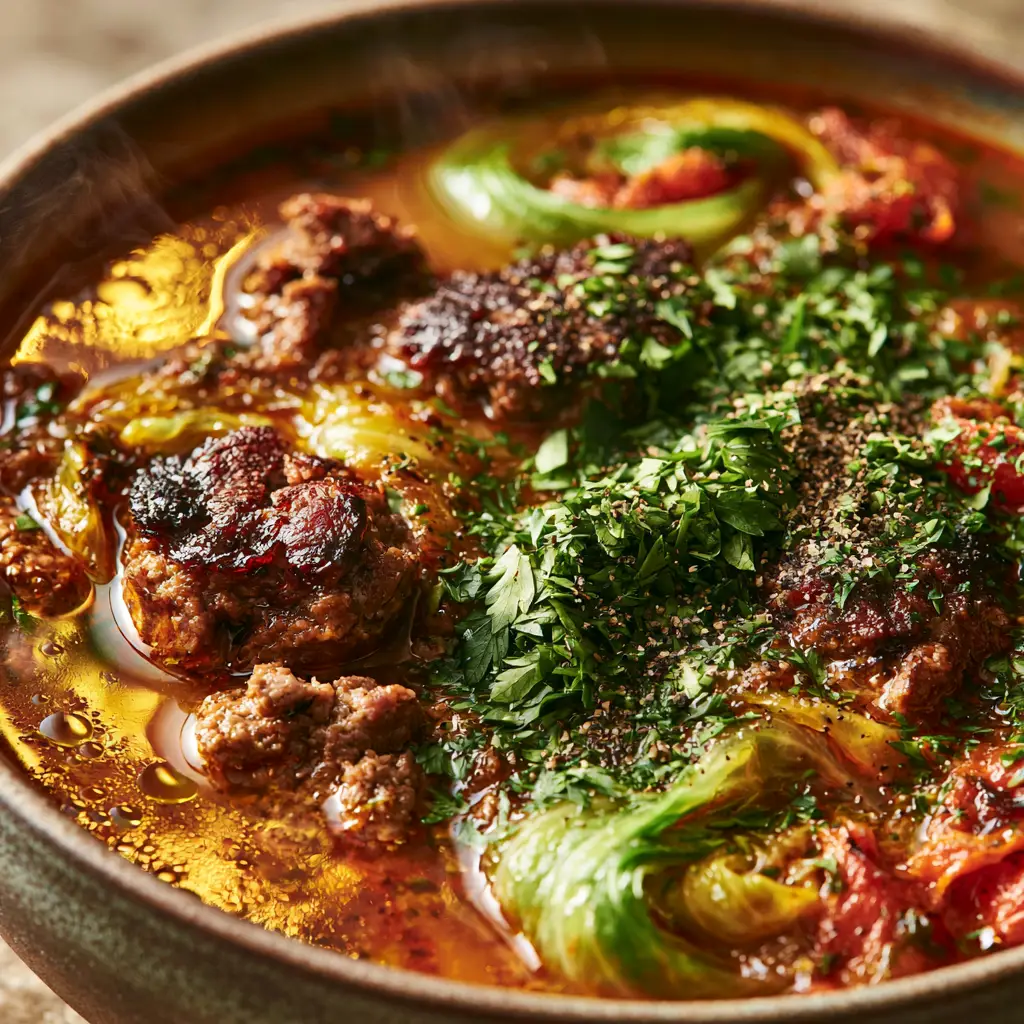
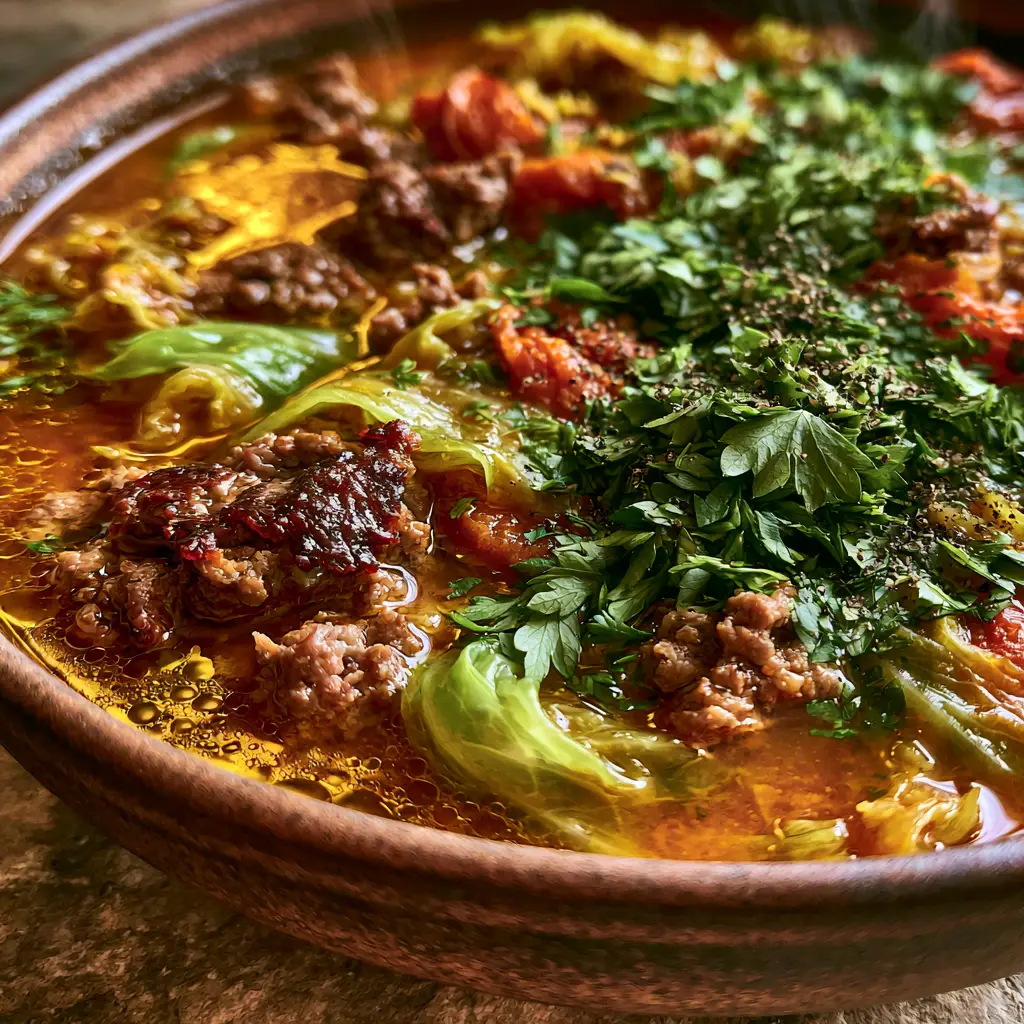
There is nothing quite as restorative as a bowl of beef cabbage soup that has been simmered to perfection. This isn’t your average watery vegetable soup; we are talking about a deep, rich amber broth shimmering with golden oil droplets and packed with caramelized beef crumbles that offer a savory bite in every spoonful.
Imagine a rustic ceramic bowl filled with tender, translucent green cabbage ribbons and chunky fire-roasted tomatoes, all tied together with a heavy garnish of fresh flat-leaf parsley and a kick of coarse black pepper. The steam rising from the surface carries the aroma of seared meat and sweet aromatics, making it the perfect centerpiece for a cold winter night.
Whether you are looking for a nutrient-dense dinner or a meal-prep staple, this recipe delivers professional-grade flavor with home-cooked comfort. It captures that elusive “handheld smartphone photo” aesthetic—honest, hearty, and visually stunning.
Why This Hearty Beef Cabbage Soup Works
- Maillard Reaction Magic: By searing the ground beef until deep caramelized edges form, we build a foundation of umami that elevates the entire broth.
- Textural Contrast: The combination of tender green cabbage ribbons and firm fire-roasted tomato chunks creates a satisfying mouthfeel.
- Visual Depth: The rich amber color of the broth, punctuated by vibrant green herbs and shimmering oil, makes this dish as beautiful as it is delicious.
- One-Pot Simplicity: All the flavor is built in a single vessel, meaning cleanup is minimal while the flavor profile is complex.
The Foundation: Ingredients for the Perfect Beef Cabbage Soup
Ground Beef: 1 lb (454g) of 80/20 lean ground beef is ideal. The fat content is necessary to create those beautiful golden oil droplets seen in the visual blueprint and to provide enough rendered fat for searing the vegetables.
Green Cabbage: 1 small head (approx. 2 lbs / 900g), sliced into thin ribbons. As it simmers, it transforms from crunchy to translucent and tender, absorbing the savory beef notes.
Beef Broth: 6 cups (1.4L) of high-quality beef stock. This provides the “rich amber” base; look for low-sodium options so you can control the final seasoning levels yourself.
Fire-Roasted Tomatoes: 1 can (14.5 oz / 411g) of diced fire-roasted tomatoes. These add a subtle smoky char and acidic brightness that cuts through the richness of the meat.
Aromatics: 1 large yellow onion and 3 cloves of garlic. These invisible foundational ingredients are essential for building the savory backbone of the soup.
Extra Virgin Olive Oil: 1 tbsp (15ml). Used to jumpstart the searing process and ensure the beef doesn’t stick before its own fats render.
Fresh Flat-Leaf Parsley: 1/2 cup (15g), finely chopped. This provides the “dense sprinkle” of greenery that finishes the dish with a burst of freshness.
Seasoning: Coarse black pepper and sea salt. The pepper isn’t just for heat; it’s a visual component of the rustic finish described in our culinary blueprint.
Essential Tools for a Rustic Soup Presentation
To achieve the seared crumbles and rich broth, a heavy-bottomed Dutch oven or a large stainless steel pot is required. These tools distribute heat evenly, allowing the beef to brown without boiling in its own juices.
You will also need a sharp chef’s knife to create those signature green cabbage ribbons and a sturdy wooden spoon for deglazing the “fond” (the brown bits) off the bottom of the pot. For serving, choose matte ceramic bowls to replicate the cozy, handheld smartphone photo aesthetic.
How to Make Beef Cabbage Soup Step-by-Step
Achieving the Perfect Beef Caramelization
Heat your olive oil over medium-high heat in a large pot. Add the ground beef, breaking it into large crumbles rather than fine grains. Let it sit undisturbed for 3-4 minutes until a deep golden-brown crust forms on the bottom.
Flip the crumbles and continue cooking until you see visible caramelized edges. This is the “Visual Recipe Blueprint” requirement for seared beef crumbles. Once browned, remove the beef and set aside, leaving the rendered fat in the pot.
Building the Savory Broth Base
Add the diced onions to the pot, sautéing until translucent. Add the garlic and cook for 1 minute until fragrant. Pour in a splash of the beef broth to deglace the pot, scraping up all those flavorful brown bits from the bottom.
Stir in the fire-roasted tomatoes and the remaining beef broth. The liquid should take on a rich amber hue as it mingles with the beef drippings and tomato juices.
Simmering the Cabbage Ribbons
Add the sliced cabbage ribbons to the pot. At first, it will look like too much cabbage, but it will wilt significantly. Bring the liquid to a gentle boil, then reduce the heat to low.
Simmer for 20-25 minutes. You are looking for a specific sensory cue: the cabbage should be translucent and tender, yet still hold its ribbon shape. Return the caramelized beef to the pot during the last 5 minutes to heat through.
Expert Tips for a Richer Beef Cabbage Soup
- Don’t Overcrowd the Pan: When browning the beef, do it in batches if necessary. If the pan is too full, the meat will steam instead of sear, and you’ll miss out on those caramelized edges.
- Control the Texture: If you prefer a bit of crunch, reduce the cabbage simmering time by 5 minutes. For a silky, melt-in-your-mouth feel, let it go a bit longer.
- Adjust the Amber Hue: If your broth looks too light, a teaspoon of tomato paste or a dash of Worcestershire sauce can deepen the color and the umami profile.
- Freshness is Key: Always add the flat-leaf parsley and coarse black pepper right before serving to maintain their vibrant color and sharp aroma.
What to Serve With This Hearty Soup
This beef cabbage soup is a complete meal on its own, but it pairs beautifully with a side of crusty sourdough or a fresh green salad. If you enjoy this flavor profile, you might also love our unstuffed cabbage roll soup for a similar taste with added rice.
For those looking for a lighter vegetarian alternative, try our lentil vegetable soup or a vibrant roasted tomato soup. If you want to lean into the beefy comfort, serving this alongside a potato topped beef pie makes for an incredible winter feast.
Storing and Reheating Your Leftovers
This soup actually tastes better the next day as the flavors continue to marry in the fridge. Store it in an airtight container for up to 4 days. When reheating, do so on the stovetop over medium heat to maintain the texture of the cabbage.
You can also freeze this soup for up to 3 months. However, note that the cabbage will become much softer after thawing. Always garnish with fresh parsley and extra pepper after reheating to revive the visual appeal.
Frequently Asked Questions
Yes, but for the best flavor, you must sear the ground beef in a skillet first to get those caramelized edges before adding everything to the slow cooker for 4-6 hours on low.
While green cabbage is traditional for its sweetness and texture, you can use Savoy cabbage for a more delicate leaf or red cabbage, though the latter will turn the broth a deep purple color.
The secret is the ‘fond’—the brown bits stuck to the bottom of the pot after searing the beef. Deglazing the pot with broth and using fire-roasted tomatoes creates that deep, rich color.
Yes! This soup is naturally low-carb. Just ensure you are using a beef broth without added sugars and avoid adding high-carb thickeners or sides like bread.
The Best Ever Beef Cabbage Soup Recipe
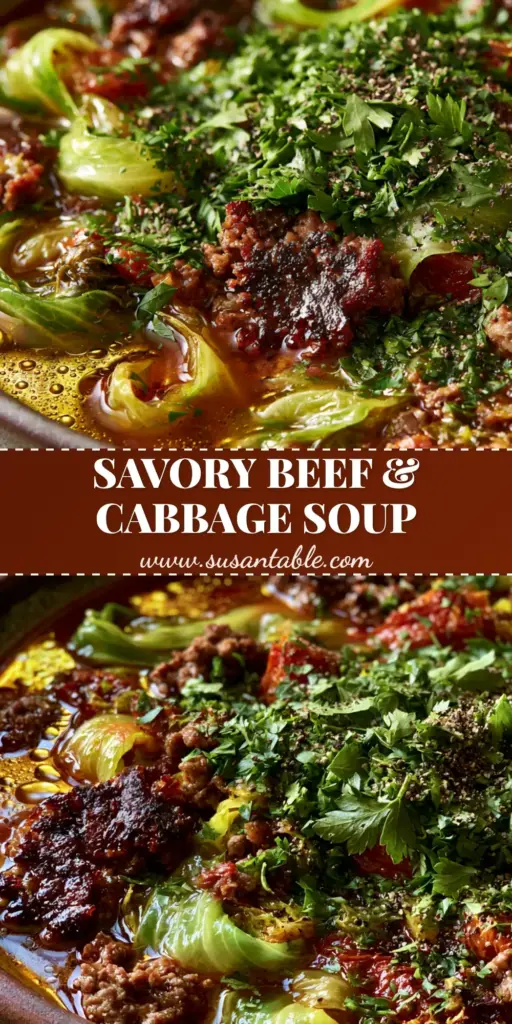
Beef Cabbage Soup: The Ultimate Savory One-Pot Meal
Ingredients
Equipment
Method
- Heat oil in Dutch oven. Brown beef in large crumbles until caramelized edges form. Remove beef and set aside.
- Sauté onions and garlic in the rendered beef fat until soft. Deglaze the pot with a splash of broth.
- Add tomatoes, broth, and cabbage ribbons. Simmer for 20-25 minutes until cabbage is translucent and tender.
- Stir beef back in. Serve with a dense sprinkle of parsley and coarse black pepper.
Notes
For a deeper amber color, deglaze the pan thoroughly to incorporate the beef fond.
Join the Community and Share Your Results!
We hope this beef cabbage soup becomes a new favorite in your kitchen. There is nothing more rewarding than seeing your recreations of these rustic, savory bowls. If you enjoyed the rich amber broth and caramelized beef, please leave a comment below and let us know how it turned out!
Don’t forget to follow us and save this recipe to your boards on Pinterest. Sharing these photos helps our community of home cooks grow, and we love seeing your unique spins on these classic comfort foods!