Welcome to the ultimate Italian pasta regional guide, where we transform your kitchen into a sprawling tour of the Mediterranean. Imagine a sun-drenched stone table laden with the textures of Puglia, the richness of Emilia-Romagna, and the herbal vibrancy of Liguria. Whether you are craving the rustic bite of thumb-pressed dough or the silky drape of wide ribbons, this guide brings authentic Italian soul to your plate.
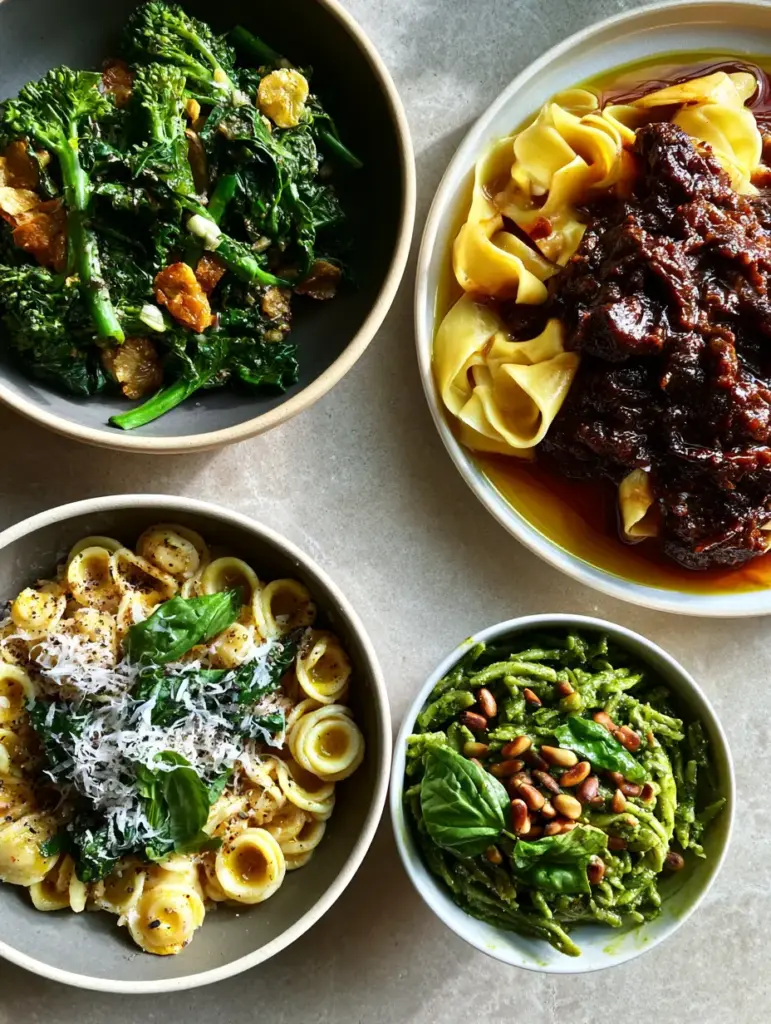
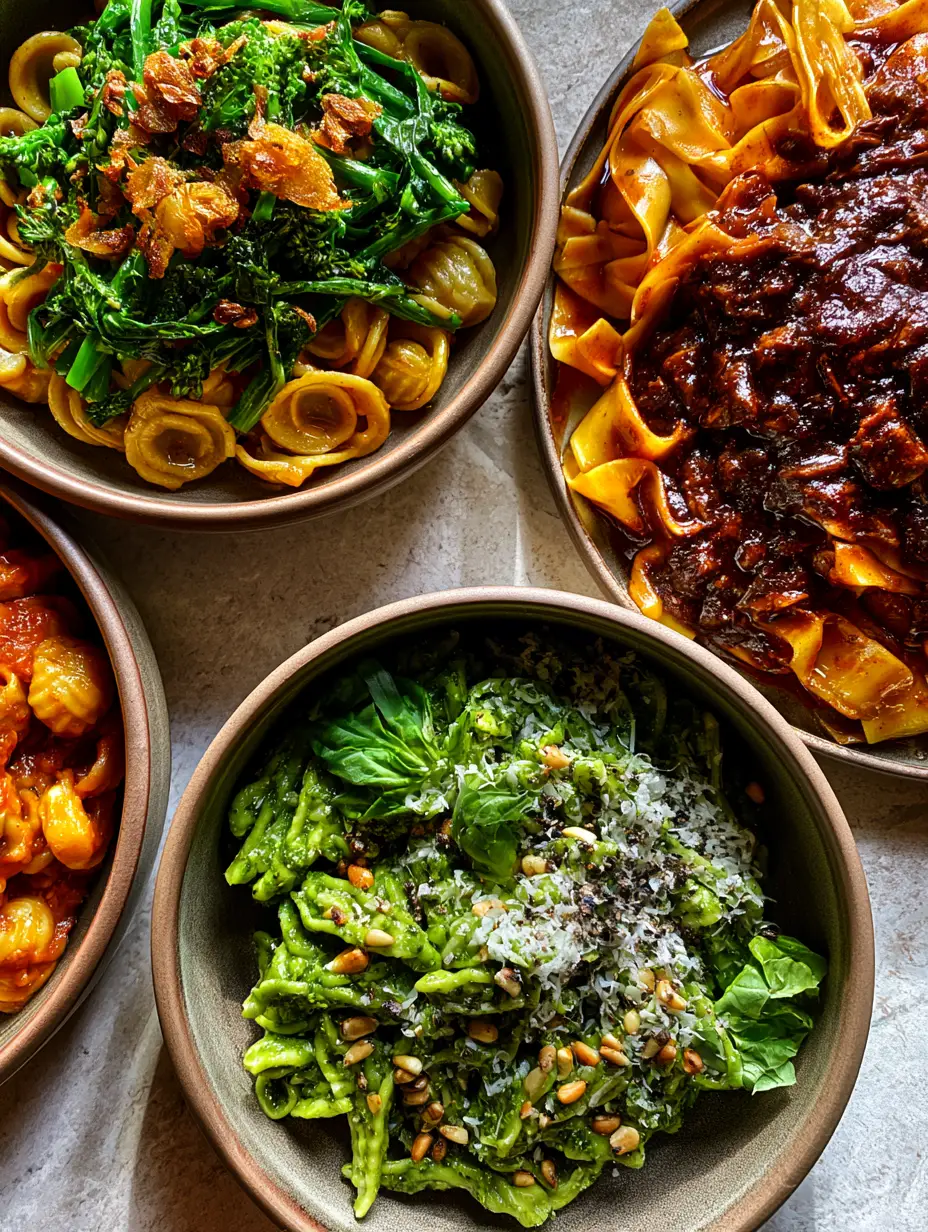
In this curated spread, we focus on the sensory harmony of three distinct dishes. We are talking about deep mahogany ragus that have simmered for hours, emerald-green pestos that smell of a summer garden, and broccoli rabe sautéed until tender-crisp with shards of golden garlic. This isn’t just a meal; it’s a masterclass in regional identity and culinary precision.
Why These Regional Classics Define the Italian Table
- Textural Diversity: Experience the contrast between chewy, artisanal orecchiette, twisted trofie, and delicate, wide pappardelle ribbons.
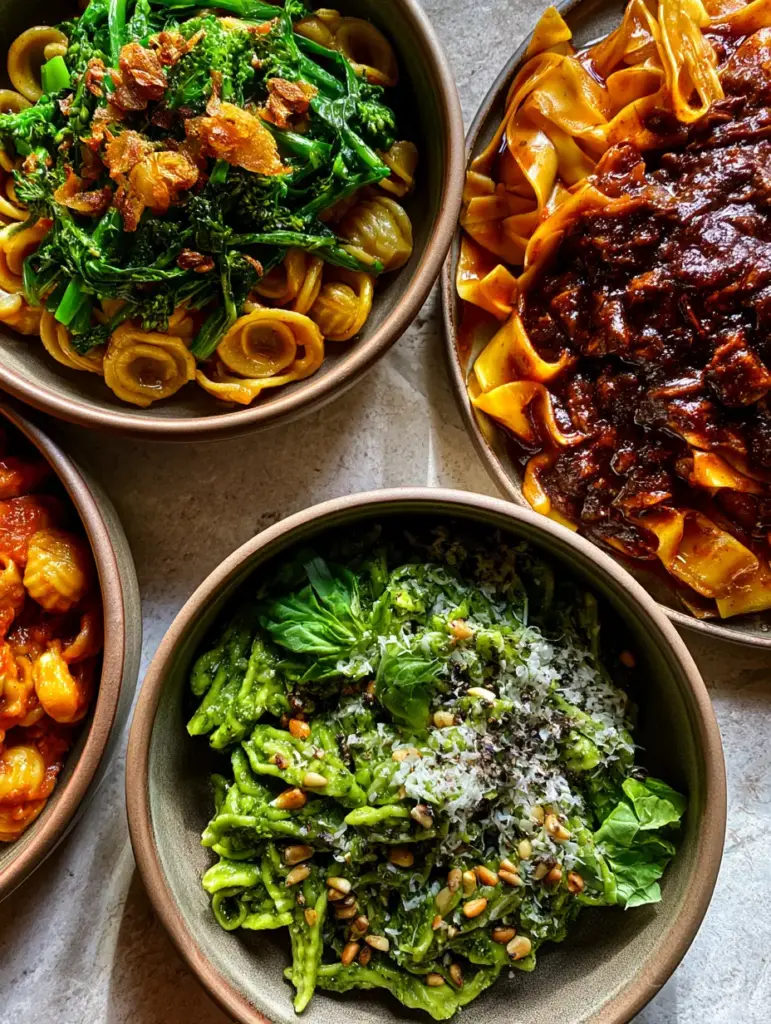
- Visual Masterpiece: From the glossy mahogany sheen of slow-cooked beef to the vibrant, emerald-green basil pesto, these dishes are a feast for the eyes.
- Symphony of Garnishes: We utilize micro-planed snowy white pecorino romano and cracked black pepper to provide a sharp, salty finish that cuts through the rich sauces.
- Authentic Techniques: Learn the professional methods for blistering tomatoes, toasting pine nuts to a perfect gold, and achieving that signature olive oil glisten.
Essential Ingredients for the Ultimate Regional Spread
Thumb-Pressed Orecchiette: 1 lb (450g) of high-quality semolina pasta. This “little ear” shape is designed to scoop up bits of vegetable and garlic in every bite.
Broccoli Rabe (Rapini): 1 large bunch (approx. 500g), trimmed. This slightly bitter green provides a necessary earthy counterpoint to the rich olive oil and garlic.
Beef for Ragu: 1.5 lbs (680g) of beef chuck or brisket. This cut contains the connective tissue necessary to create a thick, glossy, mahogany-colored sauce through slow braising.
Fresh Basil Leaves: 4 cups (approx. 120g) of packed Genovese basil. Freshness is non-negotiable for achieving that bright emerald-green hue in your pesto.
Pecorino Romano: 4 oz (115g) for micro-planing. This sheep’s milk cheese offers a sharper, saltier profile than Parmesan, perfectly complementing the regional flavors in this Italian pasta regional guide.
Extra Virgin Olive Oil: 1/2 cup (120ml) of the highest quality finishing oil. Use this for the final drizzle to create those soft highlights and a luxurious mouthfeel.
Pine Nuts: 1/4 cup (35g). Toasting these essential seeds releases oils that bind the pesto and add a buttery crunch to the trofie.
Garlic: 6 large cloves. We will slice these thinly to create crispy golden garlic bits that act as a textural garnish for the orecchiette.
Tools Required for Culinary Success
To achieve the professional results seen in our visuals, you will need a few key pieces of equipment. A heavy-bottomed Dutch oven is essential for the beef ragu to ensure even heat distribution and a deep color. A high-speed blender or traditional mortar and pestle is required for the pesto to maintain its vibrant green color.
You will also need a micro-plane grater for that “snowy” cheese effect. If you’ve previously mastered a bow-tie pasta lasagna, you’ll find the assembly of these regional dishes equally rewarding but with a focus on distinct, pure flavors.
Step-by-Step Instructions for the Regional Trio
Puglian Orecchiette with Broccoli Rabe and Crispy Garlic
Begin by bringing a large pot of salted water to a boil. Add the broccoli rabe and blanch for 2 minutes until vibrant green, then shock in ice water to preserve the color. In a wide skillet, heat 3 tbsp (45ml) of olive oil over medium-low heat.
Add your thinly sliced garlic. Watch closely for the visual cue: you want the garlic to turn a pale straw color and become crisp, not dark brown. Remove half of the garlic for garnish. Increase heat to medium, add the blanched rabe, and sauté until the edges are slightly charred. Toss with cooked orecchiette and a splash of starchy pasta water to emulsify.
Emilian-Style Pappardelle with Glossy Mahogany Beef Ragu
Sear your beef chunks in a hot Dutch oven until a deep, dark crust forms. Remove the meat and sauté finely diced aromatics (onion, carrot, celery) in the rendered fat. Stir in tomato paste and cook until it turns a rusty brick color.
Deglaze with red wine and return the beef with a splash of stock. Cover and braise on low for 3-4 hours. The sauce is finished when the beef shreds effortlessly and the liquid has reduced into a thick, mahogany-colored glaze that clings to the wide pappardelle ribbons. This rich dish pairs beautifully with a side of roasted beets and carrots for a balanced autumn feast.
Ligurian Trofie with Emerald-Green Basil Pesto
In a dry pan, toast your pine nuts over medium heat until they are fragrant and golden. In your blender, pulse the garlic, pine nuts, and a pinch of salt. Add the fresh basil and 1/3 cup (80ml) of olive oil, pulsing until smooth but still textured.
Fold in the finely grated pecorino by hand to avoid overheating the cheese. Toss the twisted trofie with the pesto, ensuring every groove is filled with the bright green sauce. For a lighter meal, this pesto also works wonderfully as a starter alongside a vegan garlic chickpea soup.
Pro Tips for Professional Plating
- The Pasta Water Secret: Always reserve at least 1 cup (240ml) of pasta cooking water. The starch is the “glue” that creates a silky, professional-grade sauce.
- Micro-planing Technique: Grate the pecorino romano directly over the hot pasta from a height. This allows the cheese to fall like snow and melt slightly upon contact.
- Temperature Control for Pesto: If using a blender, pulse in short bursts. Heat from the blades can oxidize the basil, turning your emerald green into a dull brown.
- The Glisten Factor: Do not skip the final drizzle of extra virgin olive oil. It provides the visual “pop” and highlights seen in authentic food photography.
Storing and Reheating Your Regional Pasta
Leftover ragu and orecchiette can be stored in airtight containers for up to 3 days. However, pesto-based dishes are best consumed immediately, as the basil will oxidize over time. If you must store pesto, press a piece of plastic wrap directly onto the surface of the sauce to prevent air contact.
To reheat the ragu or orecchiette, use a skillet over medium heat with a tablespoon of water or stock to loosen the sauce. Avoid the microwave if possible, as it can cause the oils in the pesto and garlic sauce to separate and become greasy.
What to Serve With This Italian Spread
While these pastas are the stars, a well-rounded Italian table often includes a variety of textures. Start your morning with an italian breakfast casserole to set the mood, or serve the pasta alongside a light vegetable side like a cheesy cauliflower broccoli casserole if you’re feeding a larger crowd.
For a refreshing finish, a simple arugula salad with lemon vinaigrette helps cleanse the palate after the rich, mahogany beef ragu. These combinations ensure your regional guide feels like a complete Mediterranean experience.
Frequently Asked Questions
While regional traditions dictate these pairings, you can swap orecchiette for conchiglie, or pappardelle for tagliatelle. The key is matching the sauce’s weight to the pasta’s surface area.
Avoid overheating the basil. Blanch the leaves briefly or pulse in short bursts in the blender, and always fold in the cheese by hand to prevent the friction from darkening the sauce.
Pecorino Romano is ideal for these dishes due to its sharp, salty profile, but a high-quality Parmigiano-Reggiano is a suitable, slightly mellower substitute.
The secret lies in a long, slow braise of high-collagen beef cuts and the addition of starchy pasta water at the end to emulsify the fats and liquids into a thick glaze.
Garlic becomes bitter if it turns dark brown. Aim for a light golden-straw color and remove it from the heat immediately to stop the cooking process.
The Definitive Regional Pasta Recipe Card
Italian pasta regional guide: Master the Art of Three Iconic Classics
Ingredients
Equipment
Method
- Blanch broccoli rabe for 2 minutes, shock in ice water. Sauté with sliced garlic in oil until garlic is crispy and golden.
- Combine cooked orecchiette with rabe, crispy garlic, and pasta water until emulsified.
- Sear beef until dark crust forms. Sauté aromatics and tomato paste. Deglaze with wine and braise for 3-4 hours until glossy and mahogany.
- Pulse toasted pine nuts, garlic, and basil with olive oil. Fold in pecorino by hand to maintain the bright green color.
Notes
Tip 2: Use a micro-plane for the cheese to create a snowy, light garnish.
Join the Culinary Journey
We hope this Italian pasta regional guide inspires you to explore the vast and delicious landscape of Italy’s favorite export. From the crispy garlic of the South to the rich braises of the North, there is a world of flavor waiting in your kitchen. Please leave a comment below with your favorite regional shape!
Don’t forget to share your creations with us! Pin this recipe to your favorite boards on Pinterest so you can find it for your next Sunday dinner. Happy cooking!