When the frost settles against the windowpane and the morning light filters through the kitchen in soft, ethereal beams, there is no culinary embrace quite like a bowl of Winter Minestrone Soup. This isn’t just a vegetable soup; it is a masterclass in texture and depth, featuring a broth so rich and velvety red it looks like liquid silk in a rustic ceramic bowl. The steam rising from the surface carries the scent of simmered herbs and aged cheese, promising a meal that is as nourishing as it is visually stunning.
Every spoonful of this Winter Minestrone Soup offers a symphony of perfectly al dente ditalini pasta, plump dark red kidney beans, and vibrant jewels of carrot and kale. The secret to its incredible body lies in a traditional Italian technique: simmering a thick Parmesan cheese rind directly in the broth until it becomes soft, glistening, and almost molten. Served with a thick slice of toasted sourdough bread to catch every stray droplet of high-quality olive oil, this recipe is the ultimate cold-weather blueprint for home cooks.
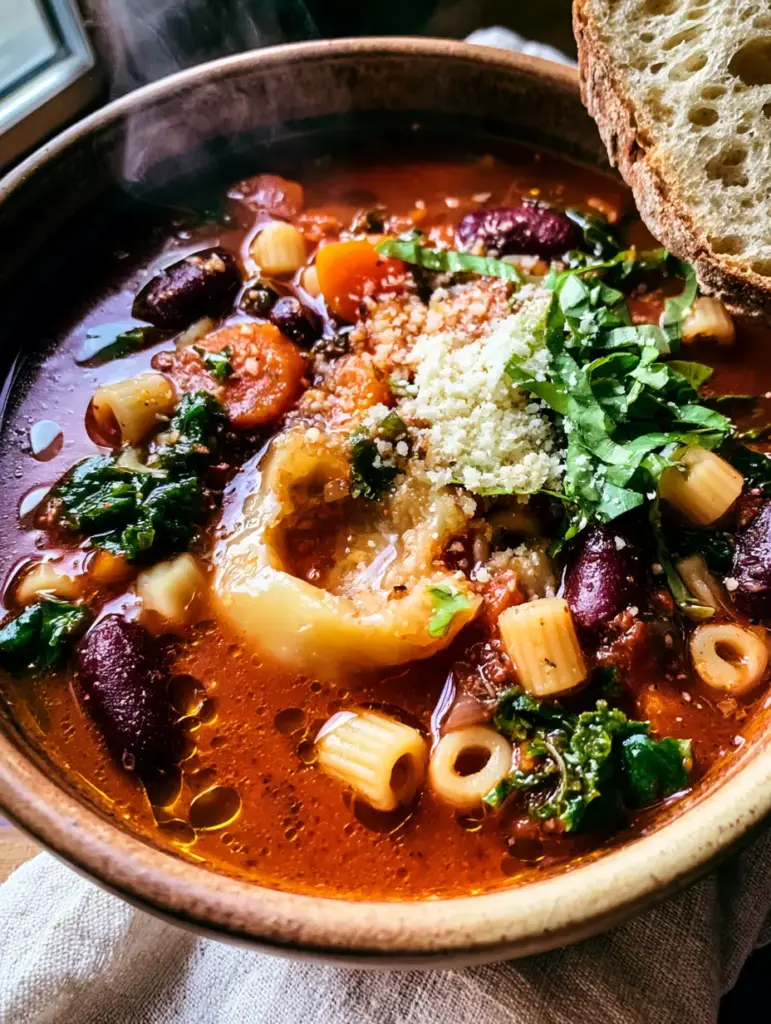
Why This Robust Winter Stew Stands Out
- The Velvety Tomato Base: Unlike thin, watery soups, our broth is intensified with tomato paste and the natural starches from the ditalini, creating a deep red, opaque finish.
- Textural Contrast: You will find a satisfying bite in every mouthful, from the tender snap of carrot coins to the leafy structure of chopped kale and the creamy interior of dark kidney beans.
- The Umami Bomb: The inclusion of a softened Parmesan rind acts as a natural flavor enhancer, infusing the soup with a savory depth that salt alone cannot achieve.
- Visual Sophistication: With bright green basil ribbons and droplets of golden olive oil, this dish brings high-end restaurant aesthetics to your dining table.
The Anatomy of an Authentic Winter Minestrone Soup
Creating a masterpiece requires the right building blocks. For this Winter Minestrone Soup, we focus on ingredients that provide both structural integrity and vibrant color to match our visual blueprint.
Ditalini Pasta: These small “thimbles” are the classic choice for minestrone. We use 1 cup (180g) of dry ditalini, ensuring they are cooked directly in the broth to release their starches, which helps thicken the liquid into that signature velvety texture.
Dark Red Kidney Beans: You will need 1 can (15 oz / 425g) of beans, rinsed and drained. These provide a meaty, plump texture and a dark contrast against the bright orange carrots and green zucchini.
The Aromatic Foundation: A combination of 1 large yellow onion (200g), 2 medium carrots (150g) sliced into coins, and 2 celery stalks (100g) forms the soffritto. These are sautéed in 3 tbsp (45ml) of extra virgin olive oil until softened and fragrant.
Rich Tomato Components: To achieve that deep red broth seen in our visual guide, we use 3 tbsp (45g) of double-concentrated tomato paste and 1 can (28 oz / 800g) of crushed tomatoes. This provides the acidity and color density required for a professional result.
Winter Greens and Vegetables: 2 cups (60g) of chopped kale and 1 medium zucchini (200g) diced into half-moons provide the vibrant green hues. These are added toward the end of the cooking process to maintain their structural integrity and bright color.
The Parmesan Element: A 2-inch (5cm) piece of Parmesan cheese rind is essential. As it simmers, it softens into a glistening, semi-melted state. We finish the dish with a generous 1/4 cup (25g) of freshly grated Parmesan cheese for a sharp, salty kick.
Garnish and Sides: Fresh basil ribbons (chiffonade), cracked black pepper, and high-quality olive oil for drizzling. Do not forget the crusty sourdough bread, toasted until golden brown to provide the perfect crunch alongside the hearty lentil vegetable soup textures found in similar rustic dishes.
Essential Tools for Soup Success
To achieve the “handheld smartphone photo” quality of this dish, you need tools that allow for even heat distribution and precise vegetable prep. A heavy-bottomed Dutch oven is non-negotiable for maintaining a steady simmer without scorching the tomato base.
A sharp chef’s knife is required to get those perfectly uniform carrot coins and diced zucchini, ensuring everything cooks at the same rate. Finally, a microplane or fine grater is needed to create the “snow-like” effect of the grated Parmesan cheese over the hot broth.
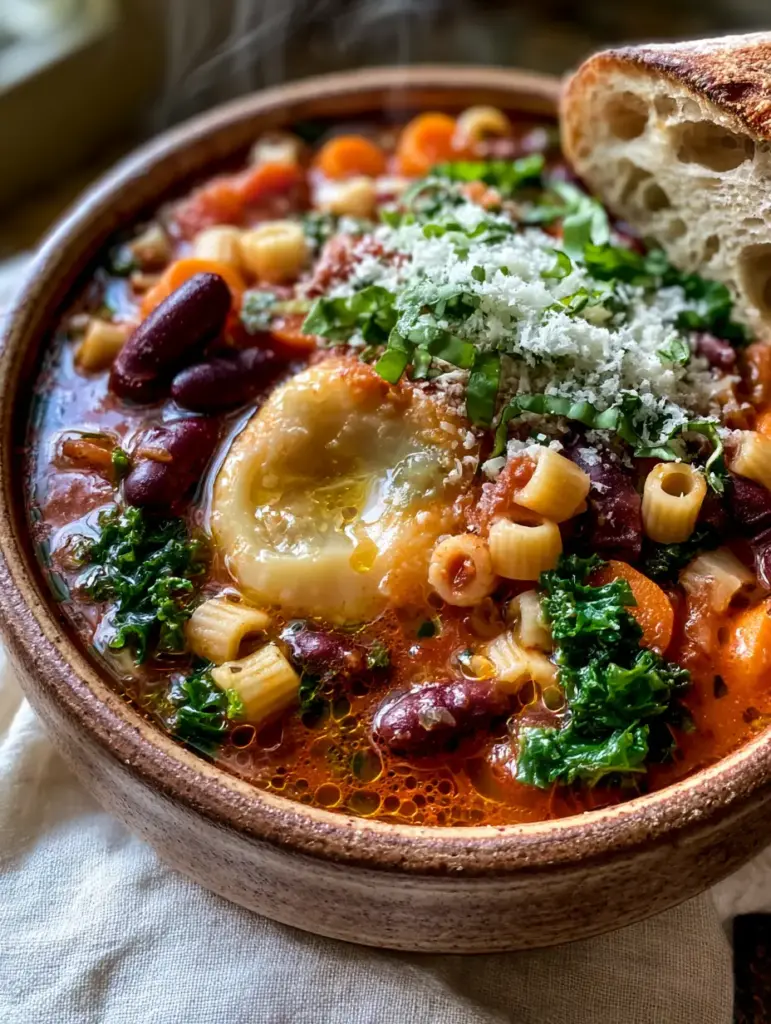
Step-by-Step Guide to the Ultimate Winter Minestrone Soup
1. Building the Aromatic Base
Heat 3 tbsp (45ml) of extra virgin olive oil in your Dutch oven over medium heat. Add the diced onion, sliced carrots, and celery. Season with a pinch of kosher salt to draw out moisture.
Sauté for 8-10 minutes. You are looking for the onions to become translucent and the carrots to just begin softening. This foundational step is similar to the base used in a traditional homemade chicken soup where building layers of flavor is key.
2. Blooming the Tomato and Herbs
Clear a small space in the center of the pot and add 3 tbsp (45g) of tomato paste. Let it cook for 2 minutes, stirring constantly, until it turns a shade darker—this “blooming” process is what guarantees that deep, rich red color in the final broth.
Stir in 3 cloves of minced garlic and 1 tsp (1g) of dried oregano. Cook for 30 seconds until the garlic is fragrant but not browned, as burnt garlic will introduce bitterness to your velvety broth.
3. The Long Simmer with the Secret Ingredient
Add the crushed tomatoes, 6 cups (1.4L) of vegetable stock, the kidney beans, and the star of the show: the Parmesan cheese rind. Bring the mixture to a boil, then reduce the heat to low.
Cover and simmer for 20 minutes. The Parmesan rind will begin to soften and release its oils and proteins, emulsifying the broth into a richer, more luxurious consistency. The scent at this stage should be deeply savory and comforting.
4. Perfectly Al Dente Pasta and Fresh Greens
Raise the heat slightly and stir in 1 cup (180g) of ditalini pasta and the diced zucchini. Cook for about 8-10 minutes. Taste the pasta frequently; it should be al dente, meaning it has a slight resistance to the tooth.
In the final 3 minutes of cooking, fold in the chopped kale. The heat of the soup will wilt the kale into a vibrant green without turning it mushy. If the soup becomes too thick, add an additional 1/2 cup (120ml) of stock to maintain the correct soup-to-sturdy-ingredient ratio.
5. Finishing and Visual Plating
Remove the Parmesan rind if desired, or leave it in the center of the bowl for that “glistening and melting” visual appeal. Ladle the soup into rustic ceramic bowls. Ensure you capture a mix of the carrot coins, kale, and beans in every serving.
Top each bowl with a generous flurry of freshly grated Parmesan, thin ribbons of fresh basil, and a heavy crack of black pepper. Drizzle a few droplets of olive oil over the surface—they should bead up like golden pearls on the red broth. Serve immediately with a warm piece of toasted sourdough bread on a neutral linen napkin.
Expert Tips for the Perfect Bowl
- Don’t Overcook the Pasta: Ditalini continues to absorb liquid as it sits. If you plan on having leftovers, consider cooking the pasta separately and adding it to individual bowls to prevent it from becoming bloated.
- Rind Management: If your Parmesan rind has a wax coating, scrape it off before adding it to the pot to ensure only pure cheese flavor enters the broth.
- Salt Awareness: Between the vegetable stock and the Parmesan rind, this soup carries a lot of natural sodium. Always taste before adding additional salt at the end.
- The Sourdough Crunch: For the best results, brush your sourdough with olive oil and rub it with a raw garlic clove before toasting. It provides a sharp contrast to the soft soup ingredients.
Storage, Reheating, and Make-Ahead Advice
This Winter Minestrone Soup actually tastes better the next day as the flavors continue to meld. Store it in an airtight container in the refrigerator for up to 4 days. If the soup thickens too much in the fridge, simply add a splash of water or broth when reheating on the stovetop.
While you can freeze this soup, be aware that the zucchini and pasta may lose some of their firm texture upon thawing. If freezing, it is best to leave the pasta out and add fresh ditalini when you reheat the base. For those looking for other freezer-friendly options, our vegetarian potato soup is another excellent winter staple.
What to Serve with Winter Minestrone
While the toasted sourdough is the classic accompaniment, you can expand your winter spread with other rustic dishes. A side of honey-roasted beets and carrots adds an earthy sweetness that complements the acidity of the tomato broth perfectly.
If you are hosting a larger gathering, consider pairing this soup with a light salad or even a hearty vegetable-forward main. The complexity of the Parmesan-infused broth allows it to stand alone as a main course, but it also functions beautifully as a starter for a larger Italian-inspired feast.
Frequently Asked Questions
Yes, simply omit the Parmesan rind and the grated cheese topping. Use a teaspoon of nutritional yeast or a tablespoon of white miso paste to replicate the umami depth provided by the cheese.
Rinsing the beans is recommended to remove excess salt and the metallic taste from the canning liquid, which ensures your tomato broth remains bright and clean in flavor.
If you don’t have kale, Swiss chard or baby spinach make excellent substitutes. Add spinach at the very end as it wilts much faster than kale or chard.
The most effective way is to cook the ditalini pasta directly in the soup and simmer a Parmesan cheese rind in the broth. The pasta releases starches while the rind adds proteins and fats, creating a velvety, thick consistency.
Pasta is highly absorbent. To prevent this, serve the soup immediately once the pasta is al dente, or cook the pasta separately and add it to individual bowls if you plan on having leftovers.
The Ultimate Winter Minestrone Soup Recipe
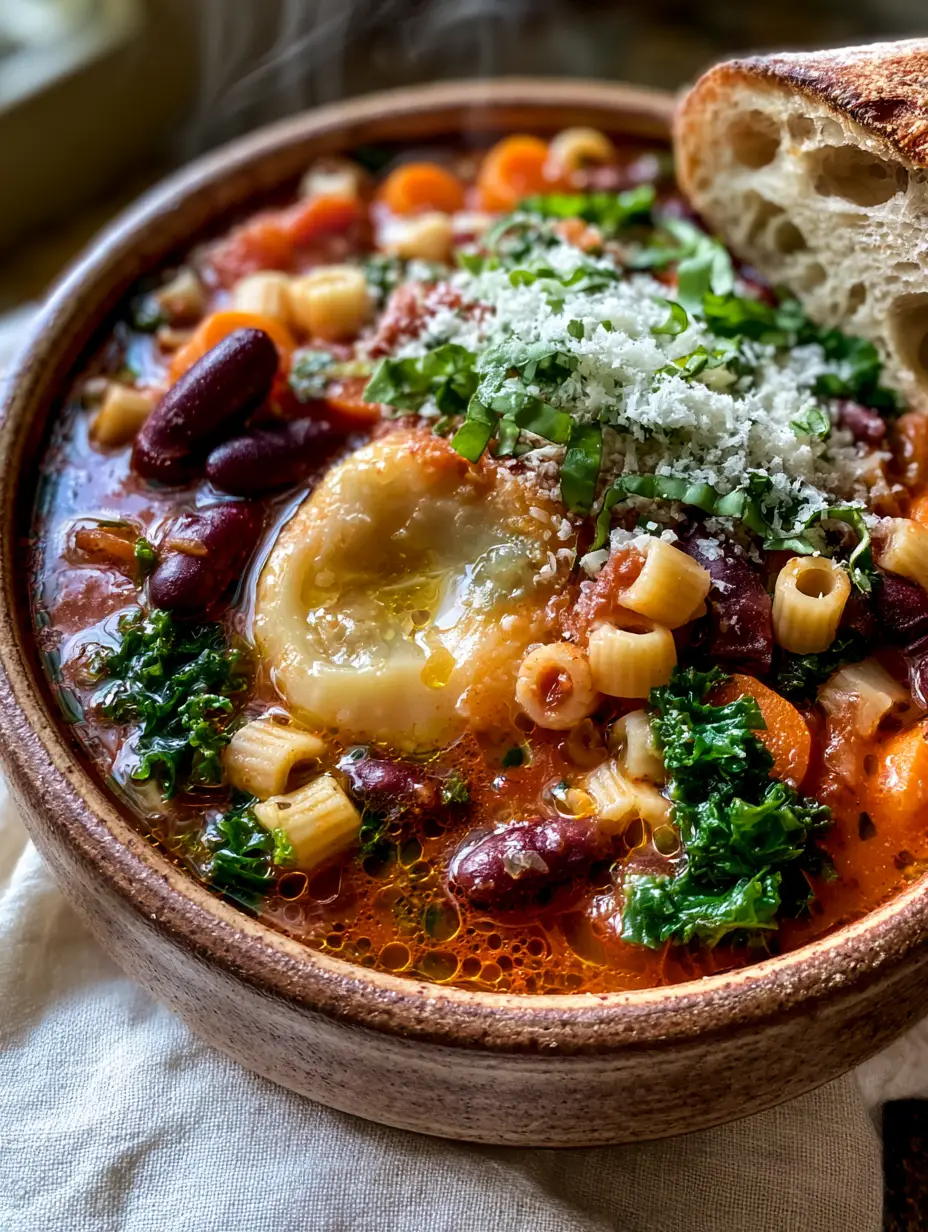
Winter Minestrone Soup with Parmesan Rind and Toasted Sourdough
Ingredients
Equipment
Method
- Heat olive oil in a Dutch oven. Add onion, carrots, and celery. Cook for 8-10 minutes until softened.
- Stir in tomato paste and garlic. Cook for 2 minutes until the paste is deep red and fragrant.
- Add crushed tomatoes, stock, kidney beans, and parmesan rind. Simmer for 20 minutes.
- Add ditalini and zucchini. Cook for 8-10 minutes until pasta is al dente.
- Stir in chopped kale in the last 3 minutes of cooking until vibrant green.
- Ladle into bowls. Top with grated parmesan, basil, black pepper, and olive oil droplets. Serve with toasted sourdough.
Notes
The parmesan rind adds a thick, velvety finish to the tomato base—don't skip it!
Conclusion: Your New Winter Tradition
There is a reason why Winter Minestrone Soup remains a cornerstone of seasonal cooking. It transforms humble pantry staples like kidney beans and pasta into a vibrant, nutrient-dense meal that satisfies both the eyes and the palate. The combination of the deep red broth and the melted Parmesan rind creates a comfort level that is hard to match with any other recipe.
We invite you to try this recipe and share your results! Did your broth achieve that perfect velvety red? Did you love the addition of the sourdough? Leave a comment below and let us know your thoughts. For more visual inspiration and to save this recipe for later, follow us on Pinterest and pin the image below!