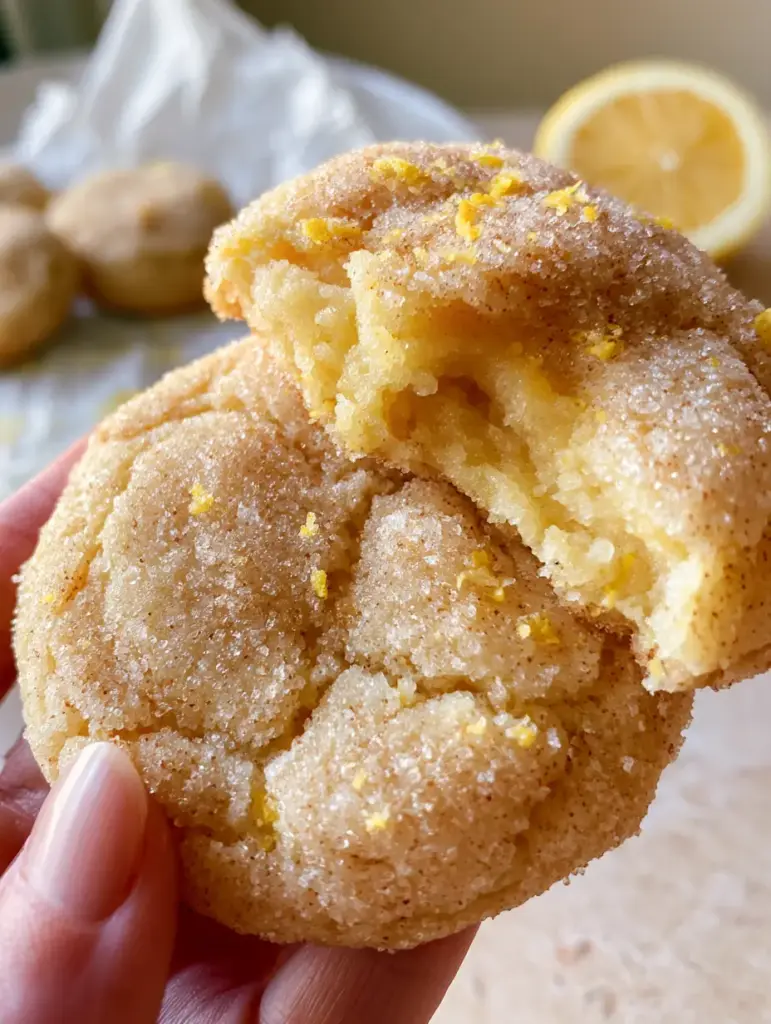
There is nothing quite like the sensory experience of breaking into a fresh batch of Lemon Snickerdoodles. Imagine a cookie so thick and lofty that it feels substantial in your hand, yet so soft that the center reveals a steaming, buttery yellow crumb that practically melts on your tongue. This isn’t your average flat, crispy wafer; this is a gourmet, bakery-style masterpiece designed for the true citrus lover.
While the classic cinnamon-sugar version holds a special place in our hearts, the addition of vibrant citrus oil and micro-planed zest elevates the flavor profile to something bright, refreshing, and entirely addictive. The exterior boasts a heavy, beautiful crackle pattern, encrusted with sparkling granulated sugar crystals and tiny shards of lemon zest that catch the light like edible jewels.
In this guide, we are diving deep into the culinary science of the perfect cookie structure. We will explore how to achieve that signature crackle and why the specific ratio of leavening agents matters for that pillowy interior. Whether you are serving these at a spring brunch or as a zesty midnight snack, these cookies are guaranteed to be the star of the show.
Why You Will Love These Zesty Soft-Baked Treats
- Structural Integrity: These cookies are engineered to be thick and lofty, ensuring they never spread into thin puddles on your baking sheet.
- Sensory Contrast: The crunch of the sparkling granulated sugar coating perfectly offsets the moist, steaming center.
- Explosive Citrus Aroma: By using fresh micro-planed lemon zest rather than just extract, we capture the essential oils that provide a deep, lingering lemon fragrance.
- The Perfect Crackle: A precise balance of cream of tartar and baking soda creates that iconic “cracked” golden exterior that defines a true snickerdoodle.
The Anatomy of a Perfect Lemon Snickerdoodle
To achieve the visual and textural results seen in professional bakery photos, we must look at the “forensic” details of our ingredients. A soft-baked lemon cookie dough requires a high moisture content, but it also needs enough structure to stay thick.
We start with high-quality unsalted butter, softened to room temperature. This allows for proper aeration during the creaming process, which is the foundation of that “pillowy” crumb. When you cream butter and sugar together, you are creating thousands of tiny air pockets that expand in the oven.
The “lemon” in these Lemon Snickerdoodles comes from a dual-threat approach: fresh zest and concentrated juice. The zest provides the floral notes, while the juice provides the necessary acidity to react with our leavening agents, resulting in a lofty, puffed-up profile.
Essential Ingredients for the Fluffiest Result
Unsalted Butter: 1 cup (227g) of high-quality butter provides the rich, fatty base that creates a moist crumb. Ensure it is at room temperature (about 65°F/18°C) so it creams effectively with the sugars.
Granulated Sugar: 1 ½ cups (300g) for the dough and an extra ¼ cup (50g) for rolling. The sugar provides sweetness and helps create the crackle effect by drawing moisture from the surface of the dough as it bakes.
Fresh Lemons: You will need 2 large lemons to produce approximately 2 tbsp (12g) of micro-planed zest. This zest is infused into the sugar coating to ensure every bite has a “sparkling” citrus finish.
Large Eggs: 2 room-temperature eggs act as the primary binder. They provide the protein structure needed to keep the cookies thick and prevent them from collapsing after they rise.
Cream of Tartar: 2 tsp (6g) is non-negotiable for any snickerdoodle. It provides the signature tang and prevents the sugar from crystallizing too quickly, leading to a softer texture.
Baking Soda: 1 tsp (5g) reacts with the cream of tartar and lemon juice to create carbon dioxide, which gives these cookies their impressive lift.
All-Purpose Flour: 3 cups (375g) of flour provides the structural framework. We use a slightly higher flour-to-fat ratio to ensure the cookies remain “lofty” rather than flat.
Fine Sea Salt: ½ tsp (3g) is essential for balancing the sweetness and enhancing the natural citrus flavors of the dough.
The Equipment Required for Professional Accuracy
To achieve the macro-level detail of a steaming, soft interior, you need the right tools. A Microplane Zester is the most important piece of equipment here; it creates those tiny shards of yellow zest that blend seamlessly into the sugar coating without being bitter.
You will also need a Mechanical Cookie Scoop (approximately 3 tbsp or 50g capacity). Using a scoop ensures every Lemon Snickerdoodle is the exact same size, which leads to even baking and a consistent “thick” profile across the entire batch.
Finally, high-quality Parchment Paper is vital. Unlike greasing a pan, parchment paper provides a neutral surface that prevents the cookies from spreading too much, helping to maintain that golden, cracked base.
Step-by-Step Instructions to Lemon Perfection
Infusing the Citrus Aromatics
In a small bowl, combine your ¼ cup (50g) of rolling sugar with 1 tbsp (6g) of the fresh lemon zest. Use your fingertips to rub the zest into the sugar until it becomes fragrant and takes on a pale yellow hue; this releases the oils for maximum flavor.
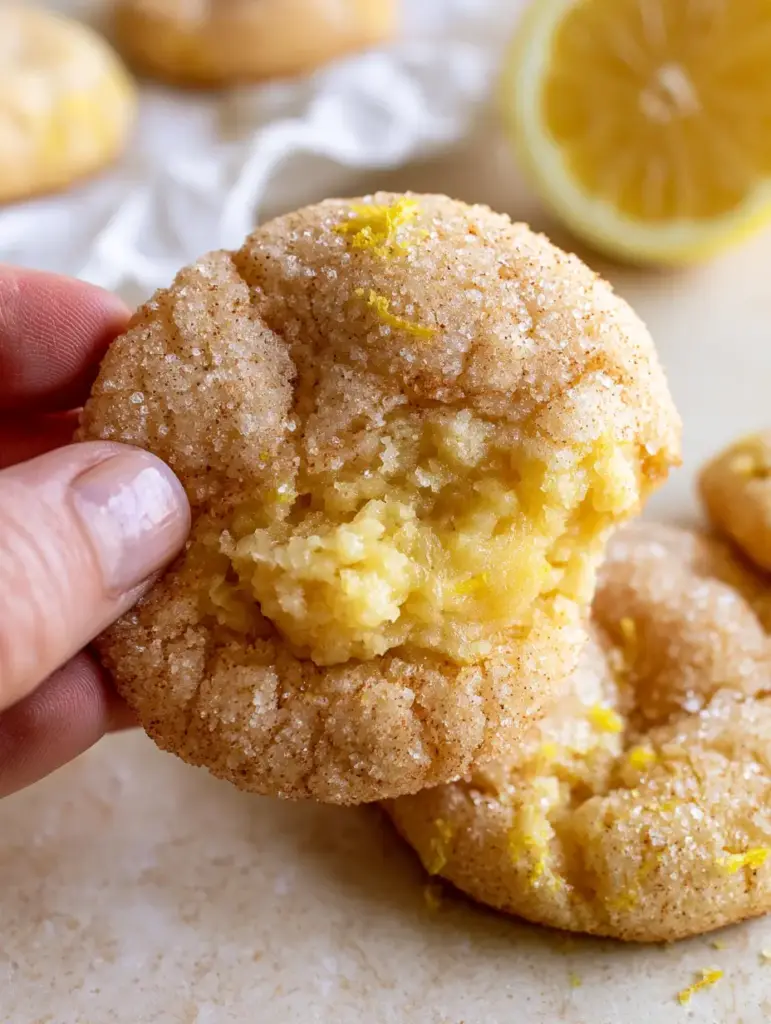
This “citrus sugar” is what creates the sparkling granulated sugar coating seen in the visual blueprint. Set this aside to let the flavors meld while you prepare the main dough.
Creaming for Maximum Loft
In a large stand mixer, beat the 1 cup (227g) of softened butter and 1 ½ cups (300g) of sugar on medium-high speed for 3-5 minutes. You are looking for a visual change: the mixture should turn pale ivory and look noticeably fluffy.
Add the eggs one at a time, followed by the remaining lemon zest and 1 tbsp (15ml) of fresh lemon juice. The batter should look smooth and creamy, almost like a thick frosting.
Integrating the Dry Science
Whisk together the flour, cream of tartar, baking soda, and salt in a separate bowl. Slowly add the dry ingredients to the wet mixture on low speed. Stop mixing the moment the last streak of flour disappears to avoid overworking the gluten.
Over-mixing is the enemy of a “pillowy soft” crumb. If you develop too much gluten, your Lemon Snickerdoodles will become tough and bready rather than moist and tender.
The Chilling Phase
For a truly thick cookie profile, chill the dough for at least 30 minutes. Cold dough spreads less in the oven, ensuring the cookies stay lofty. While the dough chills, preheat your oven to 350°F (175°C).
Rolling and Coating
Scoop balls of dough (about 2 tablespoons each) and roll them between your palms until smooth. Toss each ball into the lemon-sugar mixture, ensuring a heavy, even coating of sparkling crystals and zest shards.
Place the balls 3 inches apart on your prepared baking sheets. Do not flatten them! The oven’s heat will do the work, creating that beautiful crackle pattern naturally as the cookies rise and slightly settle.
Baking and Sensory Cues
Bake for 10-12 minutes. Look for the specific visual cues: the edges should be set and a very light golden brown, but the centers should still look slightly “underdone” and soft. This is the secret to a moist, steaming interior.
Allow the cookies to cool on the baking sheet for 5 minutes before transferring them to a wire rack. This “carry-over cooking” completes the setting of the pillowy crumb without drying out the center.
Expert Tips for a Flawless Crackle Pattern
- Check Your Leavening: Ensure your cream of tartar is fresh. If it is expired, your cookies will not rise properly, resulting in a flat, sad profile instead of a lofty one.
- Don’t Overbake: The “crackle” happens in the last two minutes of baking. If you wait until the whole cookie is brown, you’ve lost the soft-baked texture.
- Room Temperature Matters: Using cold eggs can curdle the butter mixture, leading to an uneven crumb. If you’re in a rush, place cold eggs in a bowl of warm water for 5 minutes.
- Zest Before Juicing: It is nearly impossible to zest a lemon once it has been squeezed! Always micro-plane the skin first.
Storage and Reheating for Long-Lasting Freshness
To maintain that “soft-baked” feel, store these Lemon Snickerdoodles in an airtight container at room temperature for up to 4 days. Adding a small piece of white bread to the container can help keep them moist by providing a sacrificial source of humidity.
If you want to recreate the “steaming center” experience from the photo, simply pop a cookie in the microwave for 8-10 seconds. This softens the fats and makes the crumb incredibly tender again.
These cookies also freeze beautifully. You can freeze the unbaked dough balls (rolled in sugar) for up to 3 months. Just add an extra 2 minutes to the baking time when cooking from frozen.
What to Serve with Lemon Snickerdoodles
These bright cookies are the perfect conclusion to a flavorful meal. If you are hosting a dinner party, consider starting with something savory like garlic butter noodles or a light spinach mandarin salad to complement the citrus notes.
For a cozy afternoon tea, pair these treats with a dollop of whipped ricotta or even a side of cottage cheese with cucumbers for a high-protein snack contrast. The acidity of the lemon also pairs wonderfully after a rich meal like honey chicken or authentic Italian pasta dishes.
Frequently Asked Questions
Absolutely. Roll the dough into balls and coat them in the lemon sugar, then freeze on a tray. Once solid, transfer to a bag. Bake directly from frozen, adding 2-3 minutes to the cook time.
While you can, fresh zest and juice provide a much more complex, floral, and bright flavor. The micro-planed zest in the sugar coating is essential for the visual and aromatic experience.
Yes! Cream of tartar provides the signature tang and helps create the specific cracked texture and pillowy soft crumb that defines a snickerdoodle. Without it, you just have a lemon sugar cookie.
The crackle comes from the leavening agents reacting and the sugar coating drying out the surface. Do not flatten the dough balls before baking; let the heat naturally create the cracks as they rise.
Flat cookies are usually caused by butter that is too warm or skipping the dough-chilling step. Ensure your butter is room temp (not melted) and chill the dough for 30 minutes before baking to maintain a thick profile.
The Best Thick Lemon Snickerdoodles Recipe

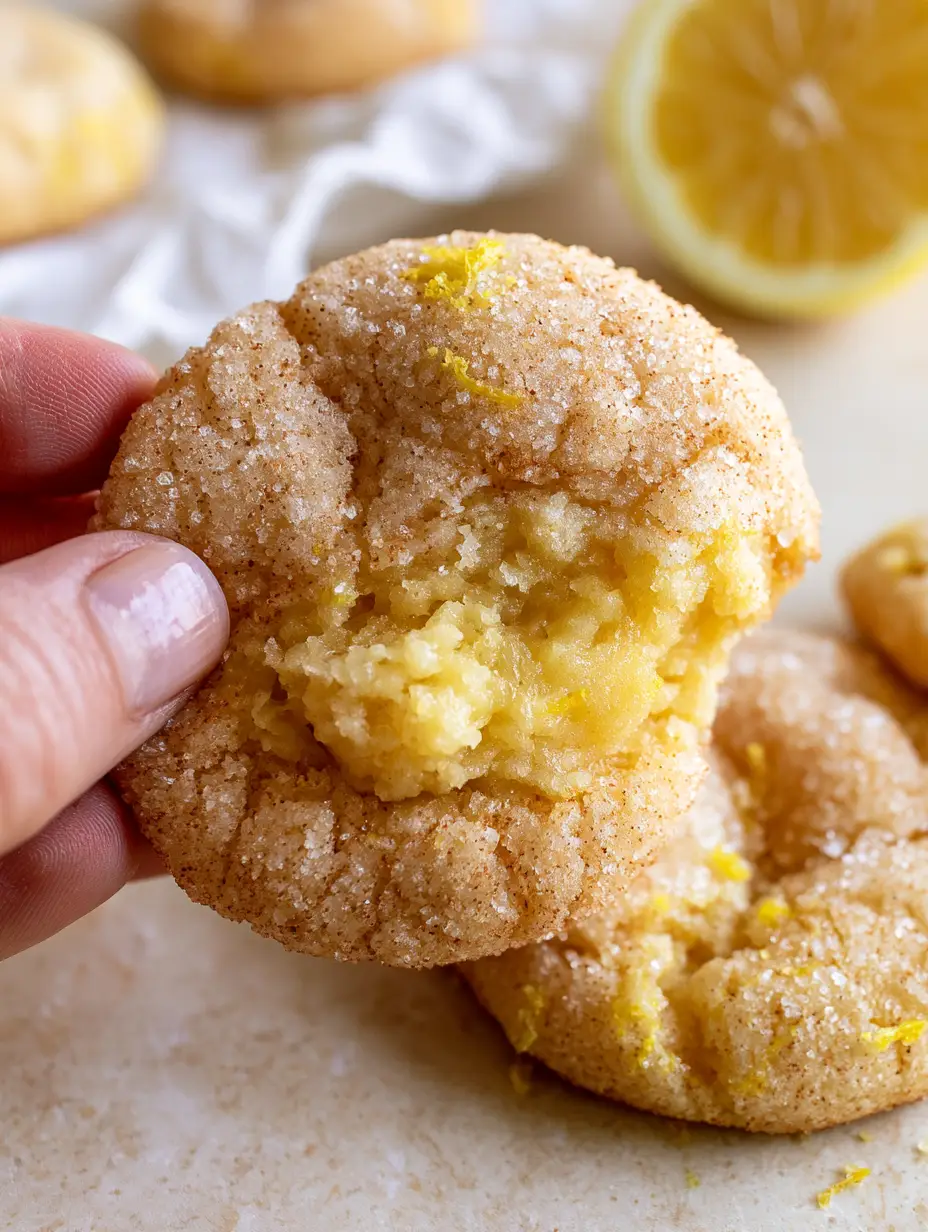
Lemon Snickerdoodles: The Ultimate Thick and Pillowy Soft-Baked Cookie
Ingredients
Equipment
Method
- In a small bowl, rub the 1/4 cup sugar and 1 tbsp lemon zest together with your fingers until fragrant.
- Cream the butter and 1.5 cups sugar in a stand mixer on medium-high for 3-5 minutes until pale and fluffy.
- Beat in the eggs one at a time, then mix in the lemon juice and zest.
- Whisk flour, cream of tartar, baking soda, and salt. Gradually add to wet ingredients on low speed until just combined.
- Chill the dough in the refrigerator for 30 minutes to ensure a thick profile.
- Preheat oven to 350°F (175°C). Scoop 2-tbsp portions of dough, roll into balls, and coat heavily in the lemon-sugar mixture.
- Place on parchment-lined sheets and bake for 10-12 minutes until edges are set but centers are soft.
Notes
Do not overbake; the cookies should look slightly soft in the center when removed from the oven.
Share Your Zesty Creations!
These Lemon Snickerdoodles are more than just a dessert; they are a bright, citrusy experience that brings joy to any kitchen. The combination of the thick profile and the sparkling sugar coating makes them as beautiful to look at as they are to eat.
If you make these, please leave a comment below and let me know how they turned out! Did you get that perfect crackle? I’d love to hear your thoughts. Don’t forget to follow me on Pinterest for more soft-baked inspiration and save this recipe to your favorite dessert board.