There is nothing quite like the sensory explosion of tearing into a fresh loaf of artisan French bread. Imagine the sound of a golden-brown caramelized crust visibly shattering into thin, glass-like shards as you pull it apart. The resistance of the crust gives way to a brilliant white, highly aerated interior with large alveoli that catch every drop of butter.
As the bread yields, a soft plume of steam escapes from the center, carrying the intoxicating aroma of fermented yeast and toasted grain. This isn’t just a side dish; it is a culinary masterpiece designed to sit proudly on a wrinkled grey linen napkin atop your favorite wooden cutting board.
Whether you are looking to master the aesthetic of modern brunch toast or simply want the perfect vessel for dipping into a rich sauce, this recipe delivers professional bakery results in a home kitchen. We have reverse-engineered the science of steam and hydration to ensure your loaves look exactly like a high-end editorial photograph.
The Science of the Perfect Artisan Baguette
To achieve the visual recipe blueprint of a rustic, scored crust and a light flour dusting, we must look at the foundation of bread science. High-quality French bread relies on a high hydration level and a long, cold fermentation period.
These techniques allow the enzymes in the flour to break down starches into simple sugars, which caramelize in the oven to create that deep golden-brown hue. The large holes in the crumb, known as the “open crumb structure,” are the result of gentle dough handling and strategic gluten development.
- Shatter-Crisp Texture: Achieved through a specific steam injection method during the first ten minutes of baking.
- Deep Alveoli: A result of an 80% hydration dough that is folded rather than kneaded.
- Rustic Visuals: Created by using a sharp bread lame to produce deep, angled score marks that “bloom” in the heat.
- Aromatic Depth: A 24-hour cold proofing stage develops the complex flavors found in professional boulangeries.
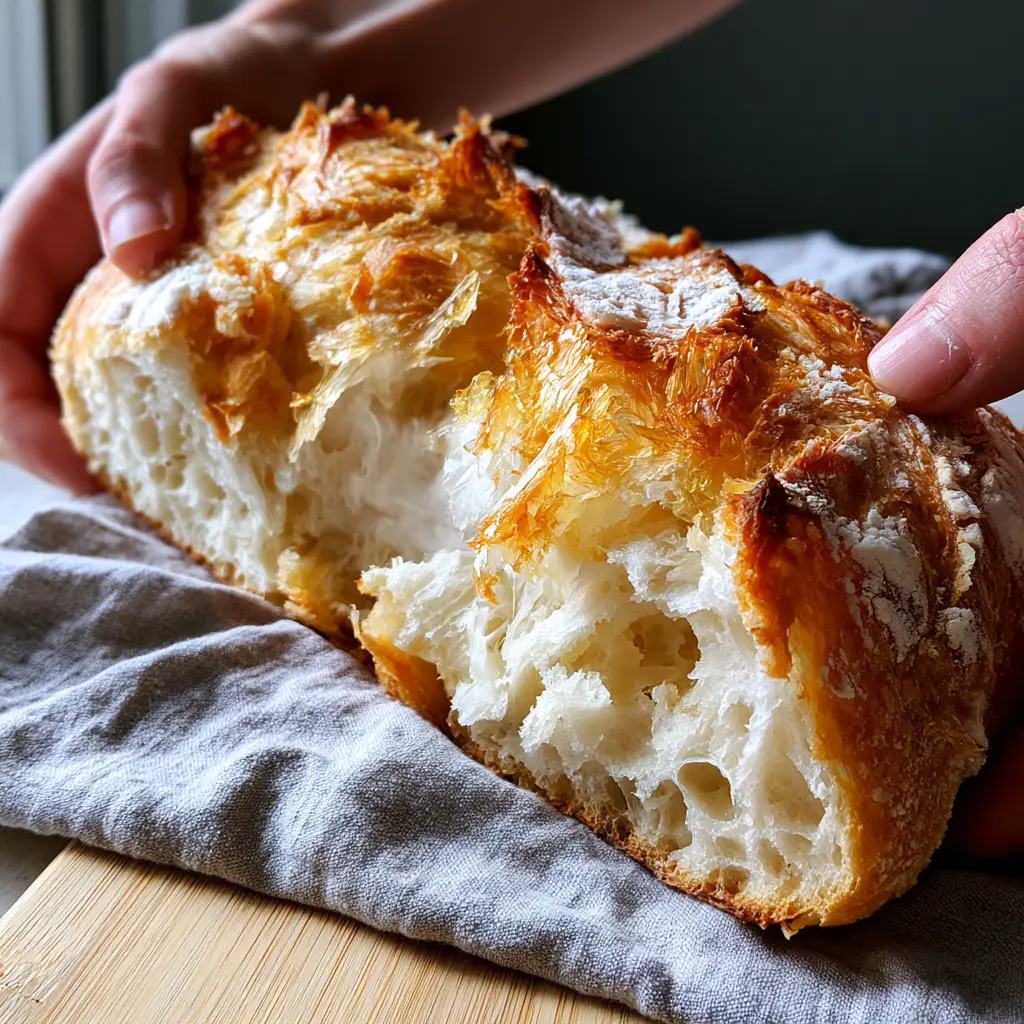
Essential Components for the Fluffiest French Bread
Every ingredient in this list serves a specific chemical purpose. To get the rustic, flour-dusted finish and the glass-like shards of crust, do not skip these details.
Bread Flour: 4 cups (500g)
Bread flour has a higher protein content than all-purpose flour, which is crucial for creating the strong gluten network that traps gas and creates those iconic large holes.
Warm Water: 1.5 cups (360ml)
Using filtered water at 105°F (40°C) ensures the yeast activates quickly without being killed by heat. The hydration level is high enough to produce steam from within the dough.
Active Dry Yeast: 2.25 tsp (7g)
This is the engine of our French bread. It provides the lift and the plume of steam that escapes when the bread is torn open.
Fine Sea Salt: 1.5 tsp (9g)
Salt regulates the yeast activity and tightens the gluten structure, preventing the bread from becoming a flat, dense mass. It also enhances the toasted grain flavor.
Sugar: 1 tsp (4g)
A small amount of sugar feeds the yeast initially and aids in the Maillard reaction, resulting in that golden-brown caramelized crust.
Rice Flour: 2 tbsp (30g)
This is our “secret” for the visual blueprint. We use this for the light flour dusting because it doesn’t burn as easily as wheat flour, keeping those rustic score marks bright white.
Must-Have Equipment for Bakery-Quality Results
To recreate the high-contrast shadows and craggy texture seen in professional artisan photos, you need the right tools to manipulate heat and moisture.
A heavy-duty baking stone or a cast iron Dutch oven is essential for heat retention. These tools mimic the floor of a professional stone oven, giving the bottom of your French bread a sturdy, caramelized base.
You will also need a spray bottle filled with water to create the steam plume. For the scoring, a dedicated bread lame (a thin razor blade) is much better than a kitchen knife for achieving those deep, rustic marks.
The Step-by-Step Path to Artisan Excellence
Step 1: The Autolyse and Mixing
In a large glass bowl, whisk together your bread flour, sugar, and yeast. Slowly pour in the warm water (360ml) and stir until a shaggy dough forms. Let this sit for 20 minutes; this “autolyse” period allows the flour to fully hydrate before the salt is added.
Step 2: Developing the Open Crumb Structure
Instead of traditional kneading, we will use the “stretch and fold” method. Sprinkle the salt (9g) over the dough. Every 30 minutes, reach under the dough, pull it upward, and fold it over itself. Repeat this four times over two hours to build strength while keeping the air bubbles intact.
Step 3: The Cold Fermentation
Cover the bowl tightly and place it in the refrigerator for 12 to 24 hours. This is the “secret” to the airy white interior. Cold fermentation slows down the yeast, allowing the gas bubbles to expand slowly and create a more complex flavor profile.
Step 4: Shaping and the Light Flour Dusting
Gently tip the cold dough onto a floured surface. Divide into two long logs. Being careful not to deflate the large alveoli, roll the dough into baguettes. Dust the tops generously with rice flour (30g) to achieve that signature rustic look.
Step 5: Scoring for the Rustic Bloom
Using your bread lame, make three deep, diagonal slashes across the top of each loaf. These score marks are not just for looks; they control where the bread expands, creating the craggy texture and high-contrast shadows that define a perfect French bread loaf.
Step 6: The Steam-Injected Bake
Preheat your oven to 475°F (245°C) with a shallow pan on the bottom rack. Slide your loaves onto the baking stone and pour 1 cup of boiling water into the bottom pan. The resulting steam creates the shattered crust shards and that beautiful glass-like finish.
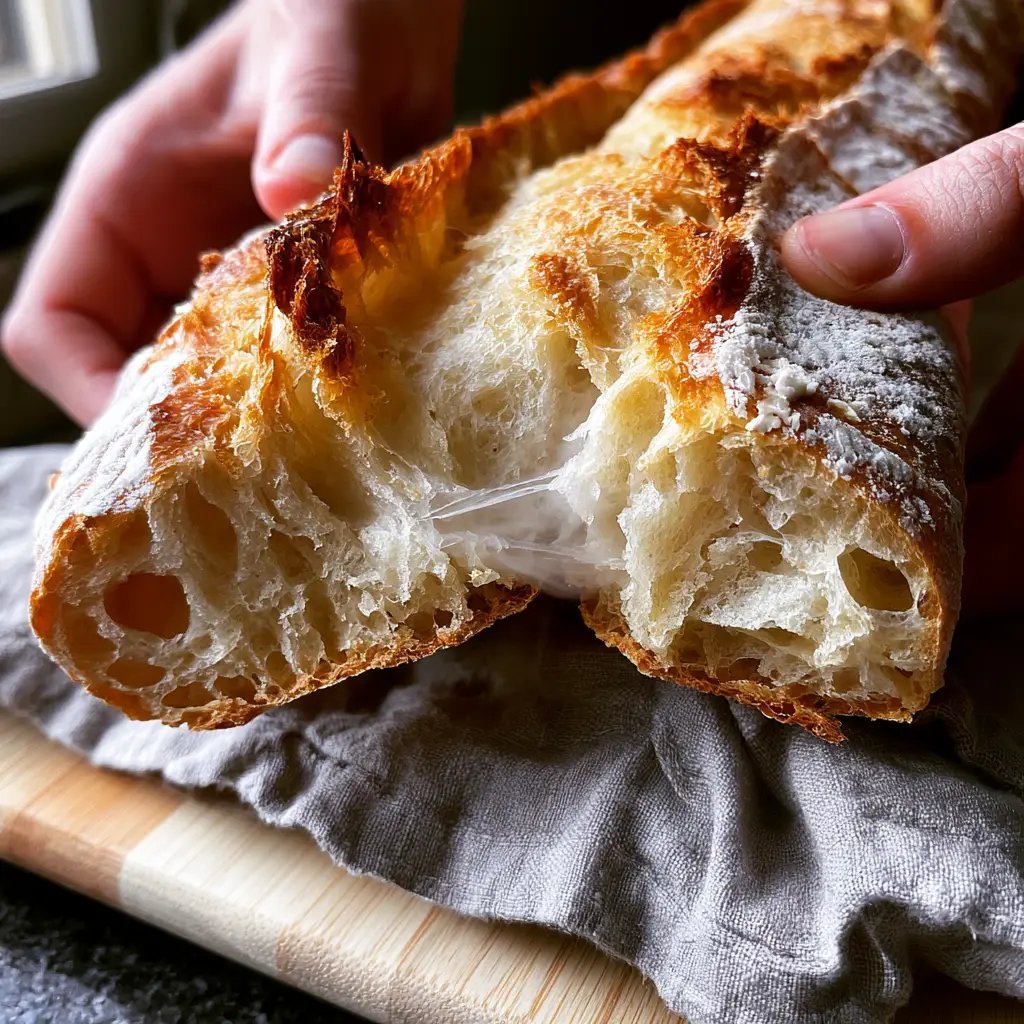
Expert Tips for Success
- The “Ear” Test: A successful score will result in a raised “ear” of crust that is extra crunchy and dark brown.
- Tapping the Bottom: To ensure the interior is fully baked, tap the bottom of the loaf. It should sound hollow, indicating the airy crumb is set.
- Steam Timing: Only use steam for the first 10 minutes of baking. Removing the steam pan for the final 15 minutes allows the crust to dehydrate and become shattered and thin.
- Cooling is Cooking: Never cut into the bread while it is piping hot. Let it rest for 30 minutes so the internal steam can set the crumb structure.
The Ultimate Pairing Guide
Artisan French bread is the ultimate chameleon of the culinary world. For a light lunch, serve a few thick slices alongside a fresh spinach mandarin salad. The crunch of the bread perfectly complements the citrus notes.
If you are looking for comfort food, this bread is the perfect tool for wiping up the sauce from garlic butter noodles or a hearty bowl of creamy pasta. For a fusion twist, try serving a toasted baguette with huli huli chicken to soak up the sweet and savory glaze.
Finally, for those who love the authentic Italian experience, brush slices with olive oil and rub with a raw garlic clove for the best bruschetta you’ve ever had.
Storage, Reheating, and Freezing
Artisan bread is best eaten the day it is made. However, you can store it in a paper bag (never plastic!) for up to 24 hours to maintain the crust’s integrity. To revive a day-old loaf, mist it with water and pop it in a 350°F (175°C) oven for 5 minutes.
To freeze, wrap the cooled loaf tightly in foil and then a freezer bag. It will last for up to 3 months. To reheat from frozen, bake at 375°F (190°C) for 15 minutes until the steam plume returns when broken.
Frequently Asked Questions
You can, but the bread will have less ‘chew’ and a smaller rise. Bread flour’s higher protein content is essential for the structural integrity of an artisan baguette.
Large holes are the result of high hydration (more water) and minimal handling. Use the stretch-and-fold method instead of heavy kneading to preserve gas bubbles.
Use a very sharp razor blade or bread lame. Hold it at a 45-degree angle and make swift, confident slashes about 1/2 inch deep.
That yeasty, slightly alcoholic smell is a sign of a successful long fermentation. It indicates that the yeast has developed complex flavor compounds that lead to superior taste.
Soft crust is usually caused by a lack of steam during the initial bake or by cooling the bread in a plastic bag. Use a steam pan for the first 10 minutes and let the loaf cool on a wire rack.
The Master Artisan French Bread Recipe
French Bread Recipe: The Ultimate Guide to an Artisan Baguette with a Shattered Crust
Ingredients
Equipment
Method
- Whisk flour, sugar, and yeast in a bowl. Add warm water (360ml) and stir until a shaggy dough forms. Let rest for 20 minutes.
- Add salt and perform 'stretch and folds' every 30 minutes for 2 hours to build strength without deflating air.
- Refrigerate dough for 12-24 hours. This creates the airy white interior and complex aroma.
- Divide dough into two logs. Dust with rice flour (30g) for a rustic look.
- Using a lame, make deep diagonal slashes to create rustic score marks.
- Bake at 475°F (245°C) with a steam pan for 10 minutes, then remove steam and bake for 15 more minutes until the crust is golden-brown and shattered.
Notes
Do not skip the cold fermentation for the best hole structure.
Start Your Baking Journey Today!
The journey to the perfect French bread is one of patience and technique, but the reward is a loaf that surpasses anything you can buy at the store. We want to see your shattered crusts and airy crumbs! Leave a comment below letting us know how your scoring turned out.
Don’t forget to save this recipe to your “Baking Basics” board on Pinterest so you can find it whenever the craving for fresh bread hits. Happy baking!