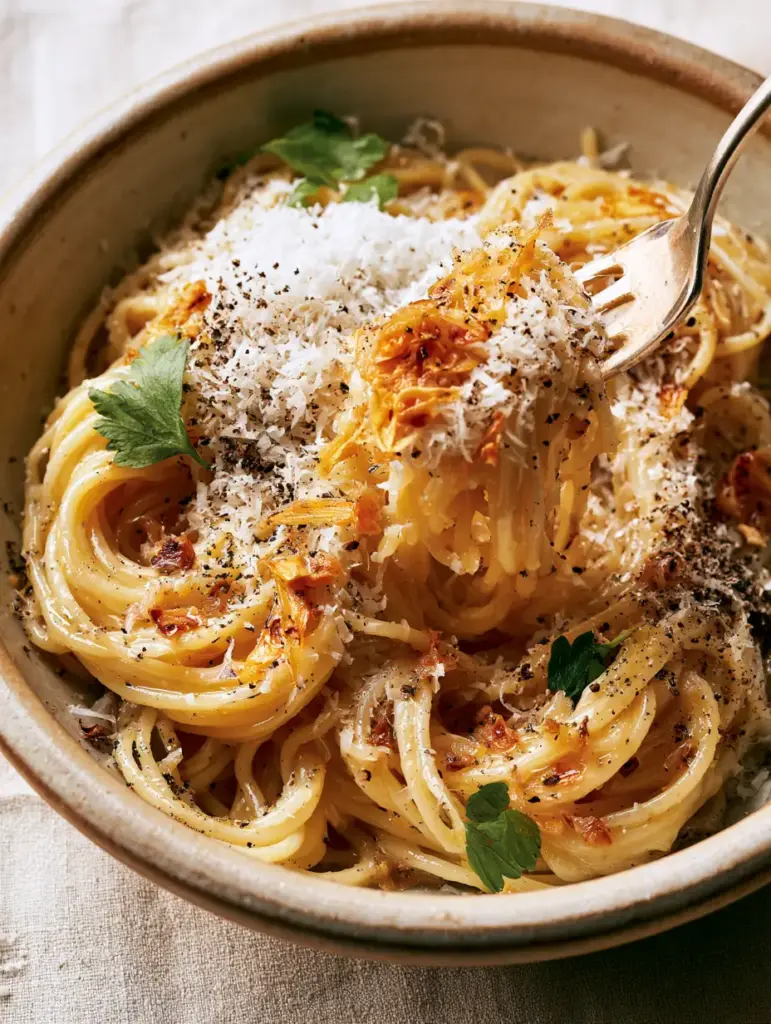
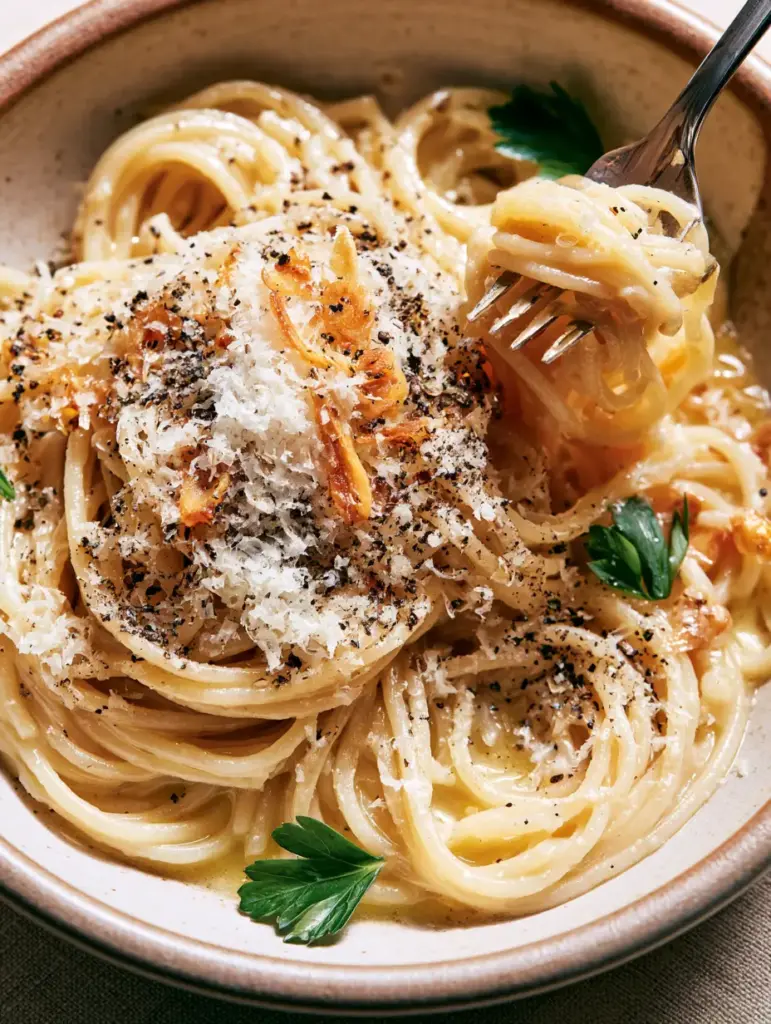
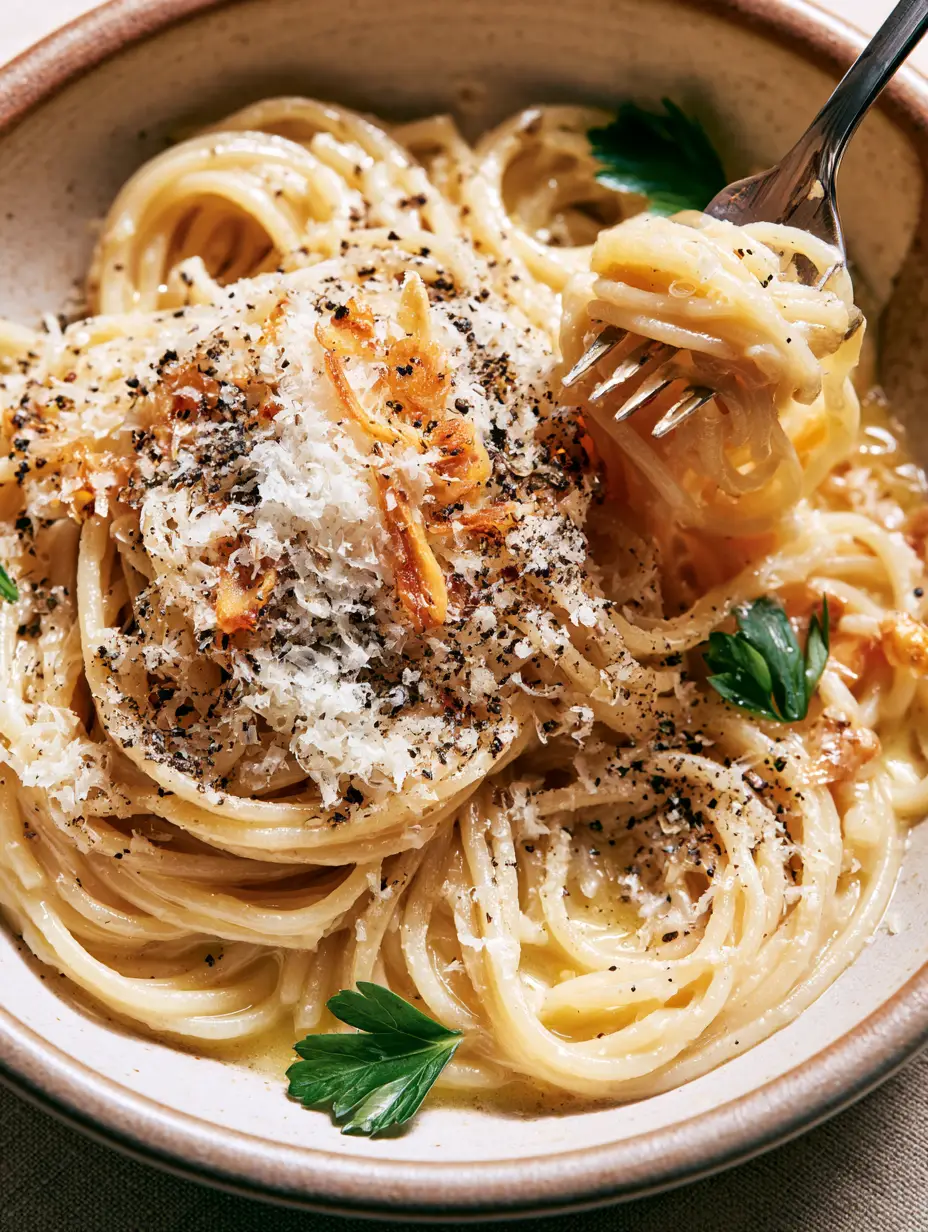
There is a specific kind of culinary magic that happens when humble pantry staples transform into a dish that looks like it belongs in a high-end Roman trattoria. This Creamy Pasta Recipe is the embodiment of that transformation, focusing on a translucent, golden-hued emulsion rather than a heavy, flour-laden sauce. Imagine swirling your fork into a cluster of al dente spaghetti, each strand coated in a glistening, light-reflective glaze that carries the deep aroma of toasted garlic and the sharp, salty punch of aged Parmigiano Reggiano.
When you look at the final plate, you aren’t seeing a thick, white pool of cream. Instead, you see the “liquid gold” of starchy pasta water married with high-quality fats to create a sauce with incredible cling. Topped with a mountain of airy, microplaned parmesan snow and the crunch of golden garlic slivers, this dish is a sensory masterpiece. It’s a masterclass in balance—where the heat of coarse cracked black pepper cuts through the richness of the emulsified cheese.
The Anatomy of the Perfect Shimmering Pasta Glaze
To achieve the visual and textural success of this Creamy Pasta Recipe, we must look beyond standard boiling and tossing. The secret lies in the science of starch and the physics of emulsification. By utilizing the starchy water that the pasta cooks in, we create a bridge between the oil-based fats and the water-based moisture, resulting in a sauce that is light yet luxurious.
- Foundational Emulsion: Unlike heavy cream sauces, this version relies on the mechanical agitation of pasta water and fat to create a shimmering, translucent finish.
- Textural Contrast: The soft, swirling noodles are juxtaposed against the crisp, toasted garlic slivers and the delicate “snow” of microplaned cheese.
- Aromatic Depth: Searing garlic until it reaches a pale golden hue releases essential oils that permeate the entire dish without becoming bitter.
- Visual Vibrancy: Freshly cracked black pepper and scattered flat-leaf parsley provide the necessary organic contrast against the neutral, off-white tones of the pasta.
Essential Components for a Five-Star Spaghetti Experience
Creating this Creamy Pasta Recipe requires high-quality ingredients that can stand on their own. Each element plays a functional role in the chemistry of the sauce and the visual architecture of the final presentation.
Dried Spaghetti (500g / 1.1 lbs): Choose a bronze-cut pasta if possible. The rougher surface area allows the emulsion to cling more effectively than smooth, mass-produced noodles.
Extra Virgin Olive Oil (60ml / 1/4 cup): This serves as the primary fat base for toasting the garlic. It carries the flavor and provides the shimmering finish seen in professional food photography.
Fresh Garlic (6-8 cloves): You must slice these into thin slivers rather than mincing. This ensures they toast evenly into golden chips rather than burning into bitter specks.
Unsalted Butter (45g / 3 tbsp): Butter contains milk solids that help stabilize the emulsion, giving the sauce its “creamy” mouthfeel without needing actual liquid cream.
Parmigiano Reggiano (100g / 3.5 oz): Use a wedge of DOP-certified cheese. Half will be melted into the sauce, and the other half will be microplaned into the airy “snow” topper.
Starchy Pasta Water (240ml / 1 cup): This is your most important ingredient. It contains the released starches needed to bind the oil and cheese into a cohesive, glossy glaze.
Coarse Cracked Black Pepper (2 tsp / 4g): Freshly cracked pepper provides a larger grain size, adding both a spicy bite and a beautiful visual “speckle” to the dish.
Fresh Flat-Leaf Parsley (15g / 1/2 cup): The leaves should be left relatively whole or torn coarsely to maintain the rustic, fresh aesthetic described in our visual blueprint.
Sea Salt (For the water): Use a generous amount of salt in the boiling water to season the pasta from the inside out, which is a hallmark of authentic Italian recipes.
Necessary Tools for Professional Execution
To replicate the high-angle, smartphone-perfect shot of this dish, you need the right tools for the job. Precision is key when dealing with emulsions and delicate cheese textures.
First, a Microplane Grater is non-negotiable. This tool creates the ultra-fine, airy curls of parmesan that look like freshly fallen snow. Standard graters produce thick shreds that are too heavy and will sink into the pasta rather than sitting on top. Second, a Large Stainless Steel Skillet is preferred over a pot for finishing the sauce. The wider surface area allows for better evaporation and faster emulsification when you begin the vigorous tossing process.
Mastering the Garlic Toasting and Pasta Prep
Achieving the Perfect Al Dente Foundation
Bring a large pot of water to a rolling boil and add enough salt so that it tastes like the sea. Add your spaghetti and cook for exactly 2 minutes less than the package instructions. This is crucial because the pasta will finish cooking inside the sauce, absorbing the garlic-infused emulsion. Before draining, reserve at least 2 cups (480ml) of that cloudy, starchy pasta water. If you are looking for a different flavor profile, you might also enjoy our garlic butter noodles.
Searing the Garlic to Golden Perfection
In your large skillet, add the olive oil and the garlic slivers while the oil is still cold. Turn the heat to medium-low. This gradual heating allows the garlic to infuse the oil without scorching. Watch for the sensory cues: the garlic will begin to sizzle gently, and the kitchen will fill with a nutty, sweet aroma. As soon as the slivers turn a light, toasted golden brown—matching the visual prompt—remove half of them with a slotted spoon and set them aside for the garnish.
Building the Shimmering Emulsion
Add the butter to the skillet with the remaining garlic and oil. Once melted, pour in 1 cup (240ml) of the reserved pasta water. Increase the heat to medium-high and whisk or shake the pan vigorously until the liquid begins to bubbles and looks slightly thickened and translucent. This is the base of your Creamy Pasta Recipe. It should look shimmering and golden, not opaque.
The Final Toss and Cheese Integration
Transfer the undercooked spaghetti directly into the skillet. Using tongs, toss the noodles constantly for 60-90 seconds. This motion beats the starch from the pasta into the fat, creating that perfect sauce cling. Turn off the heat—this is vital to prevent the cheese from clumping—and sprinkle in half of the finely grated parmesan. Continue tossing until the cheese has vanished into a smooth, glossy glaze. If the sauce looks too dry, add a splash more pasta water until the noodles look “wet” and slippery.
Expert Secrets for Culinary Success
- Temperature Control: Never add the cheese while the skillet is over direct, high heat. Excessive heat causes the proteins in the parmesan to tighten and separate from the fat, resulting in a grainy sauce rather than a creamy one.
- The “Mantecatura” Technique: This is the Italian art of finishing pasta. It involves a vigorous tossing or stirring motion that incorporates air and helps the emulsion stabilize.
- Microplane Magic: For the visual “snow” effect, hold the microplane directly over the plated pasta and grate the cheese at the very last second. The steam from the pasta will slightly soften the bottom of the cheese curls, helping them adhere.
- Pepper Freshness: Use a pepper mill on the coarsest setting. The large, irregular shards of pepper provide a much better flavor profile and visual impact than pre-ground pepper.
Serving and Presentation Cues
To match the rustic aesthetic, use a shallow ceramic bowl. Twirl the spaghetti using a carving fork and a ladle to create a high, swirling mound in the center. The sauce should look like a shimmering glaze, reflecting the morning light. Immediately top with the reserved toasted garlic slivers, the microplaned parmesan snow, and a few scattered leaves of flat-leaf parsley. The steam rising from the bowl, as seen in our reference photo, indicates the dish is at its peak temperature and texture.
What to Pair with This Creamy Pasta
While this Creamy Pasta Recipe is a complete meal on its own, it pairs beautifully with light, acidic sides that cleanse the palate between rich bites. A crisp spinach mandarin salad offers a bright citrus contrast to the garlic and parmesan. If you want a more substantial meal, a side of roasted vegetables or even a baked feta pasta with mushrooms can serve as a secondary dish for a larger gathering. For a unique texture, try serving some baked cottage cheese chips on the side for an extra protein-packed crunch.
Troubleshooting Your Pasta Emulsion
Why is my sauce watery? You likely didn’t toss the pasta long enough or the water wasn’t starchy enough. Continue to simmer for 30 seconds more while tossing to encourage evaporation and binding.
Why did my cheese clump? The pan was too hot. Always remove the pan from the heat source before adding the parmesan. You can add a tablespoon of cold water to quickly drop the temperature if needed.
Is the garlic supposed to be crunchy? The slivers set aside for garnish should have a slight, delicate crunch, while the slivers left in the sauce will be soft and buttery.
While you can, this specific recipe focuses on a traditional Italian-style emulsion using starchy pasta water, butter, and cheese to create a lighter, shimmering glaze rather than a thick, heavy white sauce.
Use a microplane grater and grate the cheese directly over the hot pasta just before serving. The fine teeth of the microplane create the airy, fluffy texture.
Start the garlic in a cold pan with the oil and use a medium-low heat. This allows the garlic to toast to a golden brown gradually without turning bitter.
Any long, thin pasta like linguine or fettuccine will work perfectly for this emulsion technique, as they provide plenty of surface area for the sauce to cling to.
This usually happens if you use pre-shredded cheese from a bag, which contains anti-caking agents. Always use a freshly grated block of Parmigiano Reggiano for a smooth melt.
The Ultimate Creamy Pasta Recipe Card
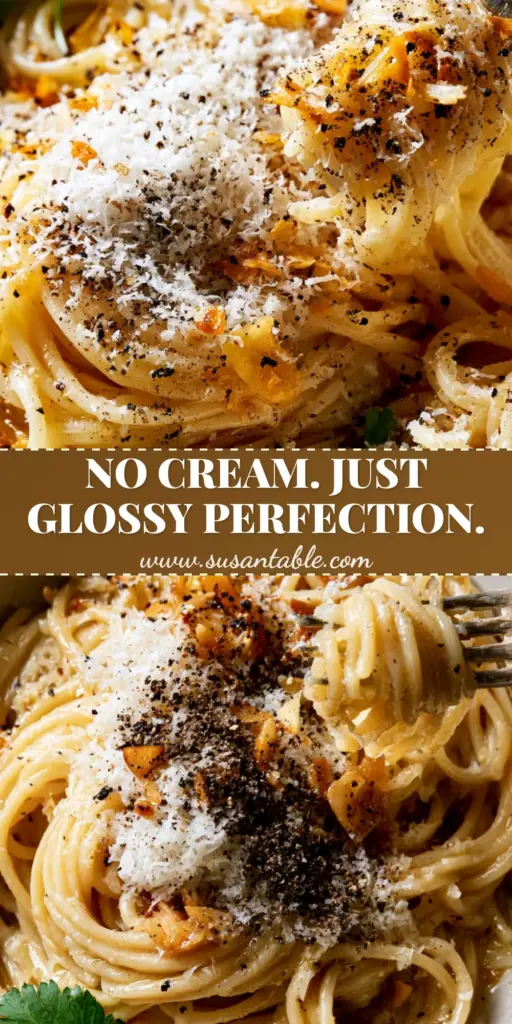
Creamy Pasta Recipe with a Shimmering Garlic Parmesan Emulsion
Ingredients
Equipment
Method
- Cook spaghetti in heavily salted water until 2 minutes before al dente. Reserve 1 cup (240ml) of starchy water and drain.
- In a cold skillet, combine olive oil and garlic slivers. Heat to medium-low until garlic is golden and aromatic. Remove half for garnish.
- Add butter and pasta water to the skillet. Increase heat and whisk until a shimmering, golden liquid forms.
- Add pasta to the skillet. Toss vigorously for 90 seconds. Remove from heat, stir in half the cheese, and top with garnishes.
Notes
Ensure the pan is off the heat before adding cheese to prevent clumping.
Closing & Call to Action
This Creamy Pasta Recipe proves that you don’t need heavy cream to achieve a luxurious, soul-warming meal. By mastering the simple art of the emulsion and paying close attention to visual details like toasted garlic and microplaned cheese, you can elevate your weeknight dinner into a gourmet experience. The shimmering golden sauce and al dente texture are sure to make this a staple in your kitchen.
If you enjoyed this recipe, please leave a comment below and let us know how your emulsion turned out! Don’t forget to follow us and share your creations on Pinterest for more culinary inspiration. Happy cooking!