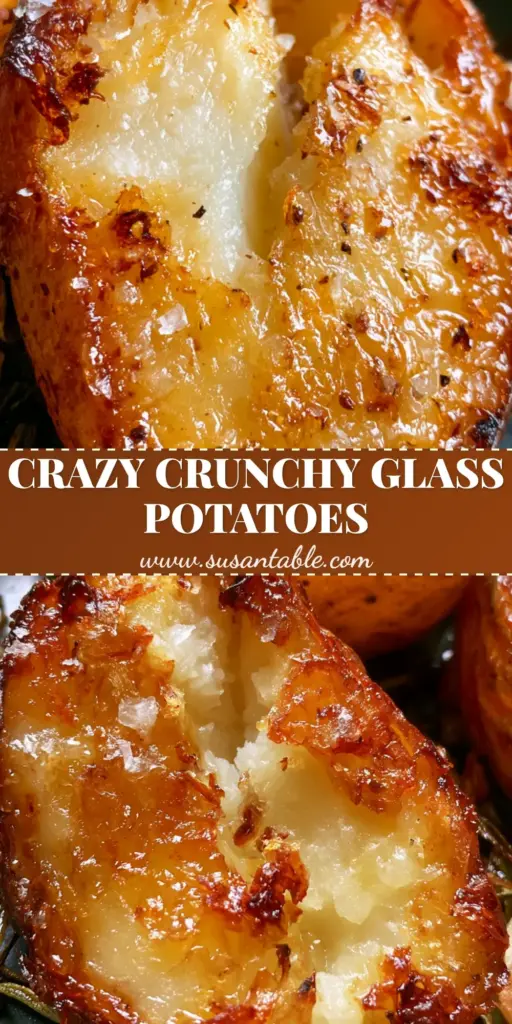
There is a specific sound that defines a truly crispy potato—it is the distinct, audible snap of a glass-like crust giving way to a cloud of steaming, snow-white fluff. If you have been searching for the holy grail of side dishes, the search ends here. This recipe is not just about roasting vegetables; it is about engineering the perfect textural contrast using culinary science.
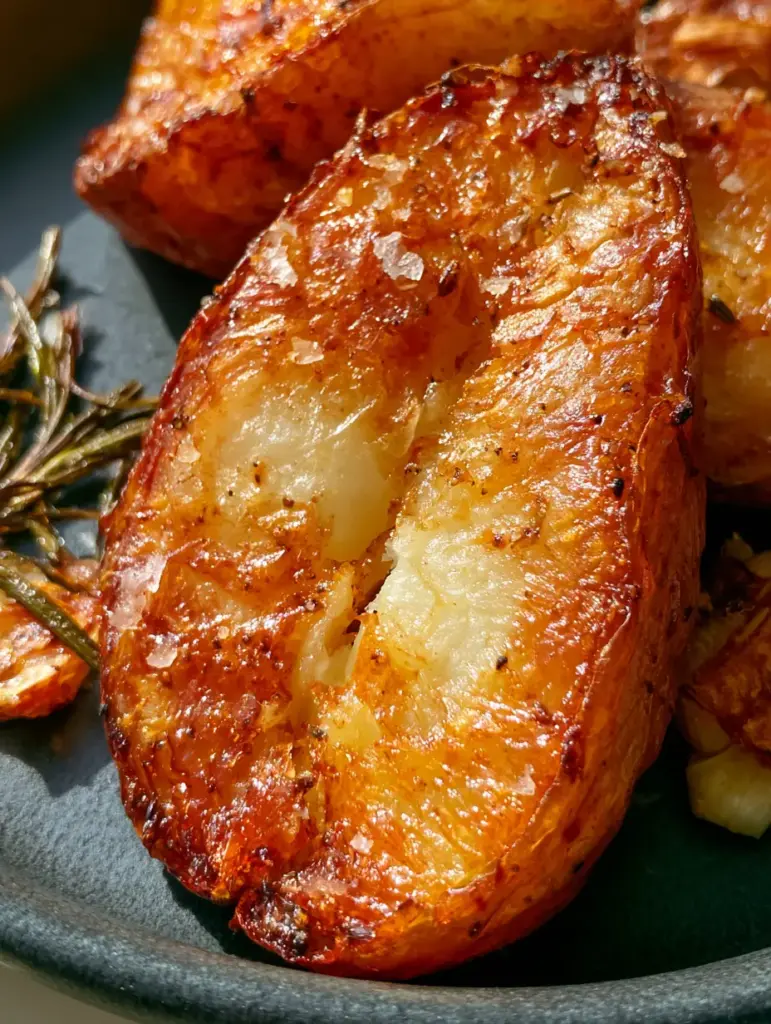
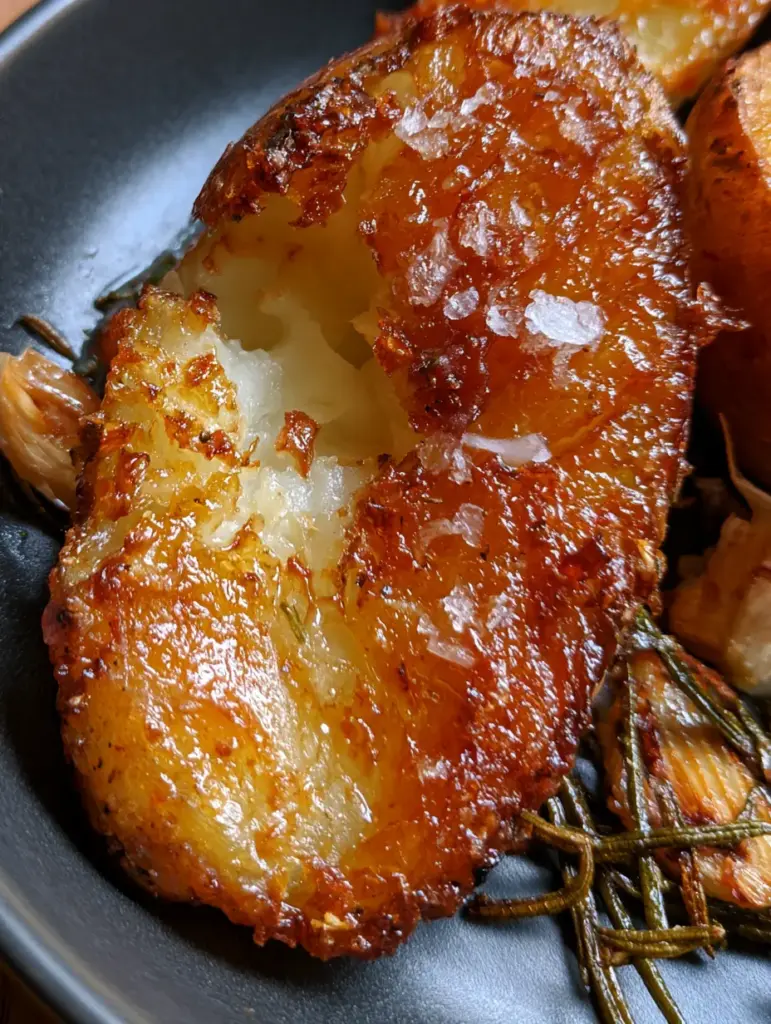
By utilizing the specific starch properties of Yukon Gold potatoes and the high-smoke-point richness of shimmering duck fat, we create a translucent, amber-colored crust that stays crunchy long after it leaves the oven. Every jagged edge is designed to catch flaky sea salt, while blistered rosemary and smashed garlic provide an aromatic depth that elevates this humble tuber into a gourmet experience.
Whether you are preparing a Sunday roast or looking for the ultimate comfort food, these potatoes are designed to be the star of the plate. Let’s dive into the forensic details of how to achieve that professional, handheld-photo-worthy result in your own kitchen.
Why This Is the Only Crispy Potato Recipe You Need
- The “Glass” Crust: A specialized cornstarch dusting creates a translucent, extra-crunchy exterior that mimics the texture of high-end restaurant roasts.
- Internal Fluffiness: By parboiling the Yukon Golds, we gelatinize the starches, ensuring a steaming, snow-white interior that melts in your mouth.
- Duck Fat Infusion: We use shimmering duck fat for its incredible flavor and ability to withstand high heat without burning, resulting in a deep amber hue.
- Aromatic Excellence: Fresh rosemary is blistered until fragrant, and garlic is smashed to release essential oils, coating every wedge in savory goodness.
The Anatomy of a Perfect Roast: Essential Ingredients
To achieve the specific visual and textural results of our crispy potato, every ingredient serves a scientific purpose. We do not just season; we build layers of flavor and structural integrity.
3 lbs (1.4kg) Yukon Gold Potatoes: These are the gold standard for roasting because they contain the perfect balance of starch and moisture. They hold their shape while providing that signature fluffy center seen in our visual blueprint.
1/2 cup (120ml) Rendered Duck Fat: This is the secret to the shimmering, golden-brown finish. Duck fat has a high smoke point and a savory richness that vegetable oils simply cannot replicate.
2 tbsp (16g) Cornstarch: This “invisible” ingredient is the key to the glass-like crust. It absorbs excess moisture on the surface of the parboiled potato, creating a thin, jagged batter that crisps up intensely.
6-8 Cloves of Fresh Garlic: These are smashed rather than minced. This prevents them from burning in the high-heat oven while allowing them to become tender, roasted shards of flavor.
4 Sprigs of Fresh Rosemary: We use whole needles that become blistered and brittle. They provide a resinous, earthy aroma that cuts through the richness of the duck fat.
1 tbsp (15g) Coarse Flaky Sea Salt: Unlike table salt, these crystalline flakes provide a structural crunch and a burst of seasoning that clings to the craggy edges of each wedge.
1 tsp (5g) Baking Soda: Added to the parboiling water, this breaks down the potato’s exterior pectin, creating more surface area for the starch to “fuzz up” and eventually turn into a crunchy crust.
Precision Tools for Roasting Success
To achieve the deep shadows and craggy textures of a professional food photograph, you need the right equipment to manage heat distribution and moisture evaporation.
Heavy-Duty Rimmed Baking Sheet: A thick metal pan prevents warping and ensures even heat distribution, which is vital for that all-over amber color. Avoid using parchment paper if you want maximum “glass” crunch, as the direct contact with metal aids in searing.
Large Stockpot: You need enough room for the potatoes to move freely during the parboiling process without crowding, which ensures even starch gelatinization.
Metal Colander: This isn’t just for draining. The act of shaking the potatoes in a metal colander is what creates the “jagged edges” mentioned in our visual prompt.
Mastering the Method: A Step-by-Step Guide to the Ultimate Crunch
Phase 1: The Scientific Parboil
Start by peeling your Yukon Golds and cutting them into large, irregular chunks or wedges. Place them in a pot of cold water—this ensures the outside and inside heat up at the same rate. Add your baking soda and a generous pinch of salt.
Bring the water to a boil and then simmer for about 8-10 minutes. You are looking for a specific sensory cue: the edges of the potatoes should be softening and starting to fray, but the center should still hold firm. This release of surface starch is the foundation of your crispy potato.
Phase 2: Creating the Jagged Surface Area
Drain the potatoes and let them steam-dry in the colander for 2 minutes. This is critical; excess water is the enemy of the crunch. Once dry, give the colander a vigorous shake. You want the surfaces of the potatoes to look “fuzzy” or mashed. This rough texture is what the cornstarch will cling to.
Sprinkle the cornstarch over the potatoes and toss again. You should see a thin, translucent coating forming over the jagged edges. This is what creates that “glass” crust effect once it hits the hot fat.
Phase 3: The Duck Fat Infusion
While the potatoes are parboiling, place your baking sheet in a 425°F (220°C) oven with the duck fat. The fat must be shimmering and screaming hot before the potatoes ever touch it. Carefully spread the potatoes onto the hot tray; you should hear an immediate, aggressive sizzle.
Roast for 20 minutes without touching them. This allows the bottom to develop a thick, amber-colored crust. After 20 minutes, turn them carefully. Add the smashed garlic cloves and the fresh rosemary sprigs at this stage. Adding them now ensures they blister and infuse the oil without turning bitter and black.
Phase 4: The Final Amber Transformation
Continue roasting for another 20-30 minutes. Look for the visual descriptors from our prompt: a translucent amber-colored crust and jagged, extra-crunchy edges. The garlic should be golden and soft, and the rosemary should be brittle to the touch.
Remove from the oven and immediately shower with the coarse flaky sea salt. The salt will stick to the shimmering oil, creating a beautiful crystalline finish. Serve immediately while the centers are still steaming and snow-white.
Expert Tips for the Perfect Crispy Potato
- Cold Water Start: Always start your potatoes in cold water to ensure even cooking. If you drop them into boiling water, the outside will disintegrate before the inside is ready.
- Don’t Crowd the Pan: If the potatoes are touching, they will steam instead of roast. Use two pans if necessary to ensure every wedge has its own “breathing room” to develop a glass crust.
- High Heat is Non-Negotiable: You need a minimum of 425°F (220°C) to achieve the Maillard reaction necessary for that deep amber color and “jagged” texture.
- The Fat Quality Matters: While you can use olive oil, duck fat provides a structural rigidity to the crust that vegetable oils cannot match. If you want that “handheld smartphone photo” authenticity, the fat is the key.
The Best Pairings for Your Roasted Potatoes
These potatoes are incredibly versatile and pair beautifully with high-protein main courses. For a complete meal, consider serving them alongside savory Greek chicken dishes or a perfectly seared steak. The richness of the duck fat also complements the brightness of honey lime garlic butter baked salmon.
If you are looking for healthy dinner ideas, these potatoes provide a satisfying starch component to a large salad or a steak fajita bowl. The contrast of the crunchy potato against tender grilled meats is a culinary match made in heaven.
Storage, Reheating, and Freezing
While best enjoyed fresh from the oven, you can store leftovers in an airtight container in the refrigerator for up to 3 days. To maintain the crispy potato texture, avoid the microwave at all costs—it will turn the glass crust into a soggy mess.
To reheat, place the potatoes back on a wire rack in a 400°F (200°C) oven for 10 minutes. This will re-activate the duck fat and crisp up the cornstarch layer. You can also freeze the parboiled and fluffed potatoes (before roasting) for up to 3 months for a quick weeknight side dish.
Frequently Asked Questions
Yes, but duck fat is preferred for its higher smoke point and lower water content. This allows the potatoes to sear more effectively at high temperatures, resulting in a more durable and flavorful crunch.
Add the smashed garlic cloves during the last 20-25 minutes of roasting. By this time, the oven temperature is moderated by the potatoes, and the garlic will roast into soft, sweet shards rather than carbonizing.
Baking soda creates an alkaline environment that breaks down the potato’s exterior pectin. This causes the surface to become ‘fuzzy’ and starchy, which eventually roasts into extra-crunchy jagged edges.
Yukon Gold potatoes are the best choice. They have a medium starch content that creates a creamy, fluffy interior while still being able to develop a rigid, crunchy exterior crust.
Cornstarch creates a thin, starch-rich ‘batter’ on the jagged surface of the potato. When it hits the hot duck fat, it dehydrates into a translucent, glass-like crust that is significantly crunchier than potato starch alone.
The Ultimate Crispy Potato Recipe
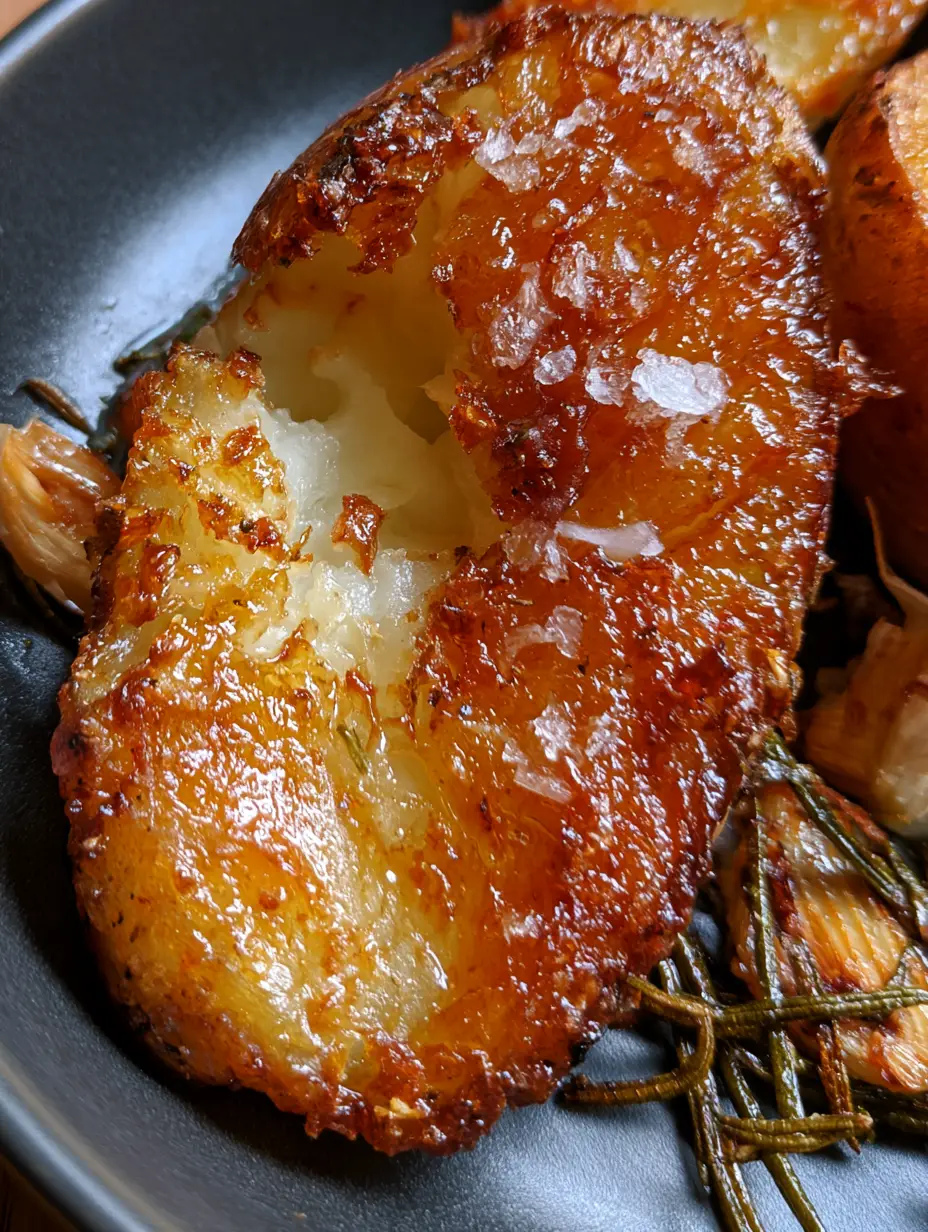
Crispy Potato Perfection: The Ultimate Duck Fat Roasted Potato Recipe
Ingredients
Equipment
Method
- Place potato chunks in a pot of cold water with salt and baking soda. Bring to a boil and simmer for 8-10 minutes until edges are soft but centers are firm.
- Drain in a colander and let steam dry for 2 minutes. Shake vigorously to create jagged, mashed-potato-like edges on the surface of each chunk.
- Preheat oven to 425°F (220°C) with the duck fat on the baking sheet. Dust the potatoes with cornstarch and toss to coat.
- Carefully add potatoes to the shimmering hot fat. Roast for 20 minutes without turning until a deep golden base forms.
- Turn the potatoes and add smashed garlic and rosemary. Roast for another 20-30 minutes until a translucent amber 'glass' crust develops.
Notes
Ensure the potatoes are completely dry before adding them to the hot fat to prevent steaming.
Join the Crispy Potato Revolution!
There is nothing quite like the satisfaction of cracking through the amber crust of a perfectly roasted potato. This recipe combines forensic visual accuracy with professional technique to ensure you get the best results every single time. If you enjoyed this deep dive into culinary crunch, please leave a comment below and share your results! Don’t forget to pin this recipe to your favorite boards on Pinterest so you never lose the secret to the perfect glass crust.